MTBF - MTTF - MTTR Stages
Accurate MTBF requires immediate failure notifications and precise restart timestamps. Incomplete data, such as unreported failures or delayed restart confirmations, can lead to misleading MTBF trends and poor reliability forecasting.
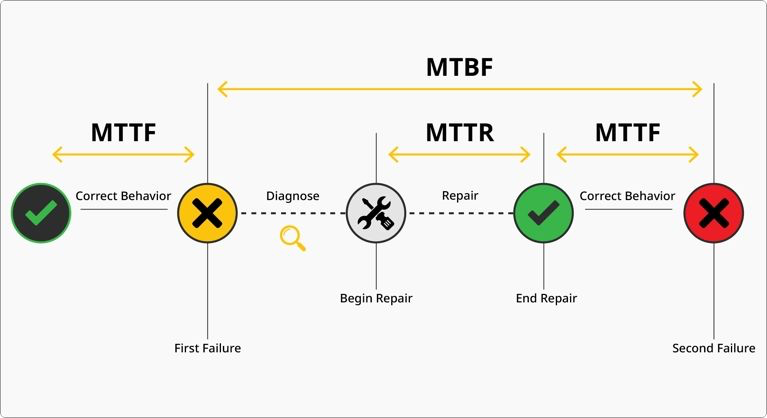
Maintenance Planners - MTBF can only be accurate if the following are done right:
1️⃣ The "failure notification" is logged immediately after the equipment stops functioning, capturing the exact failure mode and root cause indicators.
2️⃣ The "restart timestamp" is recorded precisely when the asset resumes full operation post-repair, without delays from unrelated downtime like planned shutdowns.
If failures go unreported because the team prioritizes quick fixes over documentation, your MTBF trends will be inflated and misleading - leading to poor reliability forecasting.
Even a retroactive "post-failure analysis (PFA) notification" with the failure time and mode is better than nothing.
If operators or techs overlook updating the restart time due to shift handoffs or fatigue, at minimum, they should flag the operational status change for planners to validate.
Cases where failures tie into supply chain delays, like waiting on critical spares - here, reliability metrics clash with inventory realities.
In those spots, partial confirmation of the failure event still provides a baseline for MTBF calculations.
Picture a setup where failure notifications pile up religiously, but restart confirmations lag because of lax follow-through?
How do you trust your MTBF for proactive planning?