Sensitivity Stability Over Temperature: MEMS vs Piezoelectric (PZT) Vibration Sensors
Temperature-induced sensitivity drift in vibration sensors impacts long-term reliability monitoring. MEMS accelerometers demonstrate better temperature stability than piezoelectric sensors, reducing calibration needs and minimizing trending errors.
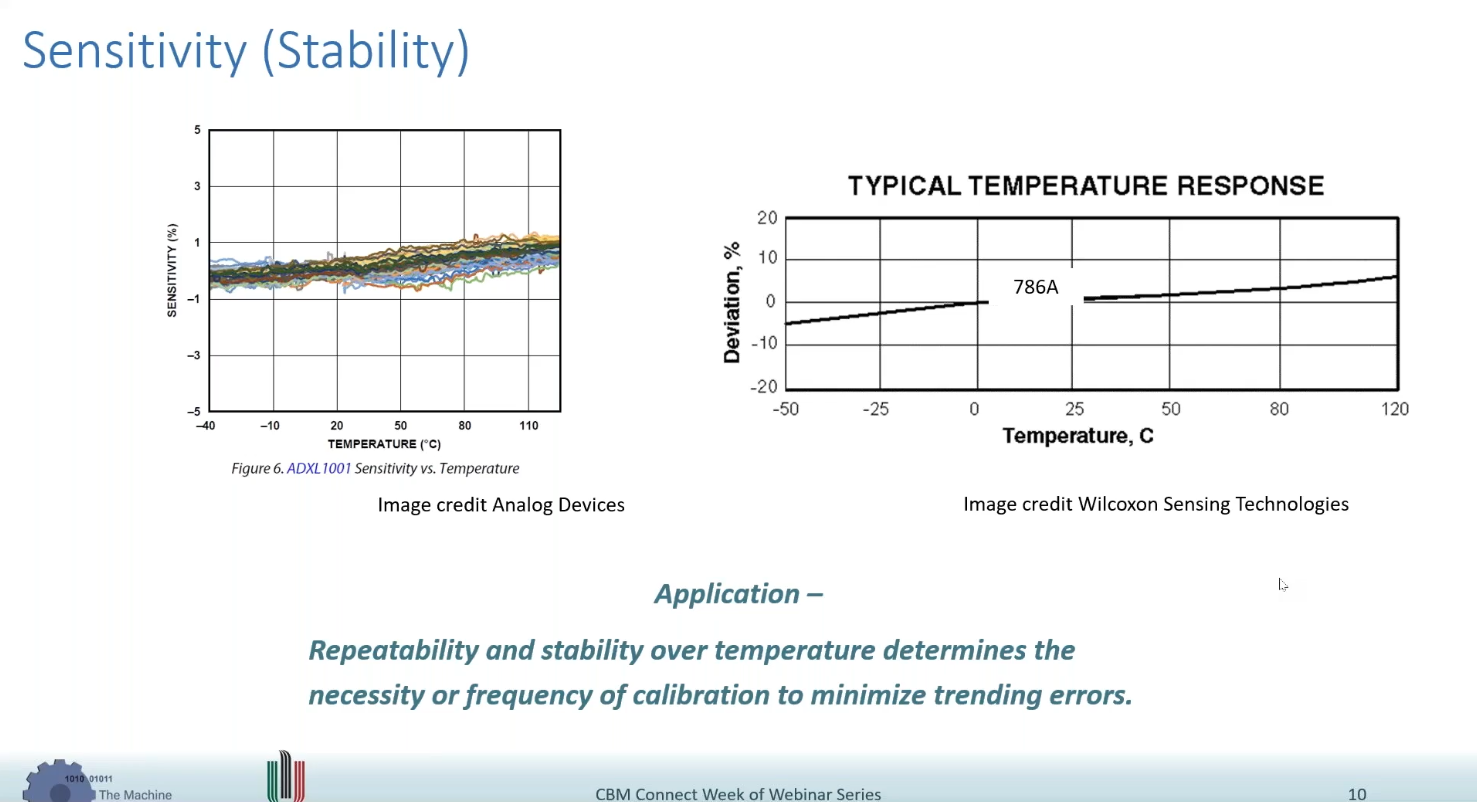
When we talk about vibration sensors, sensitivity refers to how much electrical output a sensor produces for a given mechanical input (e.g. mV/g).
However, sensitivity is not always constant — it can change with temperature, and this behavior directly impacts long-term reliability monitoring.
🔍 Why Temperature Sensitivity Matters
In real industrial environments, machines rarely operate at a fixed temperature.
Ambient conditions, load changes, lubrication state, and process variations all cause temperature fluctuations.
If a sensor’s sensitivity changes significantly with temperature:
• Measured vibration levels may drift, even if machine condition is unchanged
• Long-term trending becomes unreliable
• False alarms or missed early warnings may occur
• Calibration frequency increases, adding cost and operational effort
In short: temperature-induced sensitivity drift translates directly into diagnostic uncertainty.
📊 What the Data Shows (from the referenced webinar)
Based on the sensitivity-vs-temperature graphs shared in the CBM Live webinar:
• MEMS accelerometers
• Sensitivity variation: approximately ±1%
• Temperature range: –40 °C to +120 °C
• Indicates strong repeatability and stability across wide operating conditions
• Piezoelectric (PZT) accelerometers
• Sensitivity variation: up to ±5% over the same temperature range
• Greater dependency on temperature changes
• Higher likelihood of measurement drift over time
⚙️ Practical Impact on Condition Monitoring
Sensitivity stability over temperature directly affects:
• Trend accuracy in predictive maintenance
• Confidence in baseline vs fault growth
• Need for frequent recalibration
• Consistency across multi-sensor and multi-asset deployments
Sensors with higher temperature stability allow teams to:
• Trust long-term trends
• Reduce recalibration effort
• Focus on real machine behavior, not sensor artifacts
✅ Key Takeaway
Repeatability and sensitivity stability over temperature are critical for reliable trending.
Based on the referenced data, MEMS accelerometers demonstrate significantly better temperature stability than piezoelectric sensors, reducing calibration needs and minimizing trending errors in real-world applications.
📚 Reference:
CBM Live Webinar: “POST-MEMS Accelerometers – Technology Review and Implications for CBM”
Ed Spence & Adam Jablonski
Shared for discussion and learning within the Reliability Board community.