Understanding the Hidden Impact of Misalignment in Rotating Machinery
Misalignment, often underestimated, is a major source of chronic machine problems with severe long-term consequences. It can lead to seal and bearing failures, energy loss, increased vibration, and excessive heat, all of which can cause cascading failures and reduce asset lifespan. Early detection is crucial to prevent these issues and maintain system reliability.
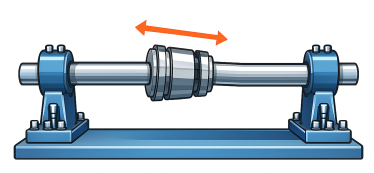
Misalignment is one of the most common — and most underestimated — sources of chronic machine problems. It rarely appears dramatic at first glance, but its long-term consequences can be severe. Even a small angular or parallel deviation between coupled components can trigger a chain reaction that affects the entire asset’s health.
Below is a deeper look at why misalignment matters, and why reliability professionals should always keep it high on their diagnostic checklist.
1. Seal Failure: The First Silent Signal
Mechanical seals are designed to operate within very specific alignment tolerances.
When that alignment shifts, even slightly, the seal faces begin to wear irregularly.
This leads to:
• Premature leakage
• Contamination of nearby components
• Increased maintenance cycles
• High replacement costs
Seal failures often show up before more serious internal damage, making them an important early warning sign.
2. Bearing Failure: The Costly Domino Effect
Misalignment places uneven loads on bearings, causing localized stress points.
As a result, you may observe:
• Pitting and flaking on raceways
• Premature fatigue and overheating
• Progressive damage to shafts, housings, and couplings
• Unplanned downtime and costly repairs
In many case studies shared in our community, misalignment has been the hidden root cause behind repeated bearing failures.
3. Energy Loss: Efficiency Drops You Can Feel
A misaligned machine must “fight” against extra forces just to operate normally.
This inefficiency shows up as:
• Higher power consumption
• Reduced output for the same energy input
• Lower overall system performance
Energy loss doesn’t always get the attention it deserves, but in large industrial systems, even a few percentage points can translate into significant financial and environmental impact.
4. Increased Vibration: The Mother of Many Failures
Misalignment is widely recognized as one of the top causes of elevated vibration levels.
When vibration rises:
• Fatigue accelerates
• Looseness develops
• Resonances can be triggered
• The entire machine becomes more vulnerable to secondary failures
This is why vibration analysts often spot misalignment patterns long before any physical symptoms appear.
5. Excessive Heat: A Clear Warning You Shouldn’t Ignore
Heat is not just a side effect — it is a key indicator of deteriorating machine health.
Because misalignment increases friction and mechanical stress, it commonly leads to:
• Breakdown of lubrication films
• Increased wear on contact surfaces
• Higher safety risks in sensitive environments
• Shortened component life
When heat and vibration rise together, misalignment should always be investigated.
As a result,
Misalignment may look like a small mechanical issue, but in reality, it’s a system-wide reliability challenge. Detecting it early can prevent cascading failures, reduce energy costs, and extend the life of critical assets.
Reference: Acoem