Starvation in Pumps
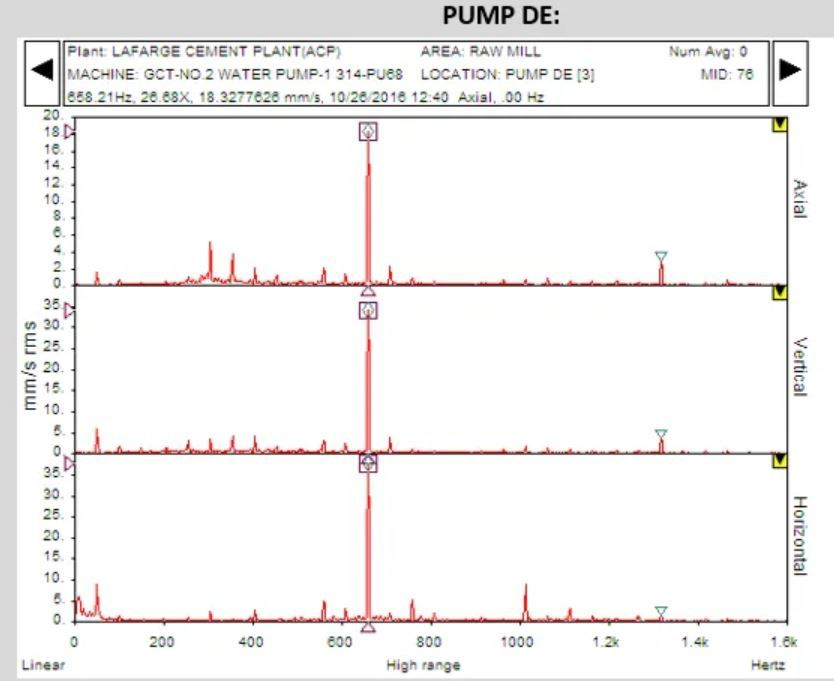
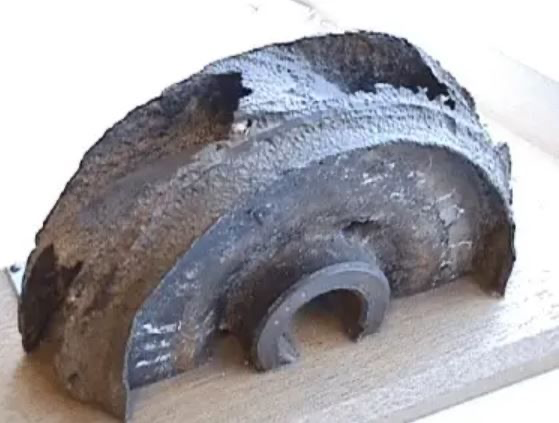
Starvation in pumps, caused by insufficient liquid, leads to impeller damage and cavitation. It can be identified by varying 1X vibration frequency amplitude and increased vane pass frequency in a vibration spectrum.
Starvation in Pumps
(Definition, Causes, Vibration Evaluation)
Definition:
Starvation occurs when not enough liquid is present to fill each vane on the impeller every revolution of the shaft. Starvation causes pumps to run dry leading to decimating the pump impeller quickly. Cavitation is one of the most common results of pump starvation.
Causes:
1) Low tank level (not enough tank head)
2) Inadequate piping (too long, too many 90° angles, or includes pipes that are too small or too large in diameter)
3) A feed pump that is too small or needs maintenance
4) A suction valve that is too heavily sprung
Vibration Evaluation:
Pump starvation can be often confused with unbalance since they both show up as 1X vibration frequency in a frequency spectrum. However, starvation can be easily distinguished by the varying amplitude of 1X frequency component in a vibration spectrum during capture of the spectrum. In addition, the vane pass frequency (the number of vanes times the rotational speed) is increased. If the impeller or the bearing (outer or inner race) is loose on the shaft, the vane pass frequency would be modulated by the shaft speed 1X.
Starvation has to be avoided by causes remedy to keep the integrity and healthy state of pump components.
Additional Images