Understanding Vertical Pumps in the Chemical Industry: Key Considerations for Reliability and Monitoring
Vertical pumps are a critical component in many chemical processing plants, where reliability, safety, and efficiency are paramount. Unlike horizontal pumps, vertical pumps are designed for applications that require a small footprint, deep well pumping, or high-pressure fluid handling—making them ideal for corrosive, hazardous, or high-temperature fluids commonly found in the chemical industry.
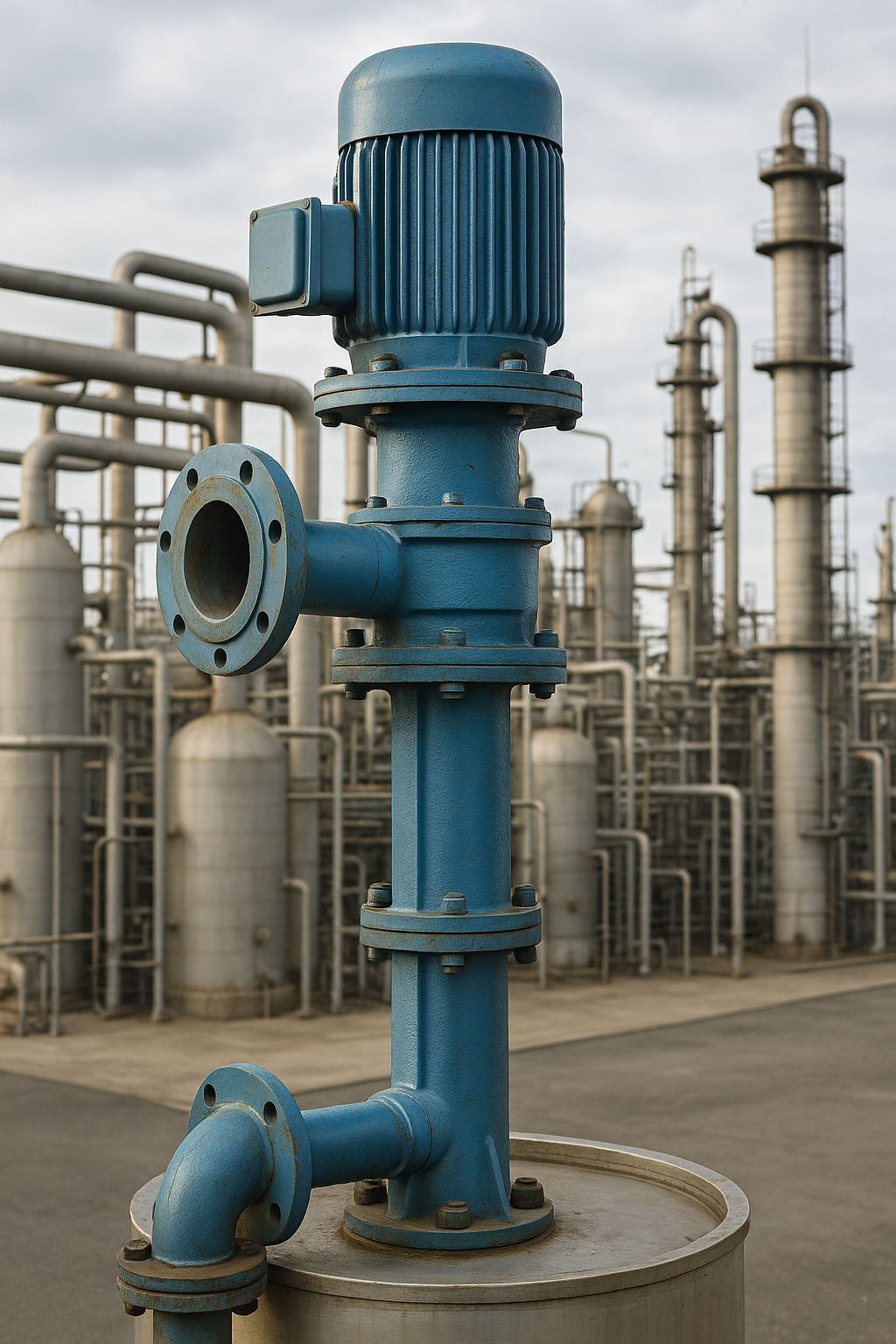
General Properties of Vertical Pumps
Vertical pumps—also known as vertical turbine or cantilever pumps—are typically characterized by the following:
• Vertical Orientation: The motor is mounted above the pump, saving horizontal space and allowing installation in deep tanks or pits.
• Multi-Stage Design: Often used in applications requiring high head, the pump may consist of multiple impellers on a single shaft.
• Shaft and Bearing Configuration: A long shaft connects the motor to the impeller, often supported by intermediate bearings.
• Wet Pit Operation: Designed to operate with the pump casing submerged in the fluid, reducing priming issues.
• Material Selection: Often constructed from corrosion-resistant alloys (e.g., Hastelloy, stainless steel) to handle aggressive chemicals.
⸻
Key Monitoring and Reliability Considerations
The chemical industry poses unique reliability challenges due to the nature of the fluids and operating environments. Here’s what needs to be carefully monitored and managed:
1. Vibration Monitoring
• Vertical pumps are prone to shaft deflection, misalignment, and resonance due to their long shafts.
• Vibration monitoring at the motor, thrust bearing, and intermediate shaft supports is crucial.
• Spectrum and time waveform analysis can detect imbalance, looseness, and bearing degradation early.
2. Thrust Bearing Health
• Thrust bearings absorb axial forces generated by impellers.
• Bearing failures are among the top root causes of vertical pump breakdowns.
• Use temperature sensors and acoustic emission sensors to detect lubrication issues and wear.
3. Lubrication System Monitoring
• Oil-lubricated vertical pumps must be monitored for oil level, quality, and temperature.
• In chemical plants, contaminants or fluid ingress into lubrication systems is a major risk.
4. Motor & Shaft Alignment
• Misalignment between the motor and pump shaft can lead to increased vibration, heat, and rapid component wear.
• Laser alignment tools and periodic checks are essential.
5. Flow & Pressure Monitoring
• Any drop in flow rate or pressure can indicate wear, clogging, or cavitation.
• Use flow meters and pressure transducers to monitor performance degradation.
Best Practices for Maximizing Uptime
• 🛠 Install condition monitoring sensors: Use vibration, temperature, acoustic, and pressure sensors for real-time feedback.
• 🔍 Trend analysis and alarms: Combine condition monitoring with threshold alarms to prevent unplanned outages.
• 📊 Use digital twins or predictive analytics: Simulate performance under different operating scenarios to predict wear/failure.
• 📅 Schedule regular inspections: Include alignment, shaft run-out, bearing clearance, and flow rate checks.
• 🧪 Implement oil analysis programs: This helps track contaminants and signs of internal wear over time.
⸻
Final Thoughts
Vertical pumps are workhorses of the chemical industry—but they require proper design consideration, vigilant monitoring, and a proactive maintenance strategy. With tools like vibration analysis, oil monitoring, and AI-based failure prediction, you can significantly reduce downtime, increase asset life, and ensure safe operations.
If you’ve worked with vertical pumps or faced specific challenges, we invite you to share your experience in the comments or upload your case studies in our community platform. Let’s use collective intelligence to improve reliability across industries.