Vibration Time Waveform Signal Processing: From Analog to Digital
Vibration analysis requires accurate time waveform signal processing, transitioning from analog to digital. This involves setting the sampling frequency and number of samples to capture the machine’s vibration accurately for analysis and fault diagnosis.
Vibration Time Waveform Signal Processing: From Analog to Digital
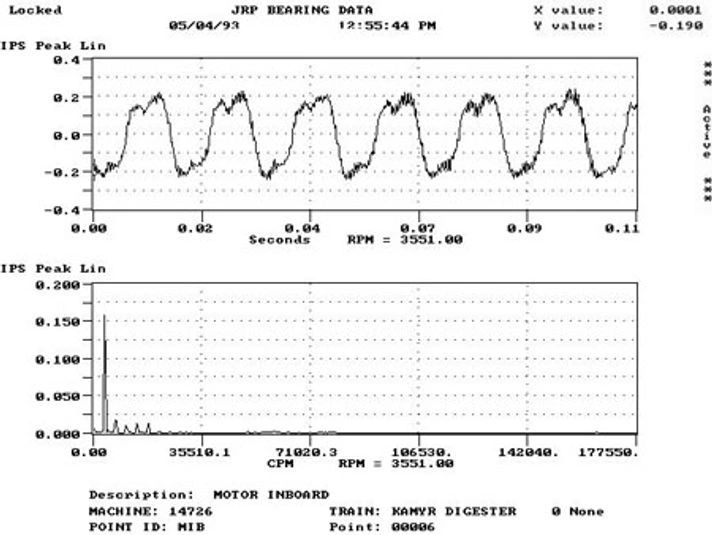
In the realm of vibration analysis, the transition from analog to digital signal processing is a critical step that ensures accurate monitoring and diagnosis of machinery health. The time waveform, often referred to as the "raw signal," captures the real-time forces generated by the machine, providing a wealth of information for analysis.
Collecting a Correct Time Waveform
The process begins with the collection of a correct time waveform. This involves two key parameters:
- Sampling Frequency: This determines how fast the data is captured. According to the Nyquist Theorem, the sampling frequency must be at least 2.56 times the maximum frequency of interest to avoid aliasing.
- Number of Samples: This defines the amount of data captured. It's crucial to collect enough samples to represent the machine's vibration accurately.
From Analog to Digital
The analog signal, which is a continuous representation of the vibration, is converted into a digital signal through a process called sampling. This involves measuring the amplitude of the analog signal at regular intervals (defined by the sampling frequency) and representing these measurements in a digital form.
Understanding the intricacies of time waveform signal processing is essential for predictive maintenance and ensuring the reliability of machinery. By correctly setting the sampling frequency and the number of samples, we can accurately convert the analog vibrations into a digital format for further analysis and fault diagnosis.