Pump Vibration Fundamentals
Vibration is more than a background sound; it’s a message from the machine. It tells you when bearings are failing, shafts are bending, or seals are rubbing. Ignoring that message leads to cracked casings, overheated bearings, and unplanned shutdowns. Every reliable engineer learns one truth early vibration is the earliest warning sign of failure. This guide explains what causes it, how to measure it, and how to interpret it correctly before damage spreads.
1. Why Pumps Vibrate
Every vibration problem comes down to two elements:
A force that excites the pump.
A structure that responds to that force.
Main Sources of Excitation
Hydraulic forces: Pressure fluctuations from impeller blades, flow separation, or cavitation. These often appear at vane-pass frequency (impeller blades × running speed).
Unbalance and misalignment: A heavy impeller spot, bent shaft, or poor coupling alignment these show up at 1× running speed.
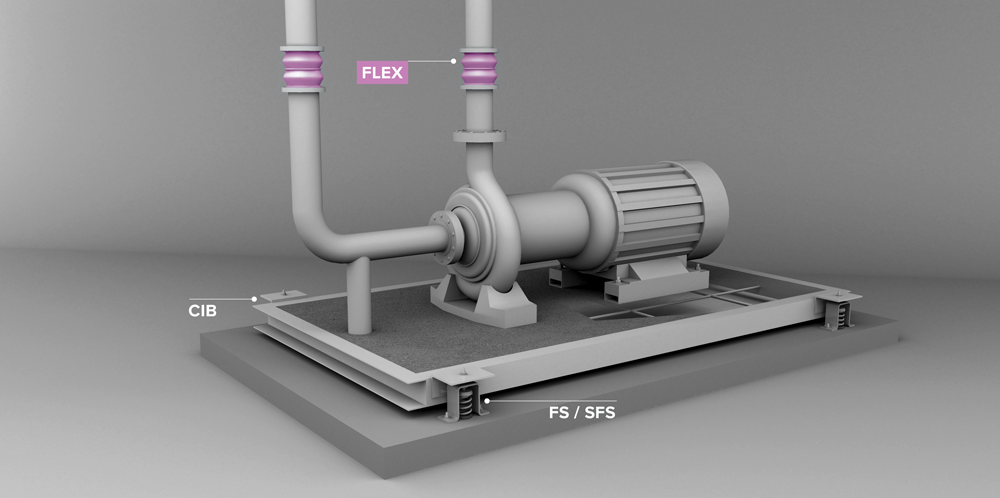
Structural or piping loads: Piping strain, loose foundations, or flexible baseplates that bend and pass energy into the pump casing.
Dynamic instabilities: Fluid-induced forces such as internal recirculation or sub synchronous whirl, especially in high-energy pumps.
Recognizing which source, you’re dealing with is the first step toward solving the issue.
2. Quick Field Checks Before Using Instruments
Before setting up analyzers, perform these quick visual and operational checks they solve many issues without advanced tools.
Check for recent changes: Has anything changed piping, seals, process flow, or VFD speed? Vibration often follows a system modification.
Inspect mechanically: Look for loose bolts, oil leaks, worn couplings, or visible shaft runout.
Verify the operating point: Make sure the pump runs near its best efficiency point (BEP). Operating too far left or right can trigger cavitation or recirculation.
Observe vibration behavior: Steady vibration → likely unbalance or misalignment. Intermittent bursts → usually cavitation or impact related.
Address any obvious mechanical or process issues first advanced data won’t help if the basics are wrong.
3. What to Measure
You don’t need an expensive lab setup to get valuable data. A few well-placed sensors can reveal almost everything you need.
Accelerometer: Mount on bearing housings (horizontal and vertical). Ideal for most pumps.
Proximity probes: Measure shaft motion directly. Essential for identifying orbit shapes or sub synchronous instability.
Pressure transducer: Placed near suction or discharge to spot cavitation or hydraulic pulsation.
Portable vibration analyzer: Collects time-waveform and frequency (FFT) data your primary tool for diagnosing root causes.
Always record:
Overall vibration (RMS).
FFT spectrum.
Phase angle at running speed (to separate unbalance from misalignment).
Transient data during start-up or shutdown (reveals resonance).
More on: https://www.linkedin.com/pulse/pump-vibration-fundamentals-omari-hussein-sabuni-n6rmc/?trackingId=na0d8ldMTlm39FG5qWJfJQ%3D%3D
by Omari Hussein Sabuni
Additional Images