Bearing Damage at a Pump Motor in Petrochemical Industry
A pump motor at a petrochemical plant exhibited abnormal vibration, prompting investigation. Elevated Crest Factor indicated a developing bearing failure, leading to replacement and improved vibration indices.
Vibration Analysis in Action – Bearing Failure Detection and Repair
(Kaveh Methanol Petrochemical)
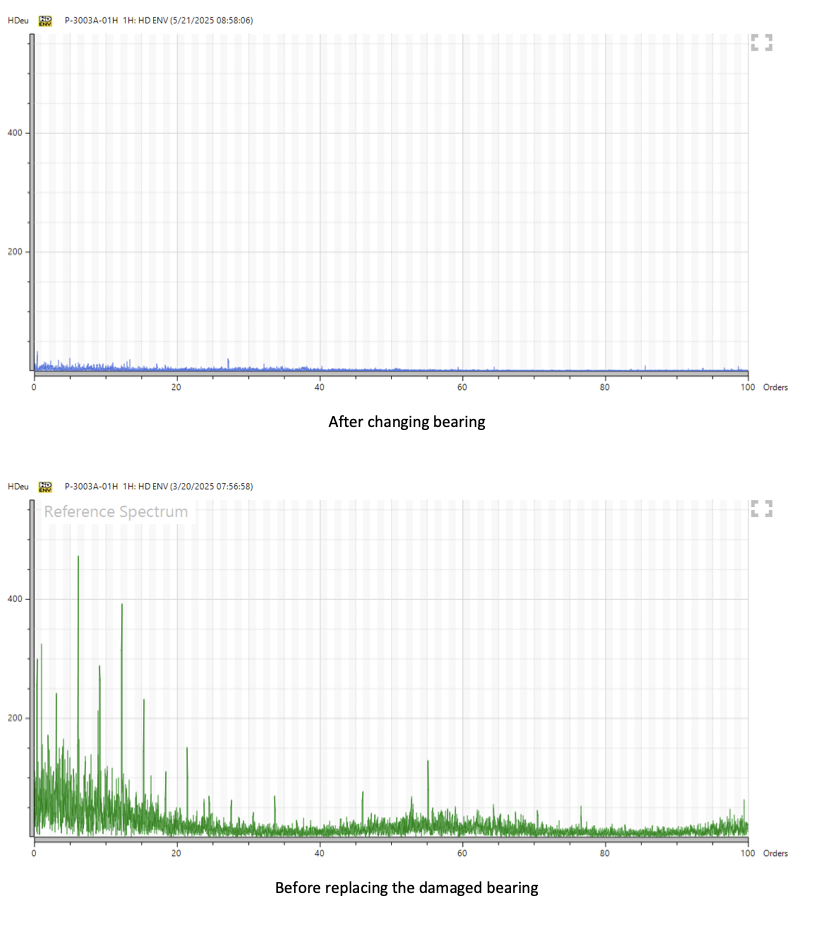
In a recent case at our petrochemical plant, one of the pump motors showed signs of abnormal vibration. Interestingly, the overall vibration levels were not significantly high, but the Crest Factor index was unusually elevated — prompting further investigation.
📊 We detected a developing bearing failure at the non-drive end (NDE) and decided to proceed with bearing replacement. After the intervention, vibration indices improved significantly.
🛠️ Case in Action:
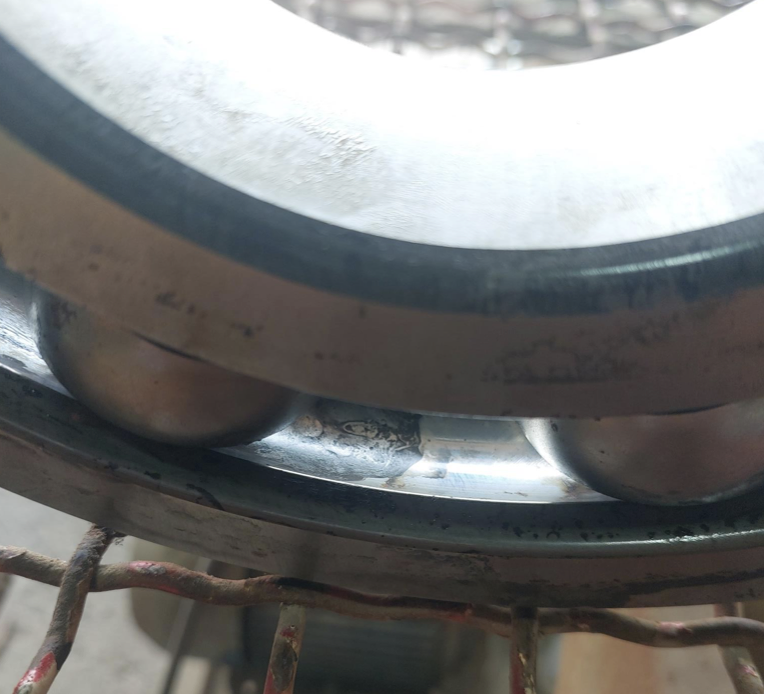
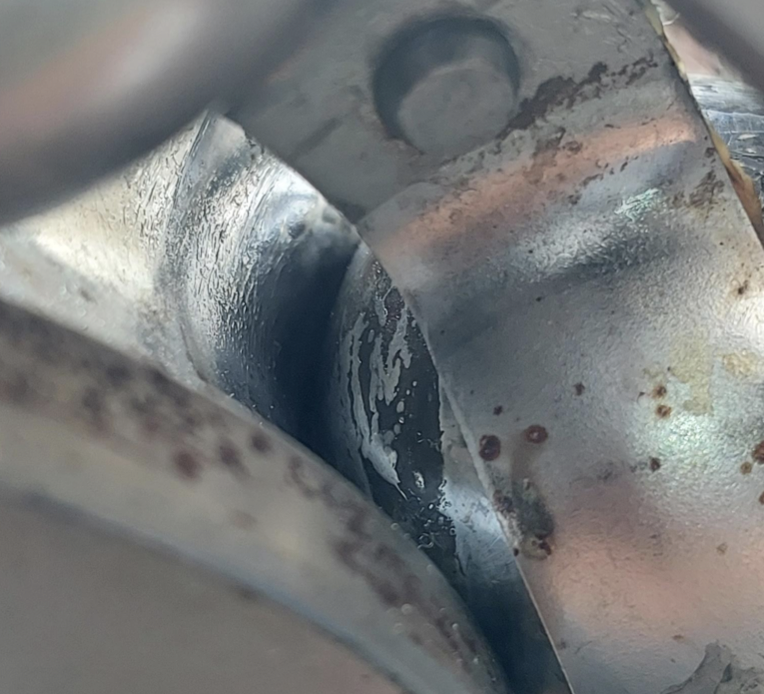
Upon inspection, the bearing damage appeared to be surface-level and relatively minor. However, the elevated Crest Factor indicated an early-stage defect — possibly due to local pitting or surface fatigue.
❓ Have you ever experienced a high Crest Factor without a major increase in overall vibration?
💭 In your opinion, was bearing replacement justified at this stage?
📷 Considering the photo of the bearing, what might be the cause of such localized damage?
⚠️ What risks could the motor have faced if the bearing had not been replaced in time?
This case underscores the value of data-driven maintenance decisions and proactive monitoring in asset protection.
Let’s connect and discuss real-world reliability engineering cases.
Additional Images