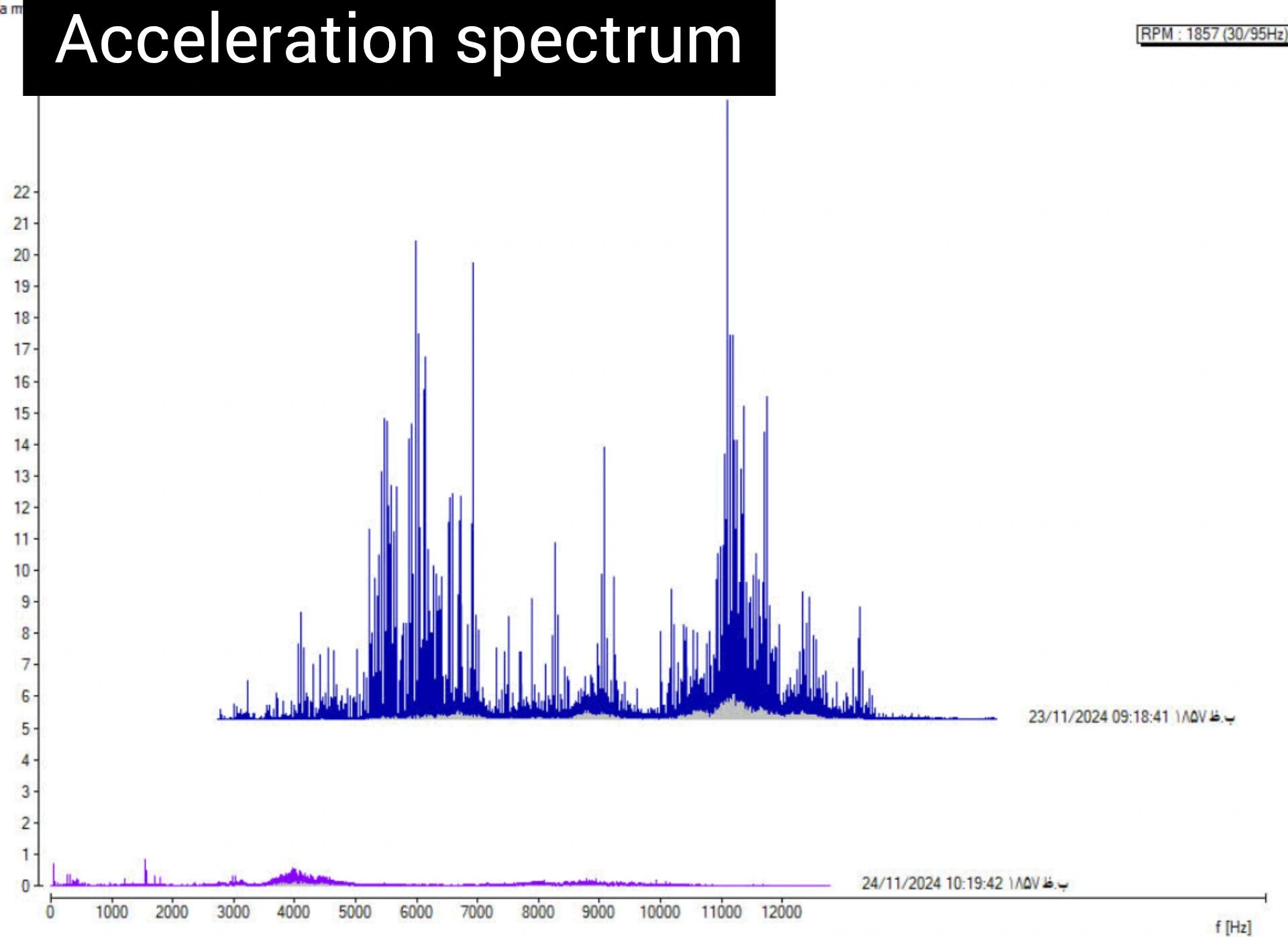
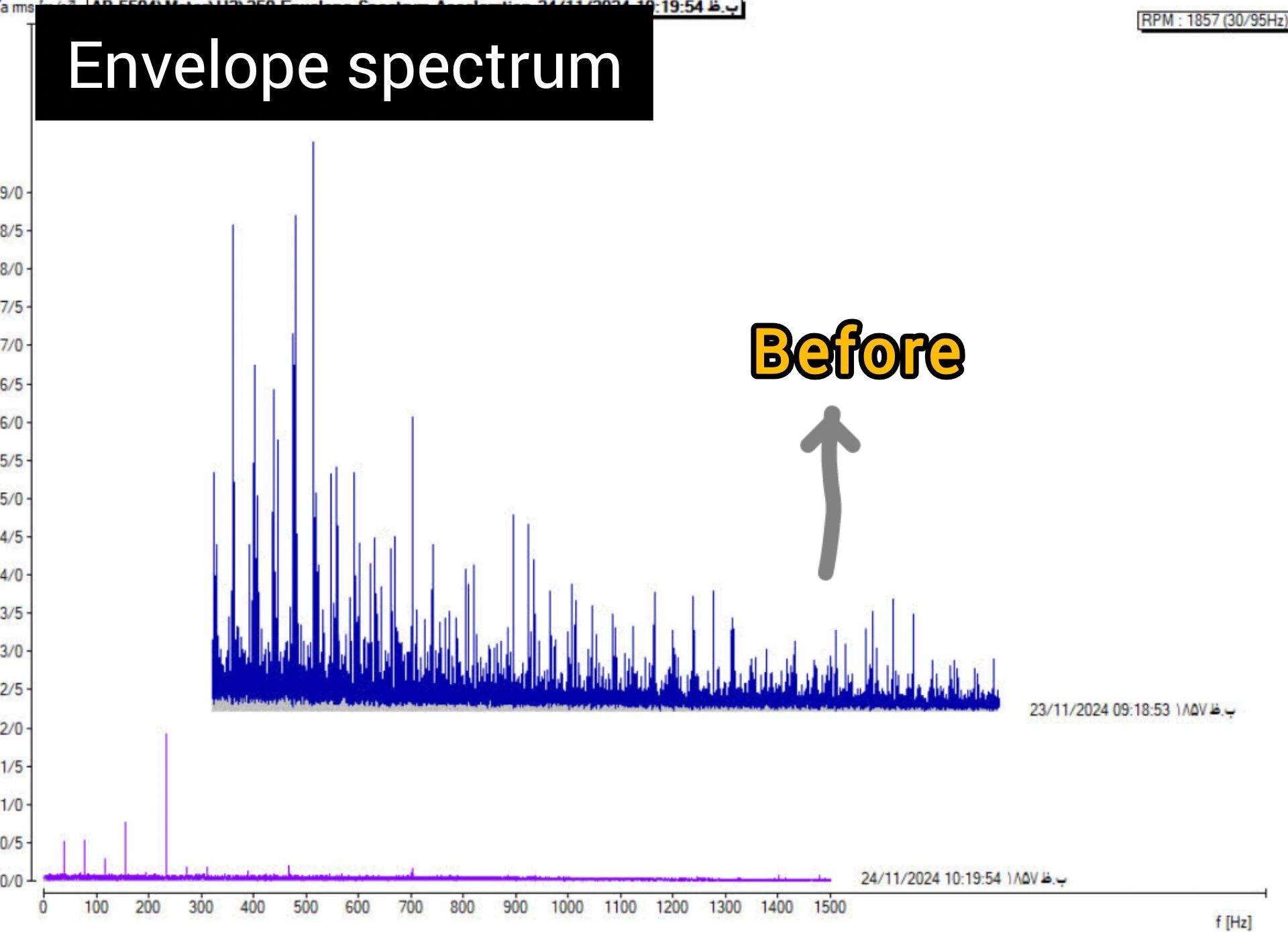
Increase at High Frequency Vibration Energy Because of Misalignment
Misalignment introduces fluctuating forces that excite localized stress patterns, increasing high-frequency vibration energy. Correcting alignment minimizes these forces, reducing bearing stress and high-frequency vibration, as seen in a drop in the envelope spectrum.
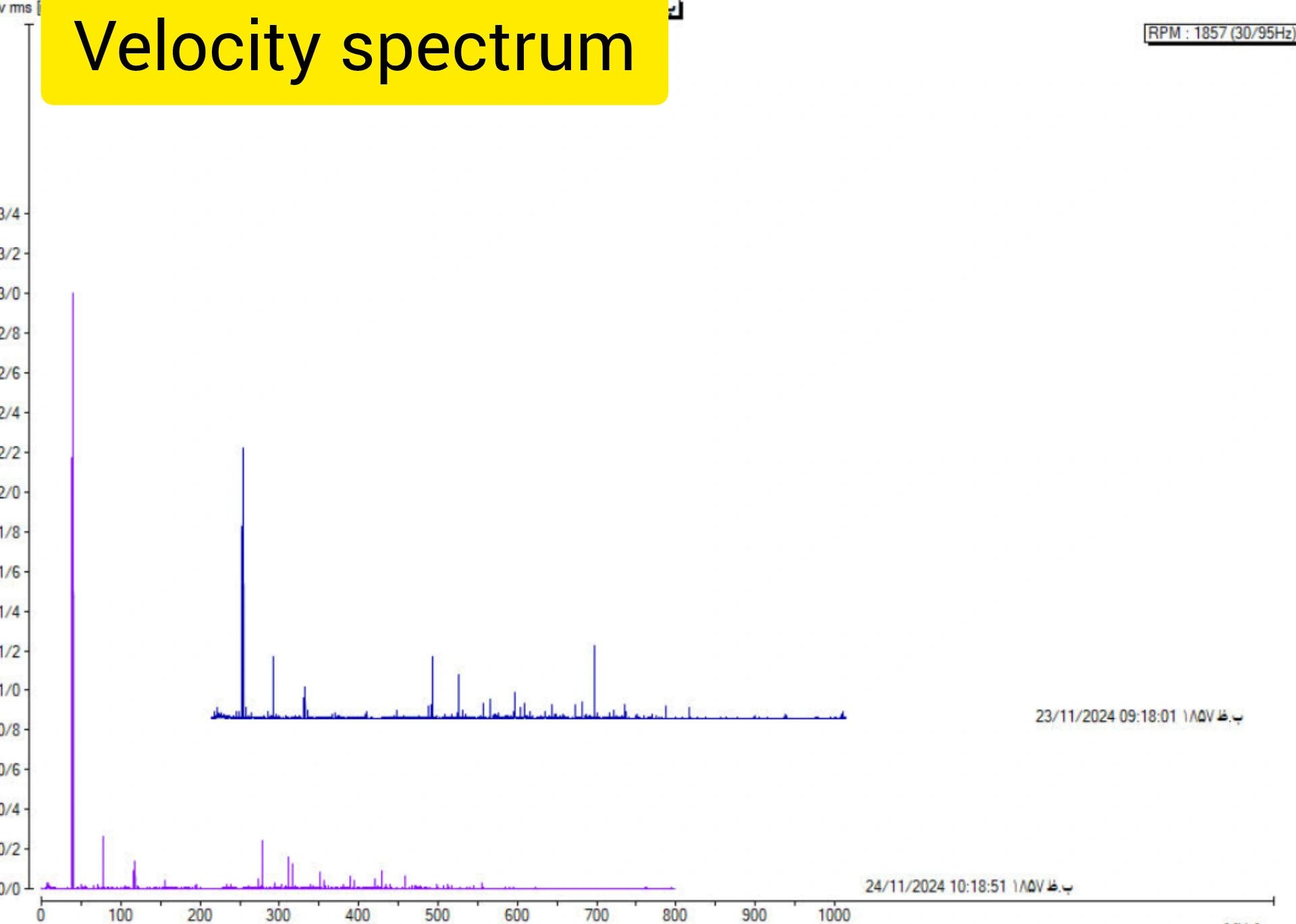
Alignment is often overlooked when diagnosing vibration issues, but its impact on machine dynamics can be significant. A recent case highlighted how precise alignment led to a dramatic drop in the envelope spectrum, while the velocity spectrum remained unchanged. Why did this happen?
Misalignment introduces fluctuating forces that create periodic loading on bearings and other components. These forces don’t always generate strong overall vibration but can excite localized stress patterns. These fluctuations lead to high-frequency modulations, which are captured in the envelope spectrum. Bearings, couplings, and even structural connections can experience uneven loading, amplifying vibration energy in higher frequency bands.
Once alignment is corrected, these forces are minimized, reducing bearing stress, contact irregularities, and energy transfer into high-frequency regions. This explains why the envelope spectrum showed a significant drop while the velocity spectrum remained relatively unchanged.
Alignment issues may not always manifest in overall vibration levels but can create subtle yet destructive forces that show up in high-frequency analysis. Monitoring envelope and acceleration spectra can reveal hidden alignment-related stress before it leads to severe damage.
Additional Images