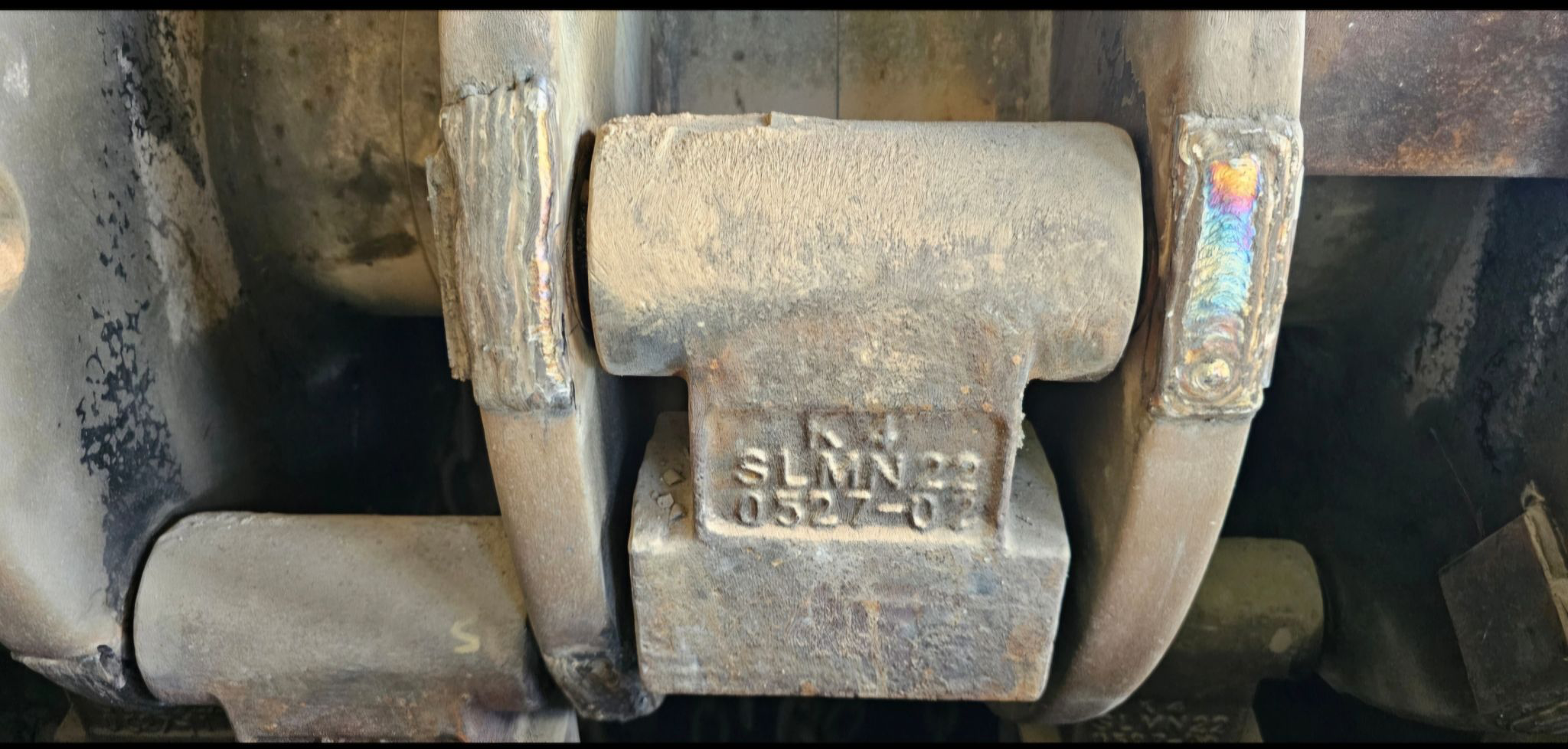
Vibration Analysis on a Clinker Hammer Crusher Drive – Blade Pass Frequency Detection
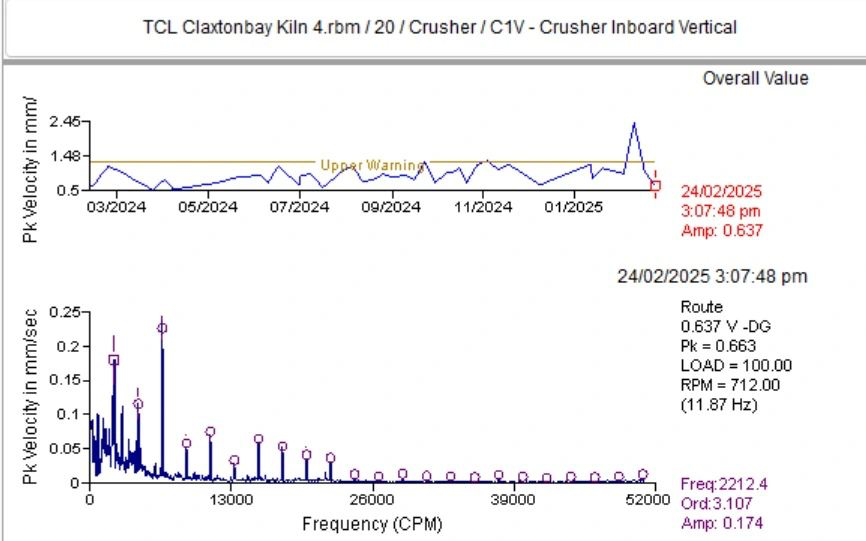
Vibration analysis on a clinker hammer crusher revealed a peak at 2212.4 CPM (36.87 Hz), corresponding to 3.107X running speed, likely indicating the blade pass frequency. Elevated BPF levels could signify hammer wear, imbalance, misalignment, structural looseness, material buildup, or uneven loading.
Vibration Analysis on a Clinker Hammer Crusher Drive – Blade Pass Frequency Detection
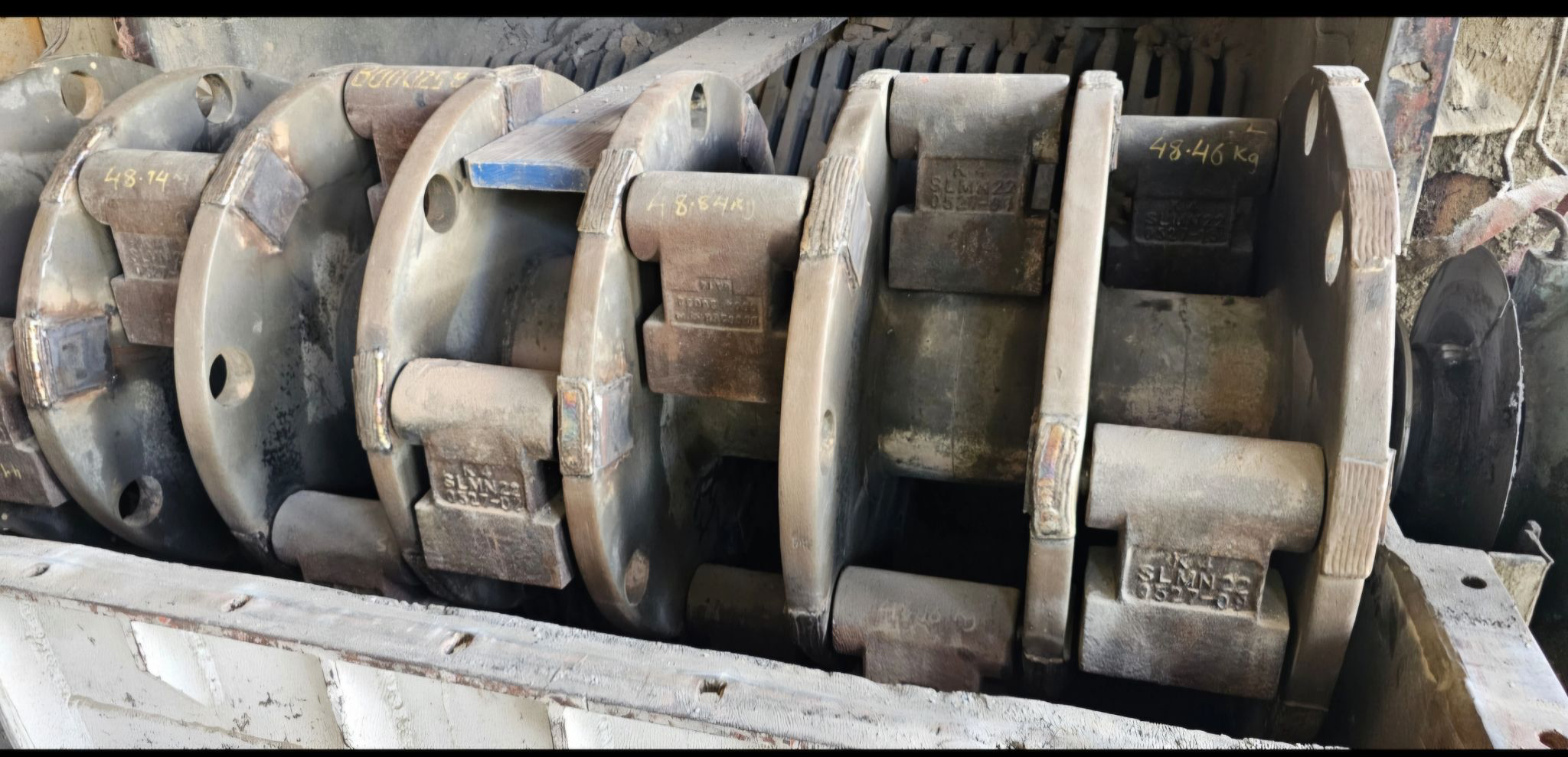
Recently, while analyzing vibration data on a clinker hammer crusher, we observed a peak at 2212.4 CPM (36.87 Hz), which corresponds to 3.107X running speed. Given that this is a hammer crusher, this frequency likely represents the blade pass frequency (BPF)—the rate at which hammers pass a given point in the crusher.
Key Observations:
✅ The running speed of the machine is 712 RPM (11.87 Hz)
✅ The detected frequency is approximately 3X running speed
✅ Blade pass frequencies typically occur at N × RPM, where N = number of hammers
Why This Matters:
Elevated BPF levels could indicate issues such as:
⚠ Hammer wear or imbalance
⚠ Misalignment or structural looseness
⚠ Material buildup or uneven loading
A deeper analysis, including phase checks and time waveform analysis, will help confirm the root cause.
What’s your experience with hammer crushers? Have you encountered similar vibration trends?
Additional Images