Resonance Catch by Frequency Response Function
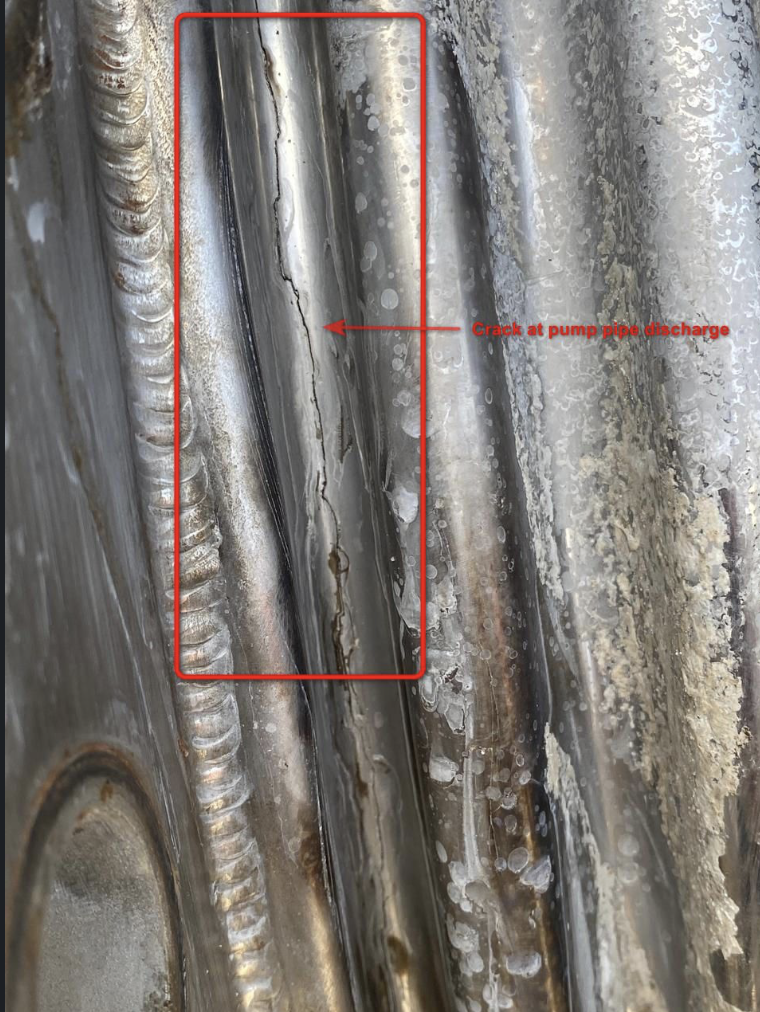
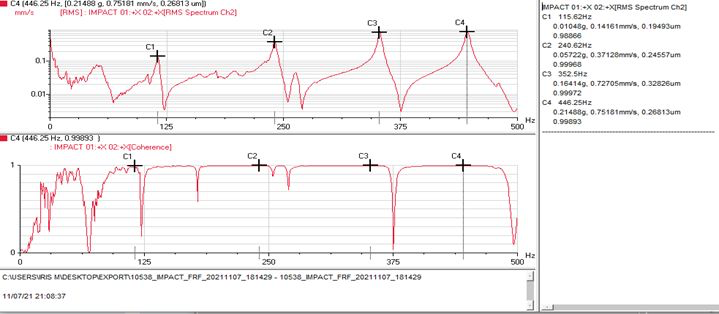
Severe cracks were found on the discharge pipe of a rotary lobe pump during inspection. A Frequency Response Function (FRF) test revealed resonance at 240 Hz, matching the pump’s force frequency.
Case Study: Frequency Response Function Test .
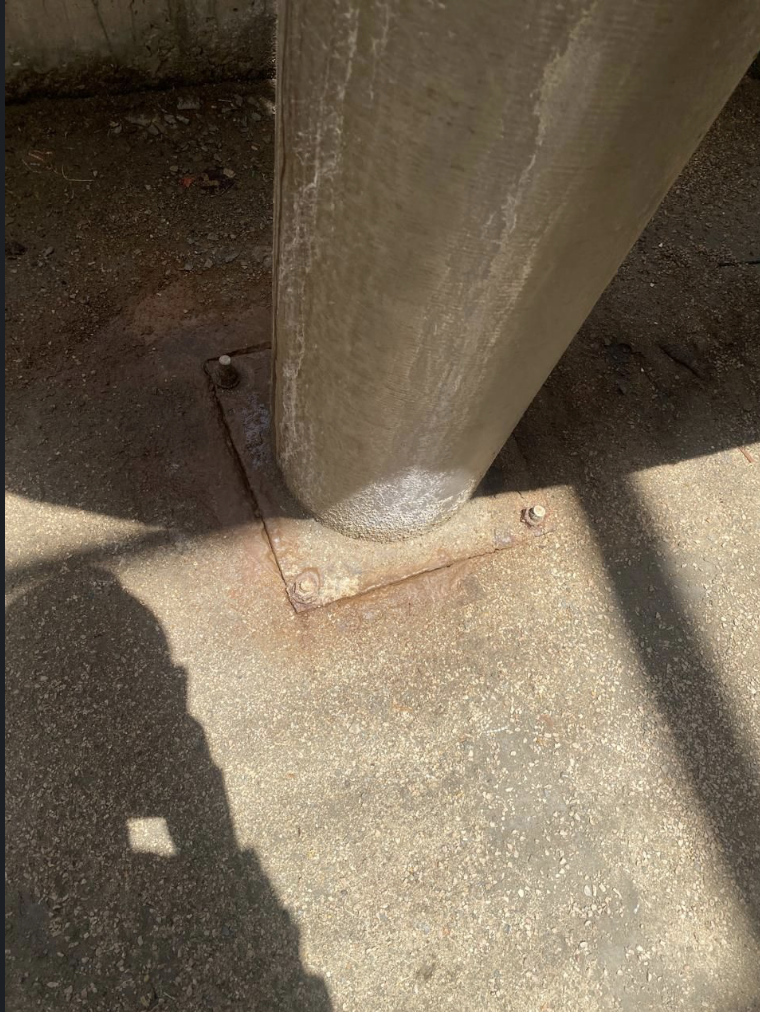
During a routine inspection of a rotary lobe pump, severe cracks were observed on the discharge pipe. The first question that came to my mind: What could cause such structural damage?
I conducted a detailed Frequency Response Function (FRF) test by using Acoem vibration analyzer to identify possible resonance or excitation frequencies. After completing several inspections, I performed FRF test (see the pic attached in the post).Key Findings from the FRF Test (Horizontal Direction): 1st Natural Frequency: 115 Hz, 2nd Natural Frequency: 240 Hz, 3rd Natural Frequency: 352Hz, fourth Natural frequency 446 Hz
Quick analysis comes at your mind is RESONANCE. !! Resonance with what? Which force frequencies are exciting the structure?
It is a Rotary Lobe Pump with 4 lobes
A rotary lobe pump speed 3600 RPM). !!
resonate at force frequency of 240 Hz . SEE the pipes cracks below !!
Additional Images