Preventing Critical Failure in a Paper Machine Guide Roll
Increased measurements on a paper machine guide roll bearing detected early signs of failure due to rising acceleration levels. The bearing was replaced during a planned shutdown, preventing a major failure and unplanned downtime.
Success Case: Preventing Critical Failure in a Paper Machine Guide Roll
Since January 14th, we increased the frequency of measurements on a guide roll bearing in a paper machine due to rising acceleration levels. We did not have online monitoring, so our condition-based approach was crucial in detecting early signs of failure. The roll was in a challenging location, hidden behind the frame, making maintenance complex. Replacing the roll also meant changing the wire, which was not yet at the end of its campaign.
The lubrication system used a rotameter, so as soon as we detected the first increase in acceleration values, we evaluated whether increasing the flow rate would be a valid action. However, the trend persisted, indicating that the issue was not related to lubrication alone.
The first warning came when acceleration reached 1.98 Gs, showing carpet delamination and peak deltas matching inner and outer race frequencies. The bearing in question was a CARB 2319 K C4. We continued tracking it until March 24th, when a sudden spike pushed acceleration to 3.24 Gs, entering a critical range where reliability could no longer be assured.
We extended operation until a planned shutdown on March 27th, when we decided to replace the entire roll—a better choice than changing just the bearings. Even though the wire had to be replaced, the savings from avoiding an unplanned failure justified the decision. The intervention was completed in 6 hours, while a functional failure could have caused 12 to 14 hours of unplanned downtime.
This was a great example of predictive maintenance preventing a major failure.
Have you faced similar challenges without online monitoring?
What were the root causes of failure in your experience?
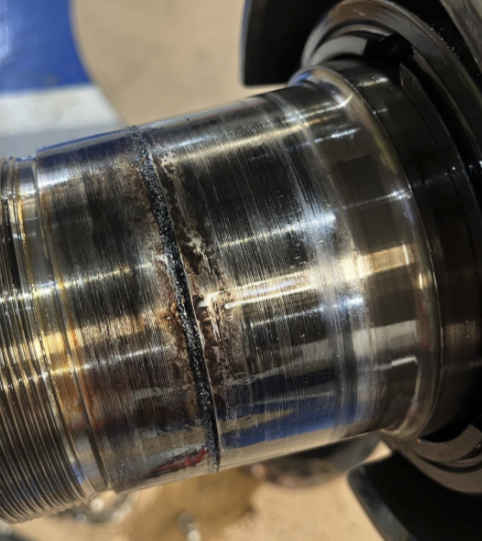
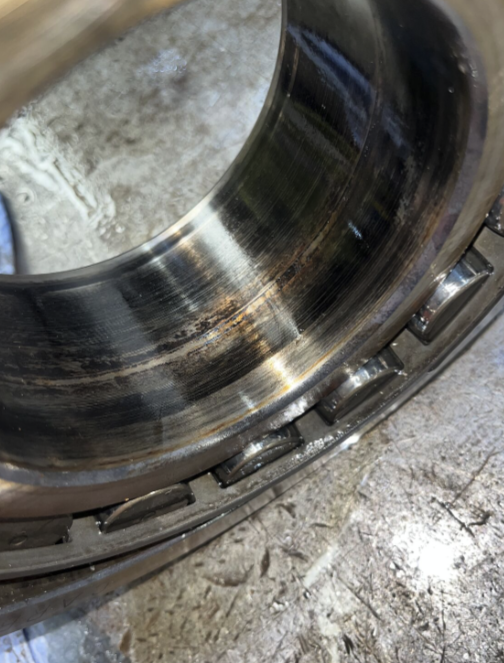
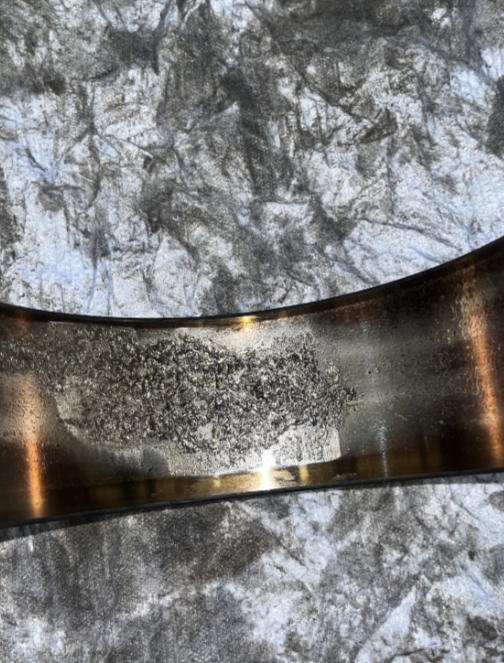
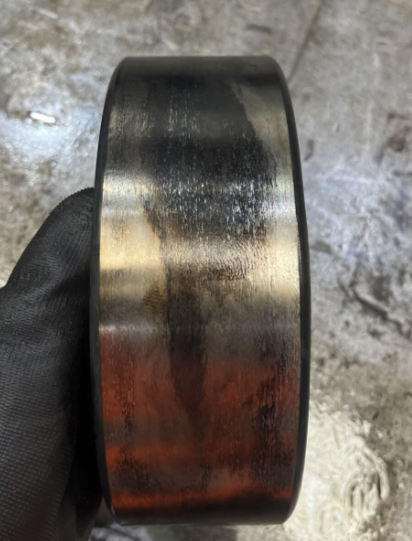
Here, we found misalignment, oxidation marks, excessive clearance, and significant housing damage.
Let’s discuss—what would you have done in this situation? Drop a comment and share your insights!
Additional Images