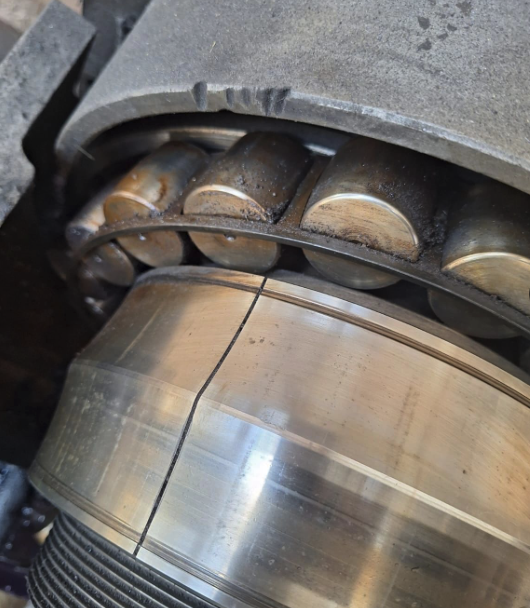
Boiler Draft Fan Bearing Failure
A boiler draft fan experienced bearing failure, prompting intensive analysis and monitoring. The SKF Enlight Collect IMx-1 sensor enabled automated daily monitoring, confirming the need for bearing replacement and ensuring operational reliability.
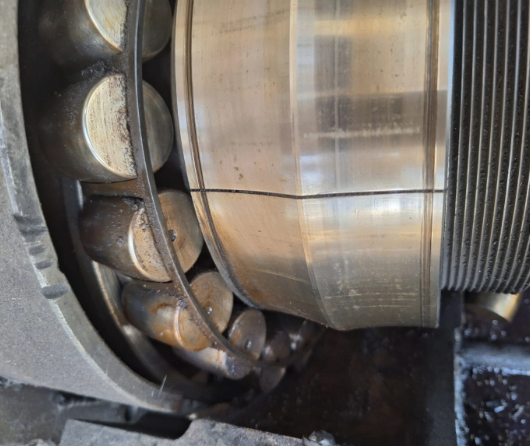
Success Story: Intensive Diagnosis and Monitoring of L.A. Bearing Failure
Context
A boiler draft fan experienced bearing raceway failure on the drive side (L.A.), causing abnormal vibrations that indicated accelerated wear and imminent risk of failure. This problem could compromise process efficiency and put plant operation at risk, making immediate action necessary to avoid unexpected downtime.
Intensive Action and Monitoring
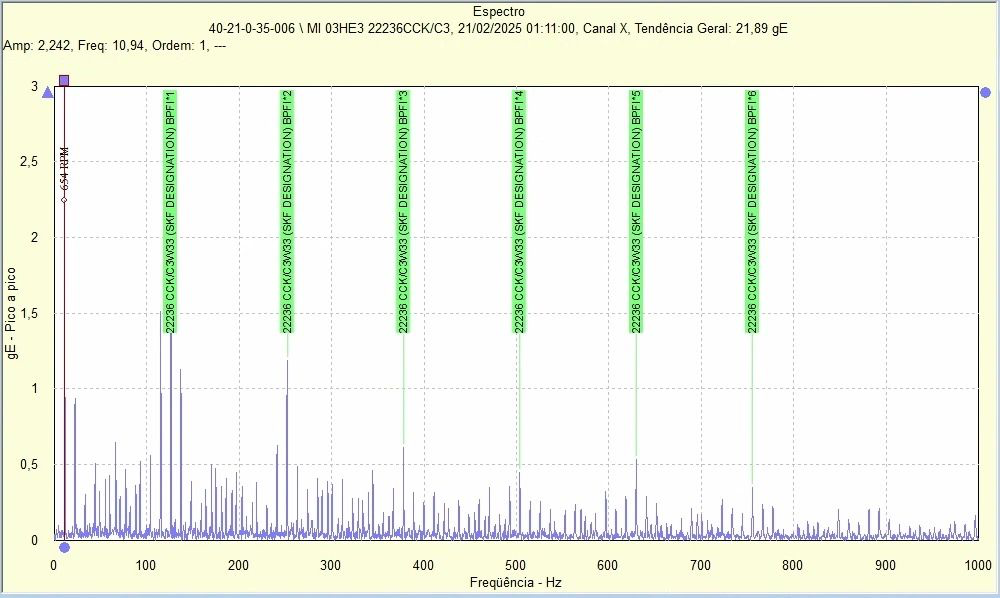
To ensure accurate diagnosis and continuous monitoring of the condition of the equipment, an intensive analysis of the fan vibrations was carried out, with special attention to the L.A. and L.O.A. bearings.
In addition to conventional measurements, the SKF Enlight Collect IMx-1 sensor was installed, enabling automated daily monitoring of bearing vibrations and temperature. Sensor technology has made it possible to continuously collect data, identifying abnormal vibration patterns and providing fundamental insights for decision-making.
Based on the data obtained, the need to replace the L.A. bearing was confirmed. After changing the component, the vibration levels were monitored again and proved to be within ideal standards, ensuring the normalization of the operation and eliminating the risk of additional failures.
Reliability of the Technique
Vibration analysis, combined with the use of SKF IMx-1, has proven to be a highly effective solution for the early detection of failures in critical components. Continuous monitoring made it possible to identify the problem before it became a catastrophic failure, avoiding high costs with emergency maintenance and ensuring the operational reliability of the plant.
This case reinforces the importance of intensive monitoring and the use of advanced technologies to ensure the integrity of industrial equipment, minimizing risks and optimizing the performance of the production process.
Additional Images