Fretting Corrosion
Fretting corrosion is wear and corrosion caused by repetitive micro-motion between surfaces, often due to vibration, thermal expansion, or cyclic loading. It manifests through vibration analysis and visual inspection.
Fretting corrosion is a form of wear and corrosion that occurs at the contact area between two surfaces subjected to repetitive, relative micro-motion.
- Relative Motion: The fundamental cause is small, oscillatory movements between contacting surfaces. These movements, often in the micrometer range, lead to repeated contact and separation.
- These micro-movements can be caused by:
1- Vibration.
2- Thermal expansion and contraction.
3- Cyclic loading.
- The presence of hard particles can act as abrasives, increasing wear rates.
Surface Roughness: Rough surfaces increase the likelihood of asperity interactions, leading to higher wear rates.
- Lack of Lubrication: Lubrication is a key protector from fretting corrosion. A lack of proper lubrication allows for the metal-to-metal contact that allows the fretting to occur.
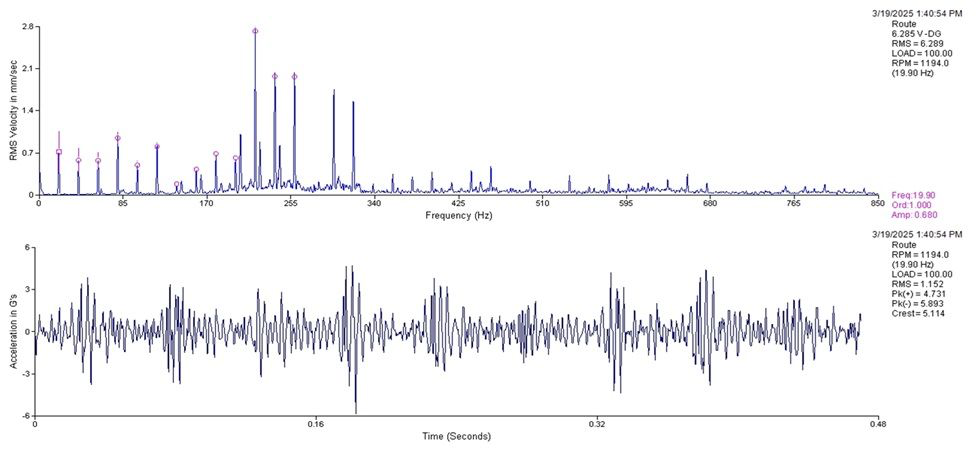
- The fretting Corrosion manifest itself through vibration analysis in a very clear symptom:
1- Multiple harmonics of rotating speed in the vibration spectrum.
2- Clear repetitive impacts in TWF with (1X) equally spaced.
3- PeakVue / Demodulation: Multiple harmonics of rotating speed.
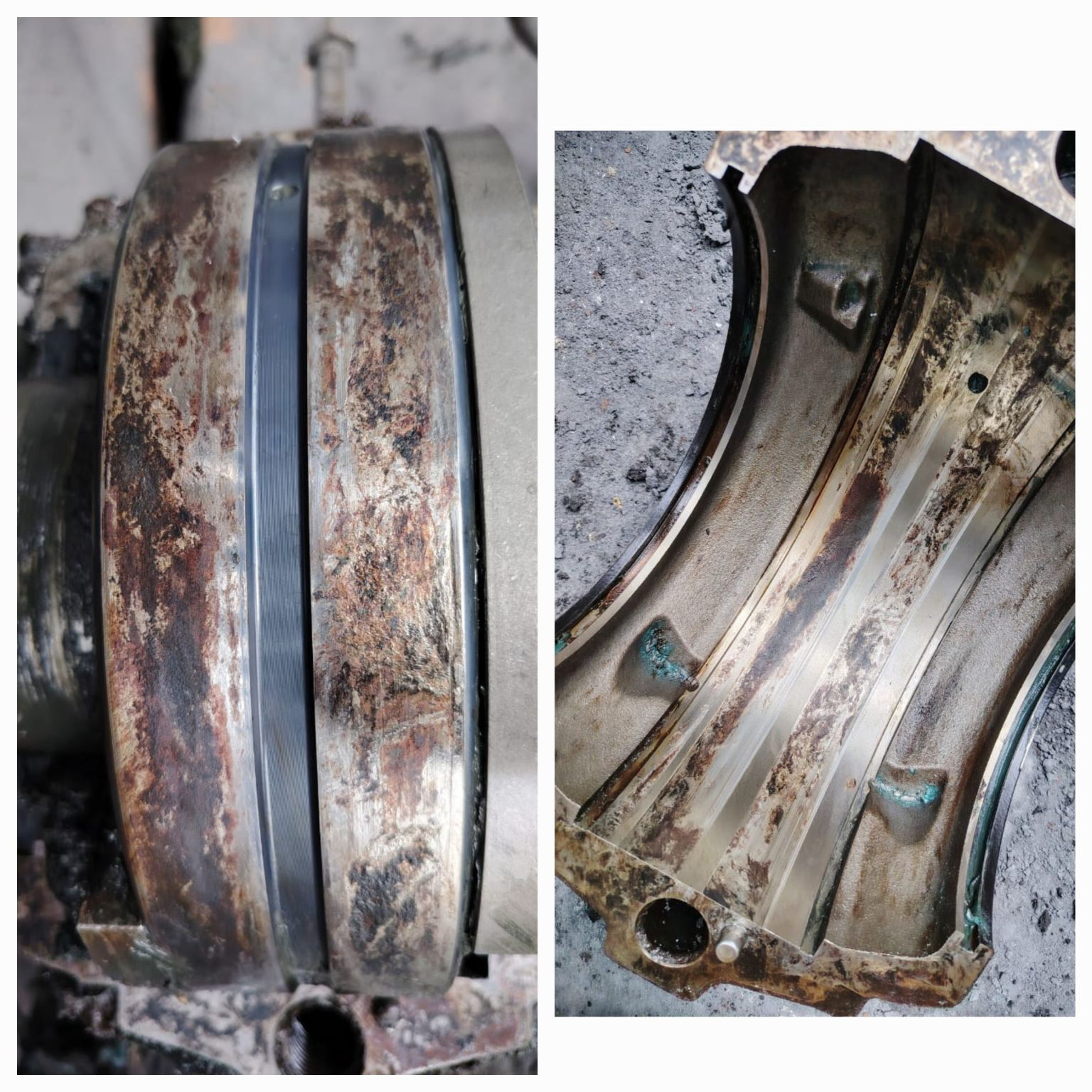
- Visual inspection will show random burnt area on the outer surface of bearing outer race and inner surface of Blummer Block.
Additional Images