Peeling Damage on Main Bearings
Peeling damage, a common main bearing failure, occurs due to insufficient lubrication, leading to metal-to-metal contact and micro-welding between rollers and raceways. To prevent peeling, increase lubricant thickness through manual or automatic lubrication systems, flush out old grease, and consider bearings with good wear and debris resistance.
Identifying Peeling
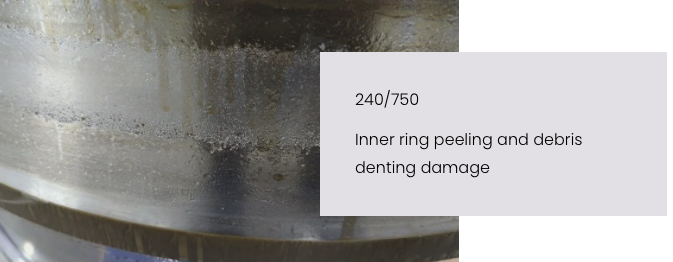
Peeling damage is one of the most common main bearing failures. It is one of the first failure modes that is seen when investigating a failed main bearing. It can be identified by the “frost” that starts on the inner or outer raceway. Below are some examples of peeling damage.
How does peeling happen?
Peeling occurs when there is not enough lubrication present in the bearing as it operates. The bearings lubrication thickness, represented by h, determines whether or not metal-to-metal contact occurs. The less lubrication you have, the more severe this contact becomes between the roller and the raceway.
When lubrication thickness is insufficient metal-to-metal contact occurs between the rollers and raceways
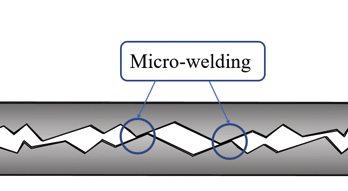
Because the manufacturer can never produce a perfectly smooth finish, varying size asperity peaks can meet and create a micro-welding effect. When the two surfaces meet due to the lack of lubrication, the high contact pressure on such a small surface area causes the points to “weld” together. As the roller continues its path along the race, it peels off a small piece of the race with it. These pieces of race will continually be removed, which leads to the visual indications of peeling as well as debris contaminating the remaining grease.
How do you stop peeling?
One of the best ways to stop peeling from occurring is to continue increasing the lubricant thickness. This can be done through manual lubrication or automatic lubrication systems. Flushing out old grease before lubrication separation or contamination occurs is also an important step that must be taken in order to avoid peeling damage. Another way to combat peeling damage is to install a main bearing that has good wear and debris resistance which will help it operate in non-ideal lubrication.
Once peeling damage starts in a bearing it can lead to debris denting and spalling and eventually a failed bearing. This is why it’s important to avoid the peeling damage in the first place. If you do find this damage best practice is to flush out all the contaminated grease and increase grease delivery to prolong life of the current bearing.
If you have any questions please call at 605-336-3693
Additional Images