Gearbox Failure with Motor Mechanical Loosenesss Case Study
Vibration analysis revealed structural looseness in the motor and a pitted/cracked/worn gear fault in the first stage of the gearbox. Recommendations include improving motor rigidity, monitoring gear fault trends, and preparing spare parts procurement.
Motor:
• 355 kW / 1294 RPM / 50 Hz
• Motor DE (Drive End) Bearing: 6322 C3
• Motor NDE (Non-Drive End) Bearing: 6316 C3
• Variable Speed: No
• Type: Horizontal
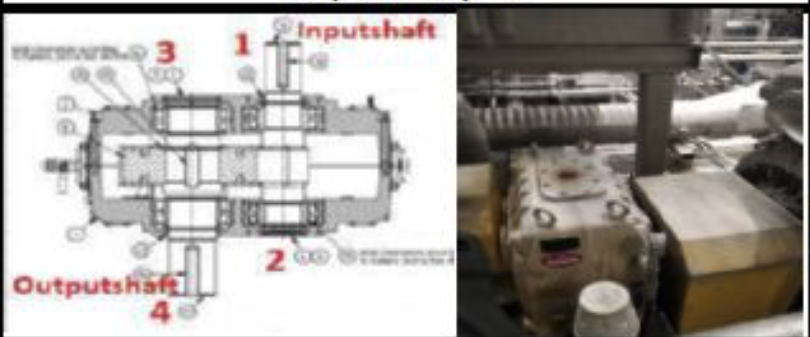
Gearbox:
• – kW / 337 RPM / Single Stage / 1:2 Ratio
• Input Shaft Outer Bearing: —
• Input Shaft Inner Bearing: 22315 C3
• Intermediate Shaft Upper Bearing: —
• Intermediate Shaft Lower Bearing: —
• Output Shaft Upper Bearing: 23220 C3
• Output Shaft Lower Bearing: —
• Output Lower Thrust Bearing: —
• Type: Horizontal
Vibration Analysis & Observations:
• Vibration measurements taken from the motor bearings show values of:
• 5.41 mm/s in the horizontal direction (Drive End bearing)
• 1.70 mm/s in the vertical direction
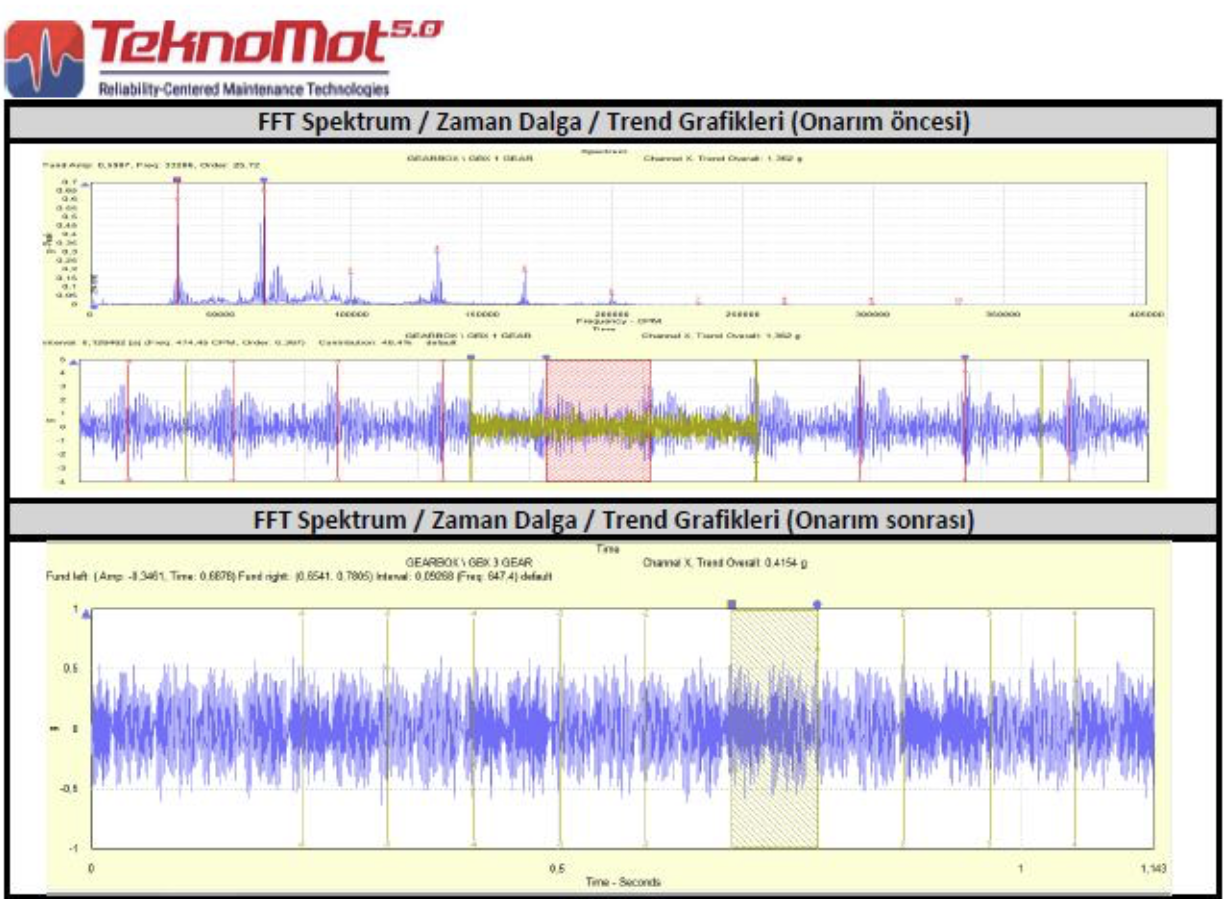
• On the 1st shaft of the gearbox, periodic impacts reaching up to 5.55 g (zero to peak) were observed in the acceleration time waveform.
Diagnosis & Findings:
• Structural looseness was detected on the front side of the motor in the horizontal direction.
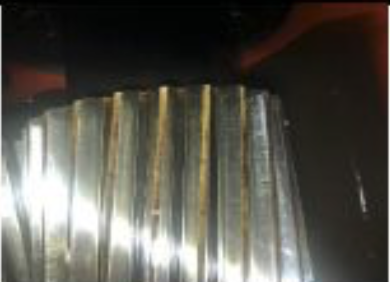
• A pitted/cracked/worn gear fault was identified in the first stage of the gearbox.
Recommendations:
• Due to the criticality of the equipment, as soon as possible:
• Improve motor rigidity by checking foot connections and foundation.
• Monitor gear fault trends through signal analysis.
• Prepare spare parts procurement accordingly.
• If a broken gear is present and the fault progresses, it may wear out other gears over time, potentially leading to unexpected shutdowns.
Probable Root Cause:
• Excessive shock loads caused wear, and moisture reactions on the gear surfaces have led to corrosion.
Additional Images