Detecting Pump Cavitation Through Vibration Analysis
Cavitation, caused by low liquid pressure and vapor bubble collapse, damages pumps and reduces efficiency. Vibration analysis can detect cavitation through high vibration values at 1X and 6X the rotational speed, a raised noise floor, and random energy bursts in the time waveform.
Detecting Pump Cavitation Through Vibration Analysis
1- What is Cavitation (Briefly)
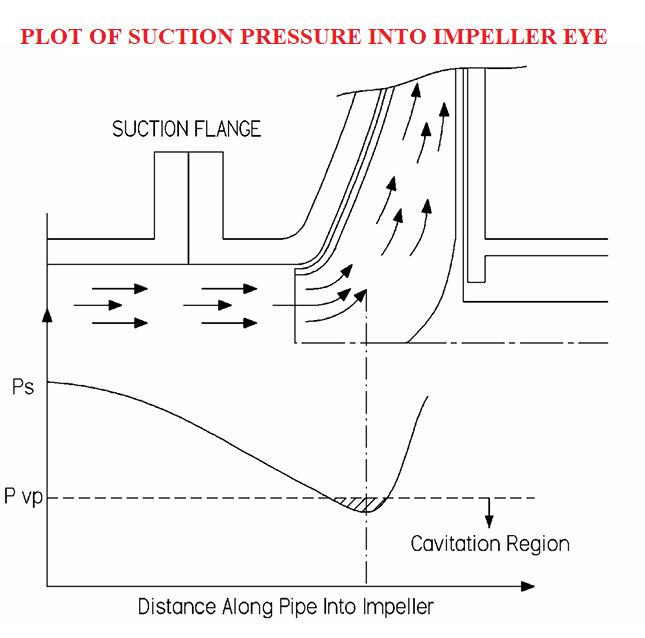
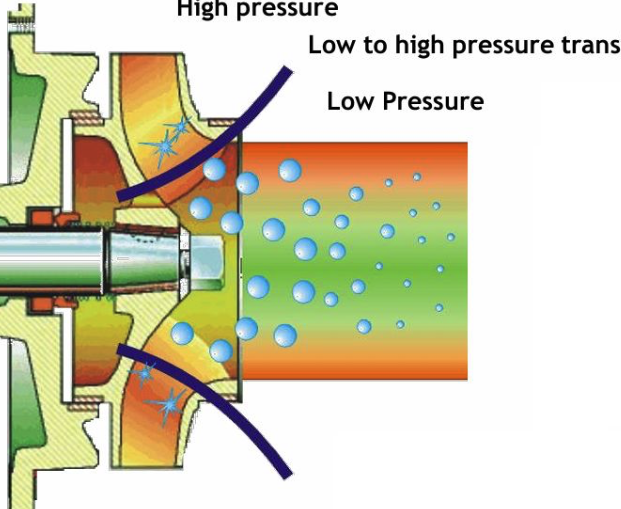
As liquid enters the impeller eye its velocity increases causing a reduction in pressure (Bernoulli's principle). If the liquid pressure falls too low, some of the liquid will vaporize forming bubbles entrained in the liquid.
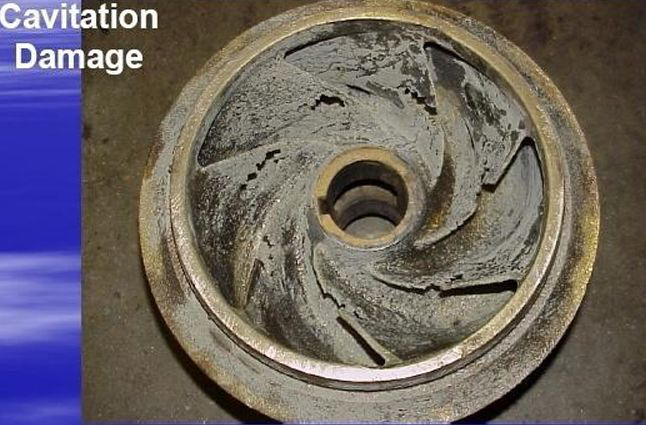
As these vapor bubbles move along the impeller vanes to a higher pressure area above the vapor pressure, they rapidly collapse.
Bubble collapses create intense pressure (10,000 psi) and shock waves on the impeller, which exceed the impeller material strength, resulting in surface fatigue and creating pitting on the surface.
The pressure required to operate a pump without causing cavitation is called net positive suction head (NPSH). The pressure head available at the pump inlet should exceed the NPSH required by a certain margin, which depends on the pump's hydraulic design. (You may read more about NPSHR, NPSH3, NPSHA, Suction Specific Speed, and NPSH Margin)
Cavitation is destructive to the pump and will lead to impeller damage, imbalance, bearing failure, shaft seal failure, loss of pump efficiency, noise, high vibration, etc.
2- Cavitation Detection Through Vibration Analysis
The high noise resulting from cavitation can be identified as if the pump is pumping gravel. However, vibration analysis may be used to confirm cavitation.
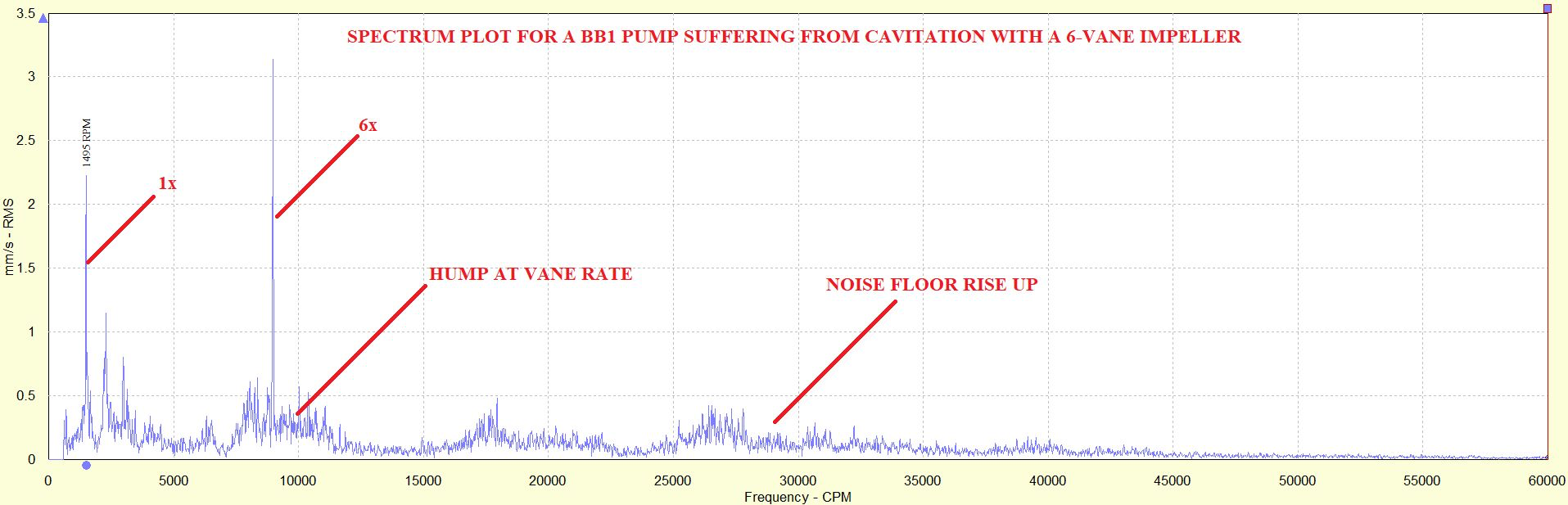
As shown in the spectrum and time waveform plots for a BB1 pump with a 6-vane impeller suffering from cavitation, the following can confirm the pump cavitation:
1- High Vibration Values at 1X (Rotational Speed) and 6X (Vane Rate): The high vibration at the vane rate can be related to any flow or hydraulic issues at the pump. Vane rate can be simply described as for every one shaft revolution the number of times the impeller vane will hit the fluid. Hence, the cavitation is due to bubbles collapsing with high intense shock waves, so for every shaft revolution, the bubbles will collapse n times (depending on the number of vanes), causing high vibration values at this specific frequency.
2- The noise floor will raise at the vane pass frequency, as well as at high frequencies due to resonance excitation.
3- Time waveform (Acceleration vs Time Plot) will show random bursts of energy. It's recommended to record vibrations to cover 10 seconds, as energy bursts could be 1-3 seconds apart
Additional Images