Root cause analysis of Bearing failure of the ACC helical two-stage gearbox
This article discusses the root cause analysis of the ACC helical two-stage gearbox's repeated bearing failure. It analyzes the failure with ISO 15243 and includes the vibration spectrum, TWF, and bearing failure pattern.
Bearing failure of the ACC helical two-stage gearbox
Gearbox data:
ACC Fan gear box Equipment Name
MACC08 Gearbox Type
750/1500 RPM Speed
Weg Motor type
6.6 KV Power
IMS: 30230, 32318.
LSS: 32036X, 32318.
HSS: 33217, 32314 BRG For gearbox
DE: 6319 C3, NDE: 6316 C3 BRG for motor
Vibration analysis:
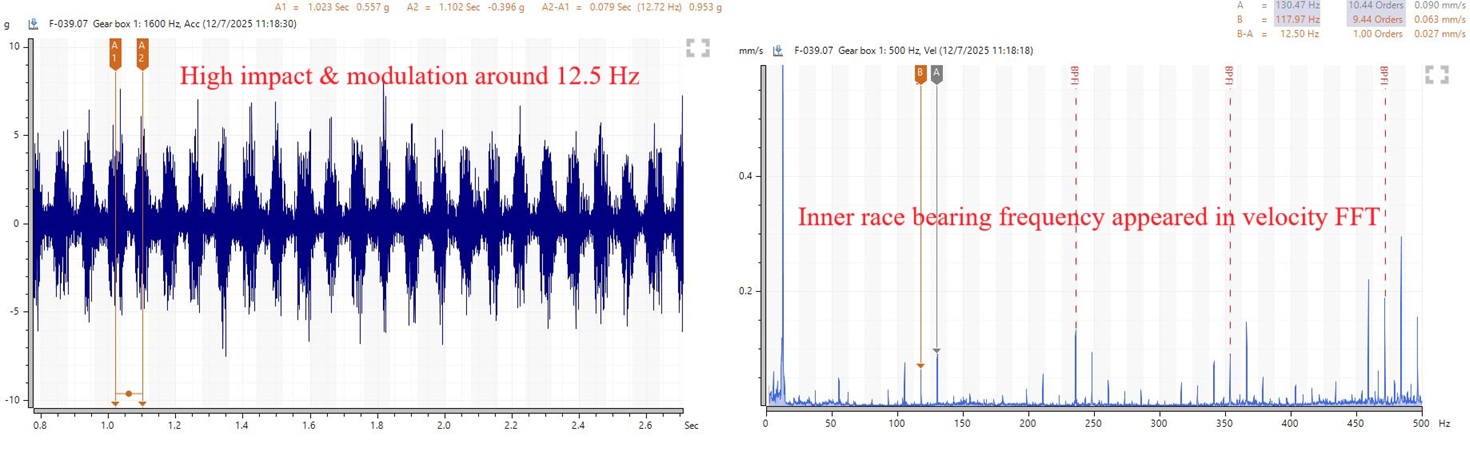
High impact & modulation around 12.5 Hz
Inner race bearing frequency appeared in velocity FFT.
Finding:
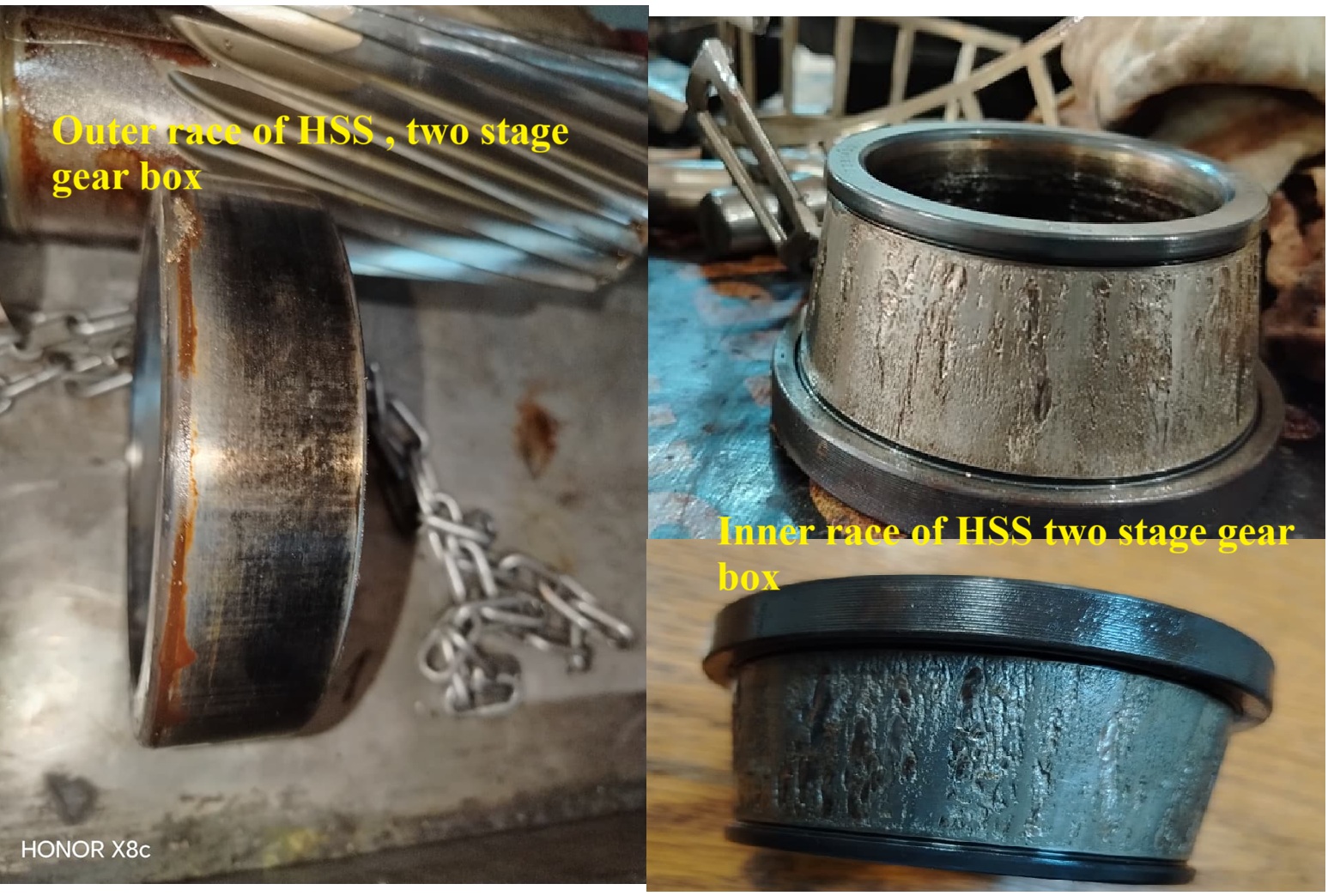
After the gearbox opened, we found the lower bearing inner race of HSS damaged and outer races burnt.
Visual Inspection:
The teardown inspection revealed severe surface damage on both the inner and outer bearing races. The raceways showed extensive spalling and pitting, characterized by flaked material and rough, fractured surfaces rather than smooth wear. The inner race exhibited a large, spalled area within the primary load zone, while multiple pitted regions were observed on the outer race. This damage is typical of rolling contact fatigue and indicates an advanced failure stage, suggesting the bearing continued operating after defect initiation. Metallic debris was present in the oil, and the race surfaces were dull and rough, consistent with degraded rolling contact and progressive vibration increase.
Most Probable Root Causes as ISO 15243:
Inadequate Lubrication / Lubricant Distress:
Lubrication issues are a common cause of bearing failure and are likely a contributing factor in this case. Although ISO VG 220 oil is generally suitable for gearbox applications, inadequate oil supply, improper viscosity at operating temperature, oil degradation, or contamination can lead to insufficient lubrication. Loss of the oil film results in metal-to-metal contact, increasing contact stress and initiating surface fatigue. Additionally, contaminated oil containing wear particles or dirt can cause abrasive damage and surface-initiated spalling. Overall, insufficient or degraded lubrication likely accelerated bearing surface damage and fatigue failure.
Contamination and Cleanliness Issues:
Contamination is a critical contributor to bearing failure. Metal wear particles, dirt ingress, or inadequate filtration can introduce abrasive debris into the lubricant, damaging raceway surfaces and disrupting the lubrication film. These surface defects act as stress concentrators, promoting early fatigue cracking and spalling. Poor contamination control, often linked with lubrication deficiencies, is therefore a likely root cause of the observed bearing damage.
Excessive Load or Duty Cycle Stress:
Operation beyond design limits, such as excessive torque, shock loading, or frequent start–stop cycles, can impose stresses exceeding the bearing’s fatigue limit and accelerate spalling. High loads combined with marginal lubrication further increase damage by reducing oil film thickness and promoting metal-to-metal contact.
Preload and Installation Corrections:
Bearing housing and shaft fits should be inspected for defects, and the replacement bearing must be installed using proper tools and procedures to avoid preload or damage., Correct bearing type and internal clearance must be ensured to accommodate thermal and operating conditions, thereby preventing uneven loading and premature spalling.
Structural Resonance or Vibration Amplification
It is less likely because the structure does not preserve vibration and the ACC fan construction includes a vibration protection sensor.
The failure was likely caused by a combination of causes. Lubrication and contamination issues, together with probable wrong preload, resulted in localized high loads that caused surface fatigue. As the damage advanced, increased vibration and dynamic loading accelerated bearing degeneration, leading to rolling contact fatigue failure.
Most Probable Root Causes as ISO 15243 assessment comparison:
Potential Cause Failure Mechanism Typical Indicators Relevance to this Case Assessment
Inadequate Lubrication / Lubricant Distress Insufficient or degraded oil film causes metal-to-metal contact, leading to high contact stress and surface fatigue (spalling). Spalling on raceways, elevated vibration, metallic debris in oil, and increased temperature. ISO VG 220 oil was used, but evidence of surface fatigue and debris suggests possible oil degradation, poor delivery, or film breakdown. Low likelihood
Contamination and Cleanliness Issues Abrasive particles damage raceway surfaces, create stress raisers, and initiate surface-initiated fatigue and spalling. Pitting, abrasive marks, early spalling, contaminated oil, and filter loading. Presence of metallic debris and spalling patterns strongly indicates contamination contributing to fatigue initiation. High likelihood
Excessive Load or Duty Cycle Stress Loads exceeding the bearing fatigue limit accelerate subsurface and surface fatigue; the oil film collapses under high stress. Accelerated spalling, high vibration, and damage at load zones. Gearbox operates at high speed with possible transient or shock loads; combined with lubrication issues, this could accelerate failure. Medium likelihood
Preload/Improper Installation Incorrect fits or preload cause uneven internal load distribution, edge loading, and localized high stresses. Localized spalling, abnormal wear patterns, and shortened bearing life. After checking the bearing clearance of the HSS, we found that it should be +0.5 to +0.10 mm, but it is compression -.05 mm, indicating the incorrect preload for this type of bearing. High likelihood
Structural Resonance or Vibration Amplification Resonance amplifies dynamic forces acting on the bearing, increasing fatigue damage. Broad vibration amplification, resonance peaks, and looseness symptoms. Considered less likely due to ACC fan design and presence of vibration protection sensors; no indication of sustained resonance. Low likelihood
Corrective action:
• Implement routine oil analysis to monitor contamination, viscosity, and wear debris.
• Ensure proper oil flow to bearings and clean oil passages.
• Confirm correct bearing type and internal clearance for the bearing application and adjust as OEM.
• Include bearings in a regular vibration condition monitoring program.
Eng. Ahmad Alfakeer, Mechanical Maintenance & Reliability Engineer with expertise in vibration analysis, VA CAT III, UT CAT I, ARP A, E, ATMA, and AMB.
Additional Images