Screw Compressor Bearing Failure Case Study
A client’s screw compressor experienced high vibration levels, causing repeated tripping. Despite limited technical information, a vibration analysis identified a bearing cage issue, leading to a recommendation for replacement.
🔎 Case Study: Screw Compressor Vibration Issue
One of our clients requested a vibration survey on their screw compressors. They reported that one unit was repeatedly tripping due to high vibration levels.
📊 The challenge:
While taking vibration measurements, the compressor tripped several times.
I requested the control room to bypass the vibration trip for a few minutes to capture accurate data.
Another difficulty was the lack of technical information: I only had the motor speed (1500 RPM) but still needed rotor speeds, gear ratios, and bearing details to complete a precise diagnosis.
⚙️ Initial findings:
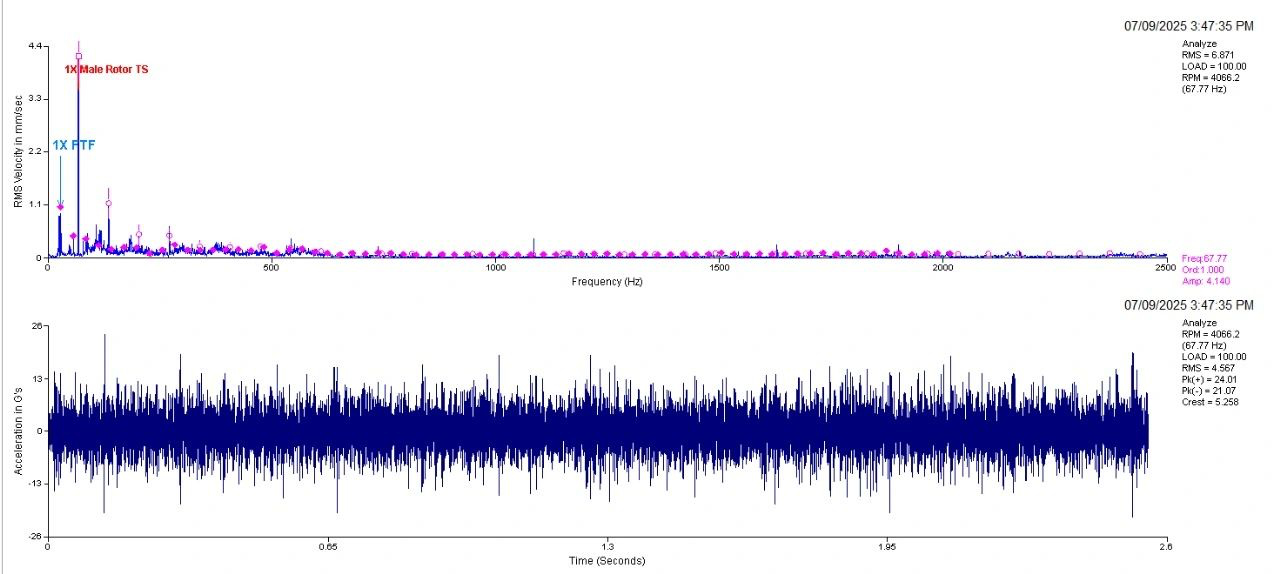
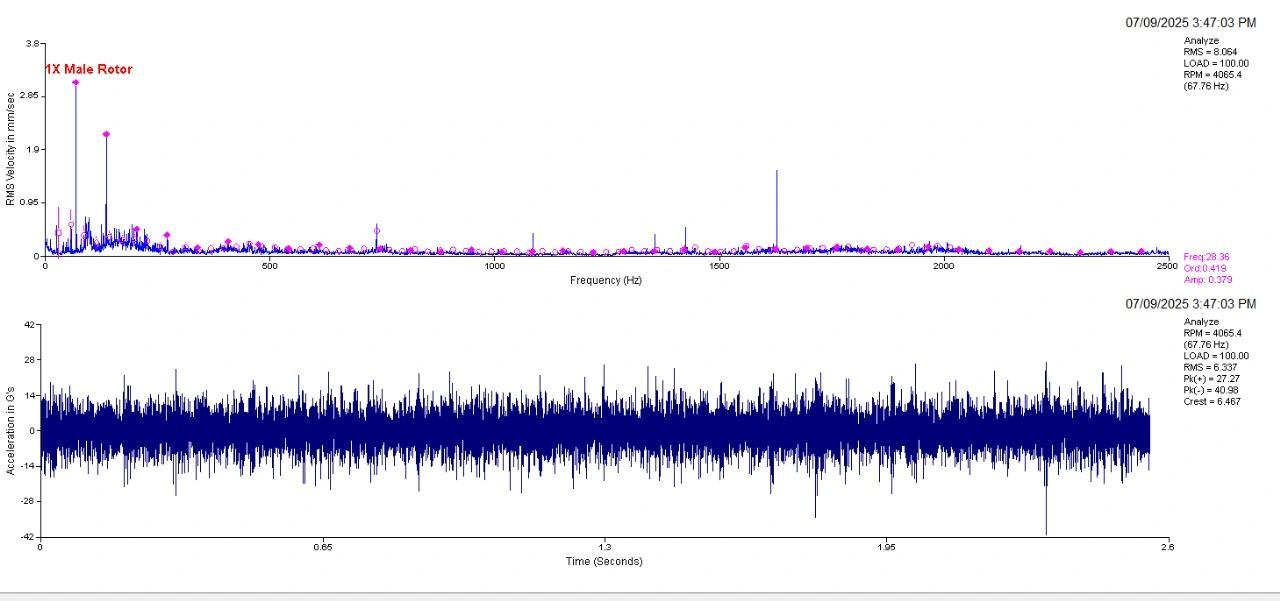
Normal spectra revealed a component at 67 Hz with several harmonics. I assumed this was related to 1X Male Rotor TS.
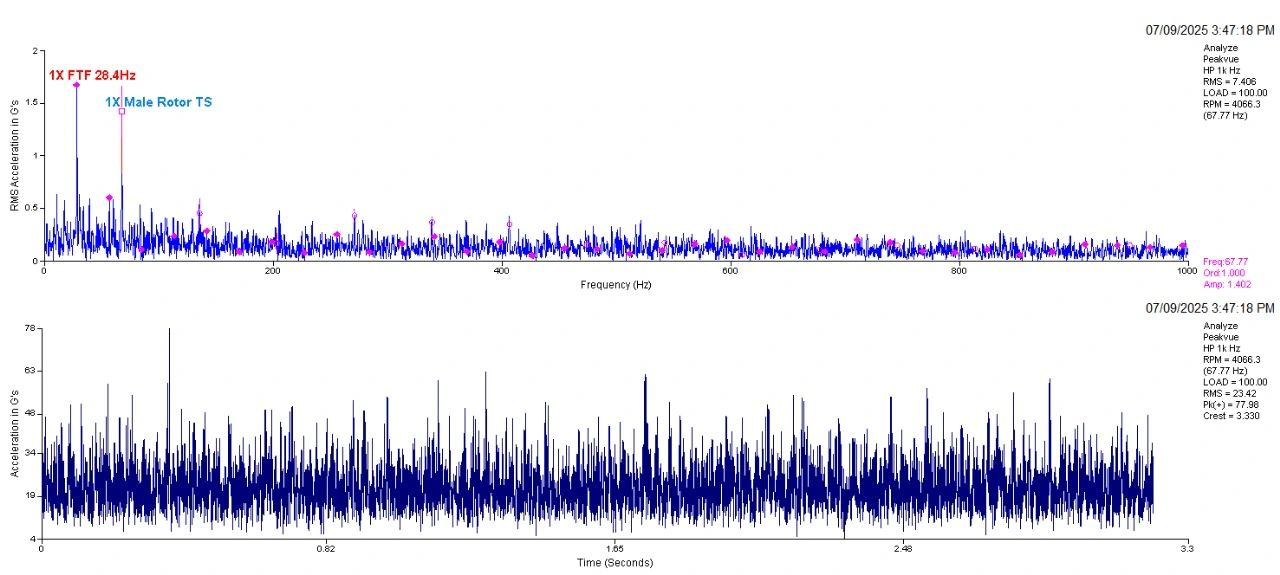
Using Emerson AMS PeakVue™ technology spectra revealed a non-harmonic component at 28.4 Hz, which is about 0.42X of Male TS, possibly pointing to the Male Rotor bearings 1X FTF.
📑 Next step:
To confirm, I contacted the compressor manufacturer and obtained:
Gear ratios (LSS & HSS)
Rotor speeds (Male: 4061 RPM / 67.6 Hz, Female: 2678 RPM / 44.6 Hz)
Bearing details and locations
This confirmed my assumption:
✅ 28.4 Hz matched the Male Rotor 1X FTF, with an amplitude of 1.7 G’s.
🔧 Recommendation:
I advised the client to replace the bearings at the nearest opportunity.
📌 Outcome:
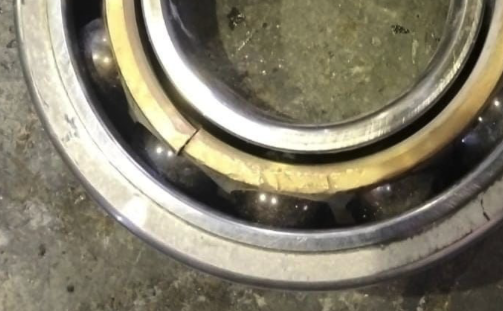
A few days later, the client reported back: after opening the compressor, they discovered a broken bearing cage – confirming the diagnosis.
Key takeaway:
Even when machine data isn’t fully available, careful analysis combined with validation from the OEM can lead to an accurate diagnosis and prevent unexpected failures.
In your experience, what are the most likely root causes that can result in a bearing cage breaking under such conditions?
Additional Images