Gearbox Input Pinion Damaged Teeth
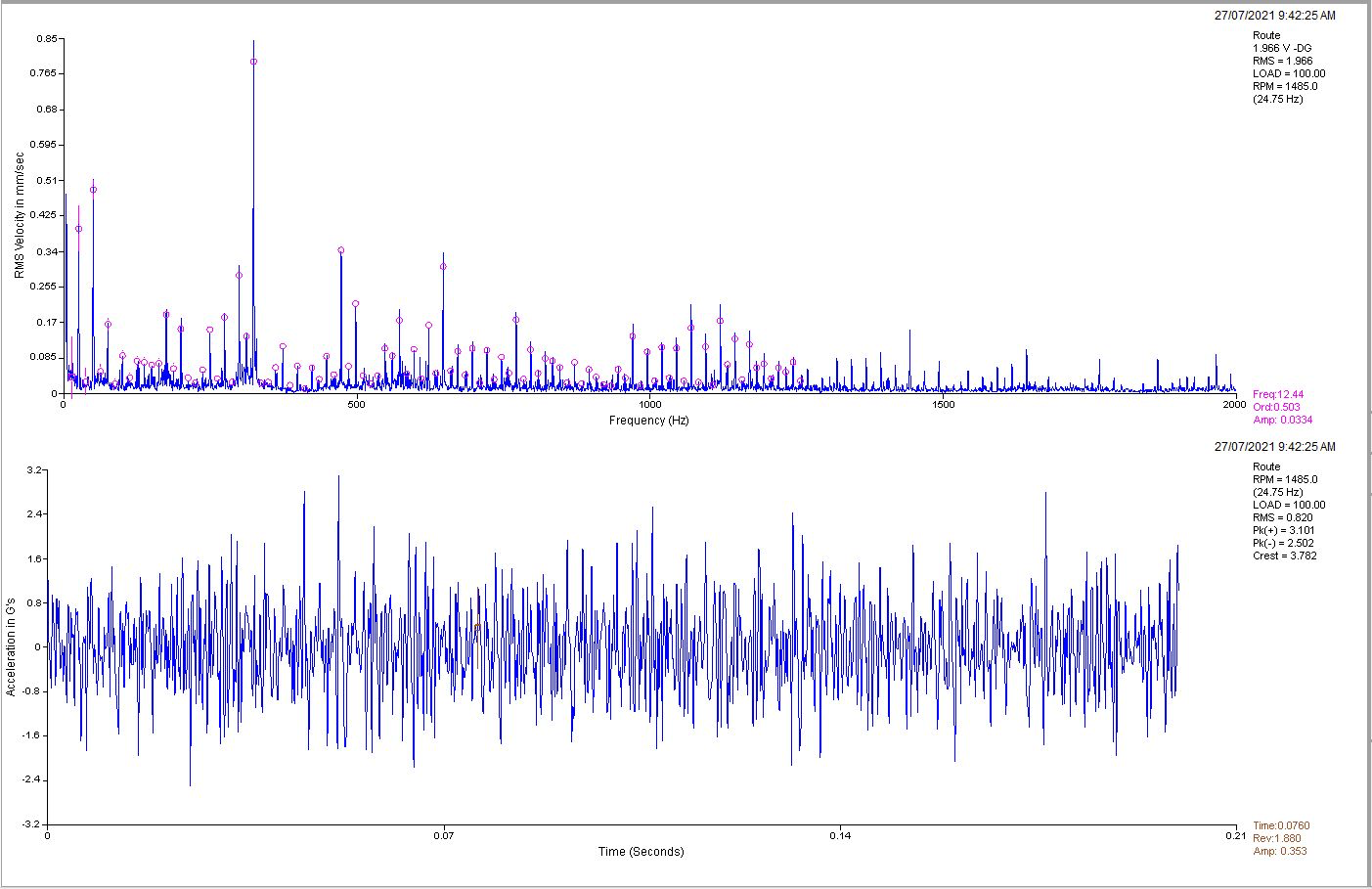
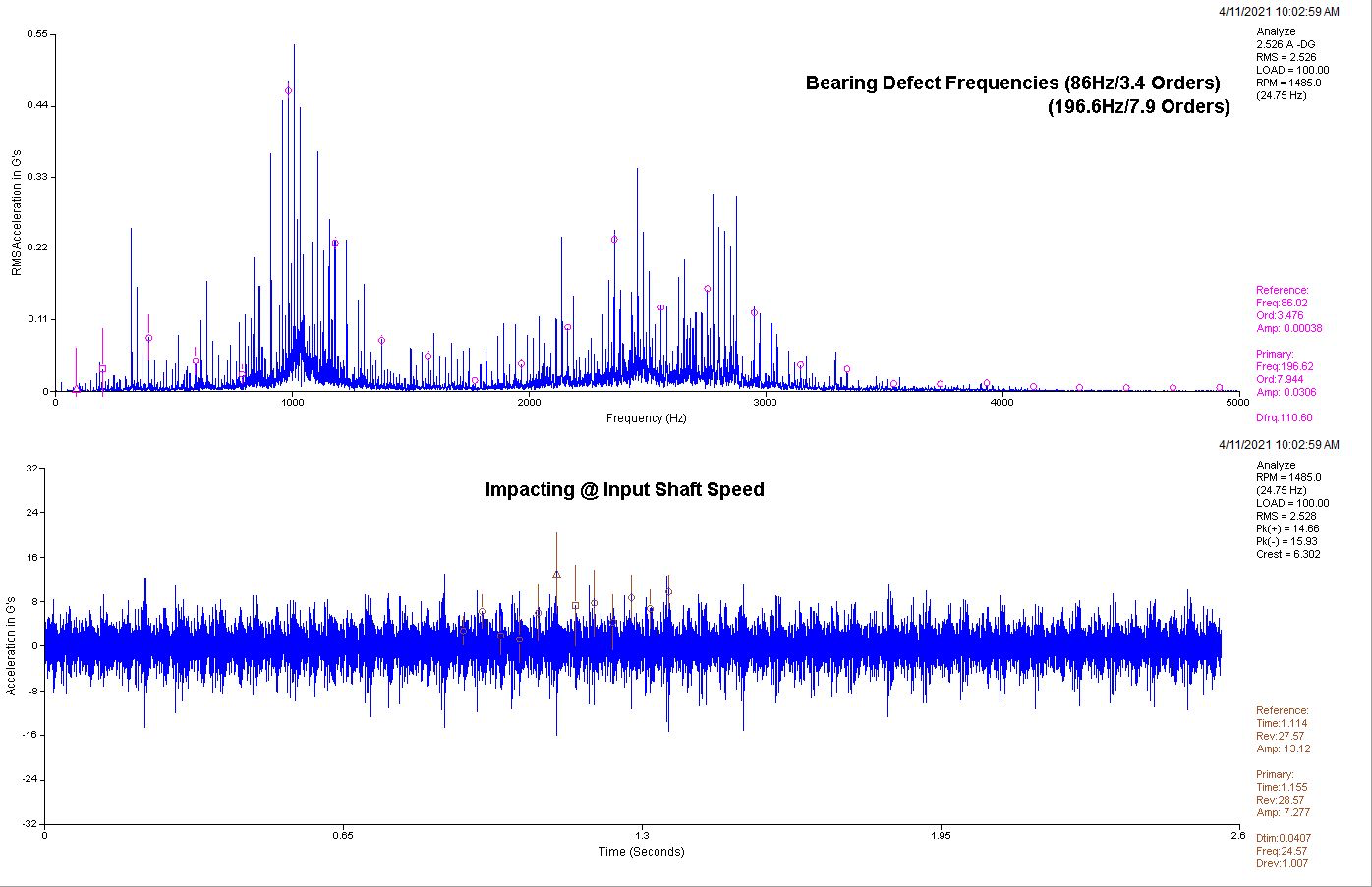
Vibration data indicated potential issues with the gearbox, leading to an offline inspection that revealed excessive wear and damage on the input pinion and mating gear teeth. The importance of utilizing multiple techniques for machine condition assessment is emphasized, highlighting the value of offline inspections despite their resource-intensive nature. The root cause of the damage is uncertain, with low oil viscosity being a potential contributing factor.
Gearbox Input Pinion Damaged Teeth
The vibration data been concerning to me for some time, Initially I didn't think the amplitudes were particularly high but the spectrum features (0.5x & 1x Harmonics & Dominant GMF) were concerning to me. As the fault developed, the amplitudes reflect the fact there was an issue. It also didn't help that oil analysis results didn't indicate any wear issues, however there was intermittent issues with low oil viscosity!
I pushed hard for an offline mechanical inspection (Gear inspections, lift checks, coupling checks). I wasn't sure what would be visible but I could give advice based on what I knew the vibration COULD mean. (Particularly Rotating looseness & damaged gears).
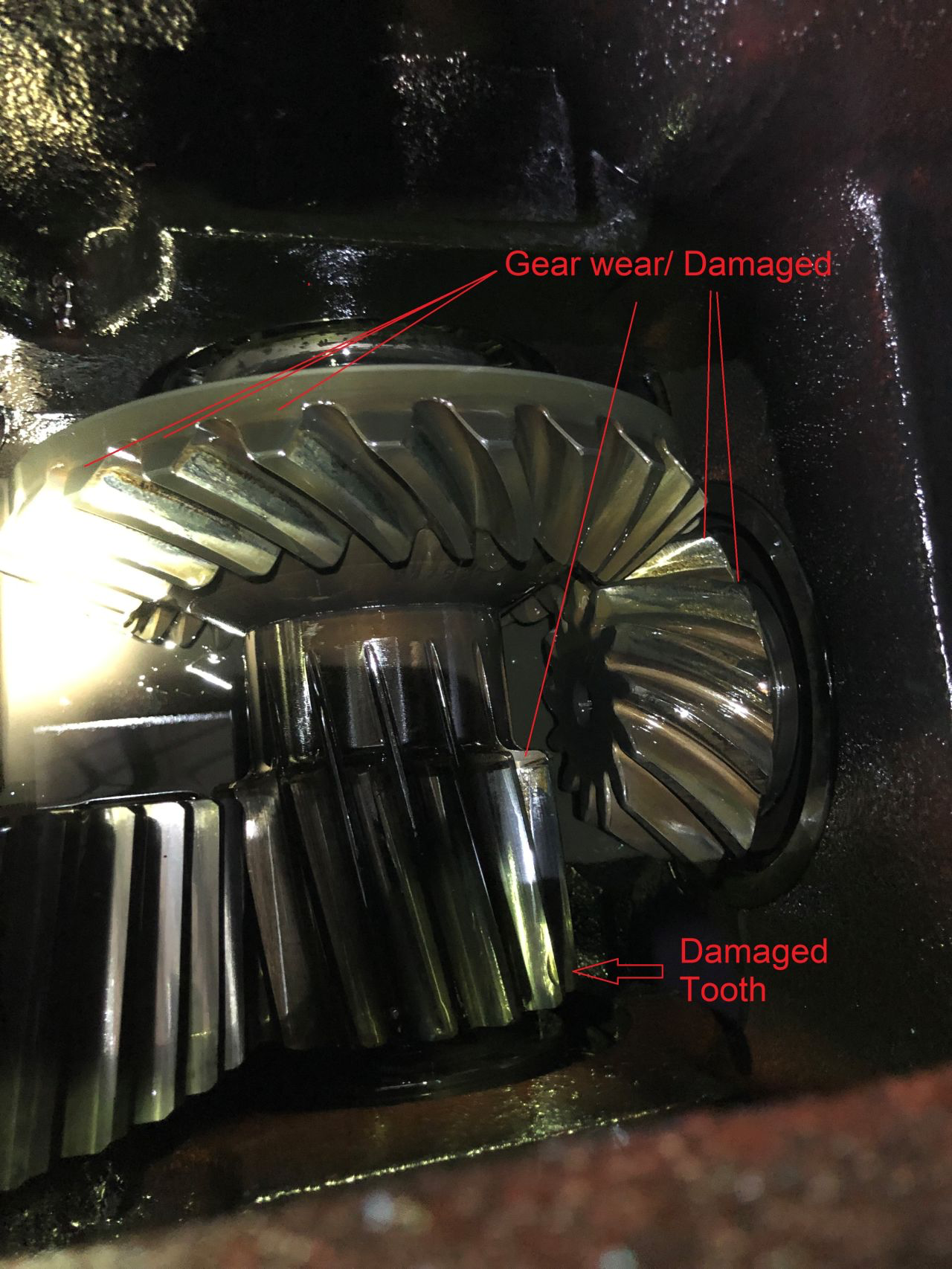
Inspection of the gears through the top of the gearbox yielded useful results. Excessive wear/Damage was identified on all input pinion gearteeth. Similar damage was visible on most teeth of the mating gear. the 2nd shaft pinion also shows excessive wear and what appears to be a chipped tooth! (could be a result of the image quality my apologies) The gearbox has been sent away and I'm eagerly awaiting additional feedback from the overhaul process, particularly the condition on the bearings.
My biggest take away from this event is the importance of utilising multiple techniques to determine the condition of our machines. While routine vibration monitoring is unintrusive and can be conducted during operation we don't know 100% what the condition is.
An offline inspection takes alot of resources and pulls personnel away from other maintenance activities, so you want that inspection to yield results! You won't get results like this every time and each time you open these components you risk of contamination and component damage. However, unlike our vibration data, when you can see/feel/smell a fault it gives a much better idea of severity.
Sure, we could lift bearing caps and inspect gears routinely but I'd say 90% of the time you won't find anything and as I previously mentioned this is taking resources away from other maintenance tasks that could be improving the reliability of our assets.
Using condition monitoring and making decisions based on condition is the key. Thankyou for reading. I'm keen to hear your thoughts. Whats the root cause? How can we prevent this happening to our assets? Is it as simple as the highlighted viscosity issues?
Additional Images