Belt Driven Fan Bearing Fault
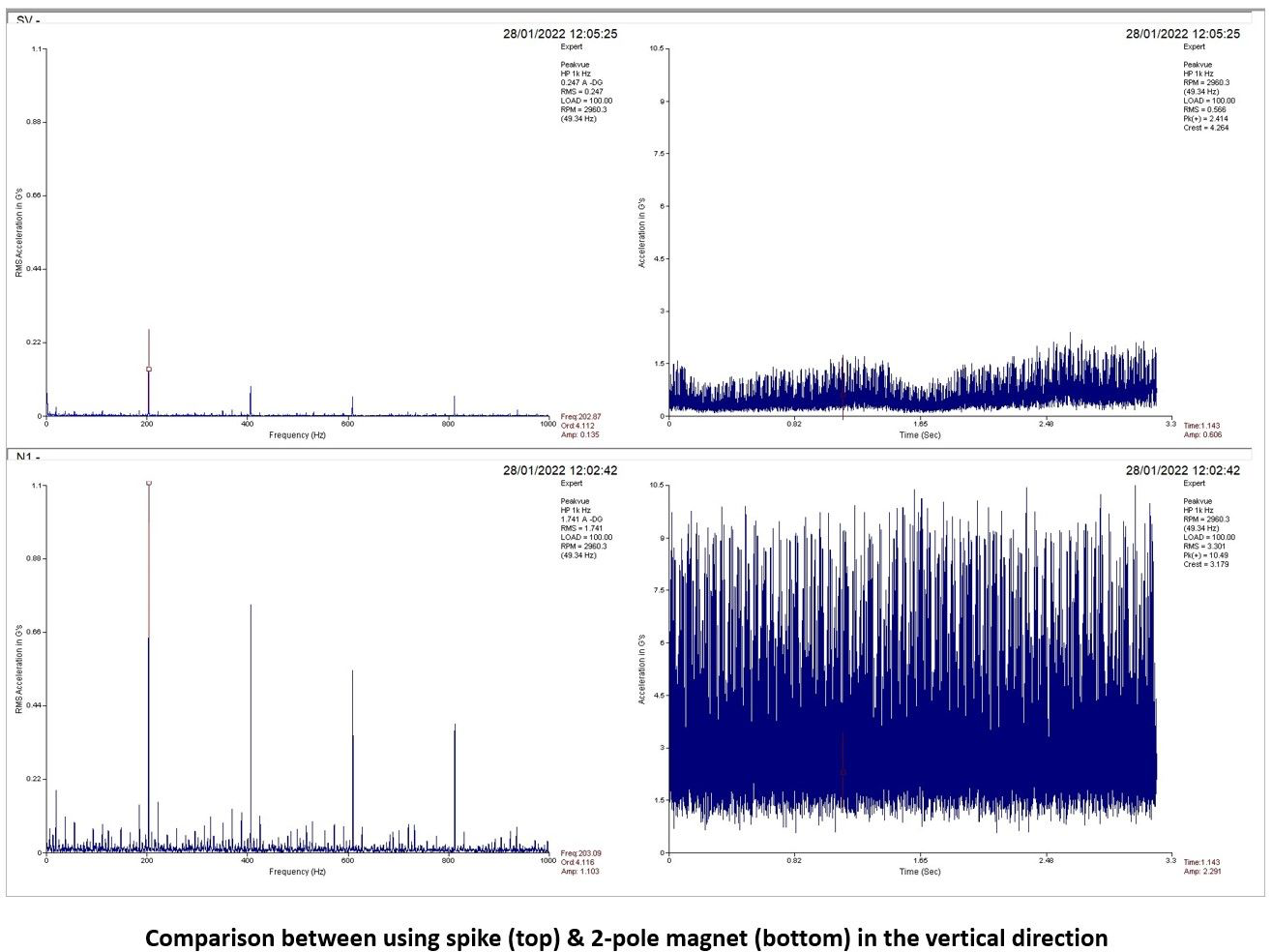
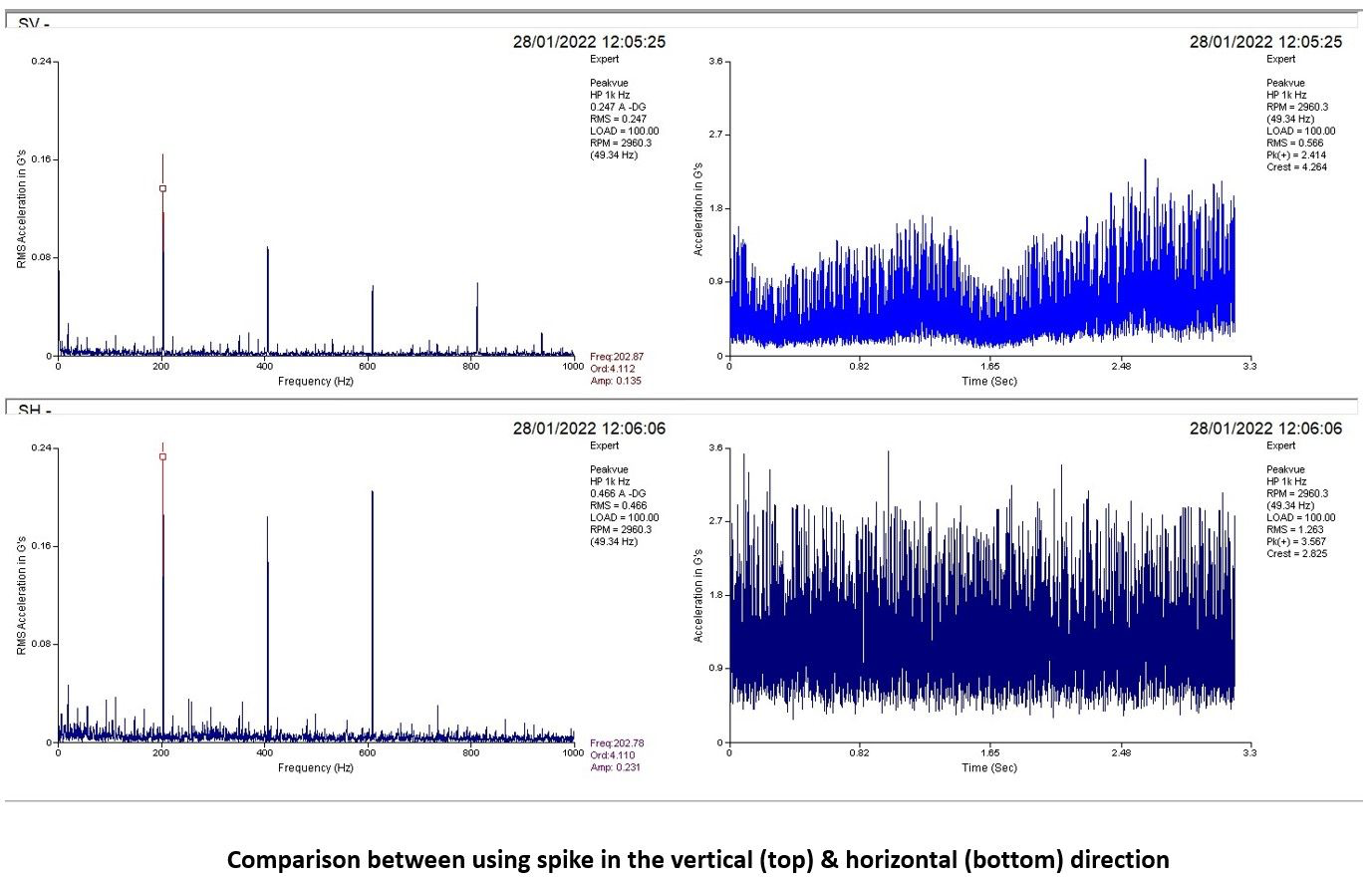
An experiment was conducted to compare the impact of mounting type, measurement axis, and Peakvue pre-filter on data quality for condition monitoring and vibration analysis. The results highlighted the significance of a good mechanical transmission path and proximity to the load zone, with mounting type having the most substantial impact on data quality.
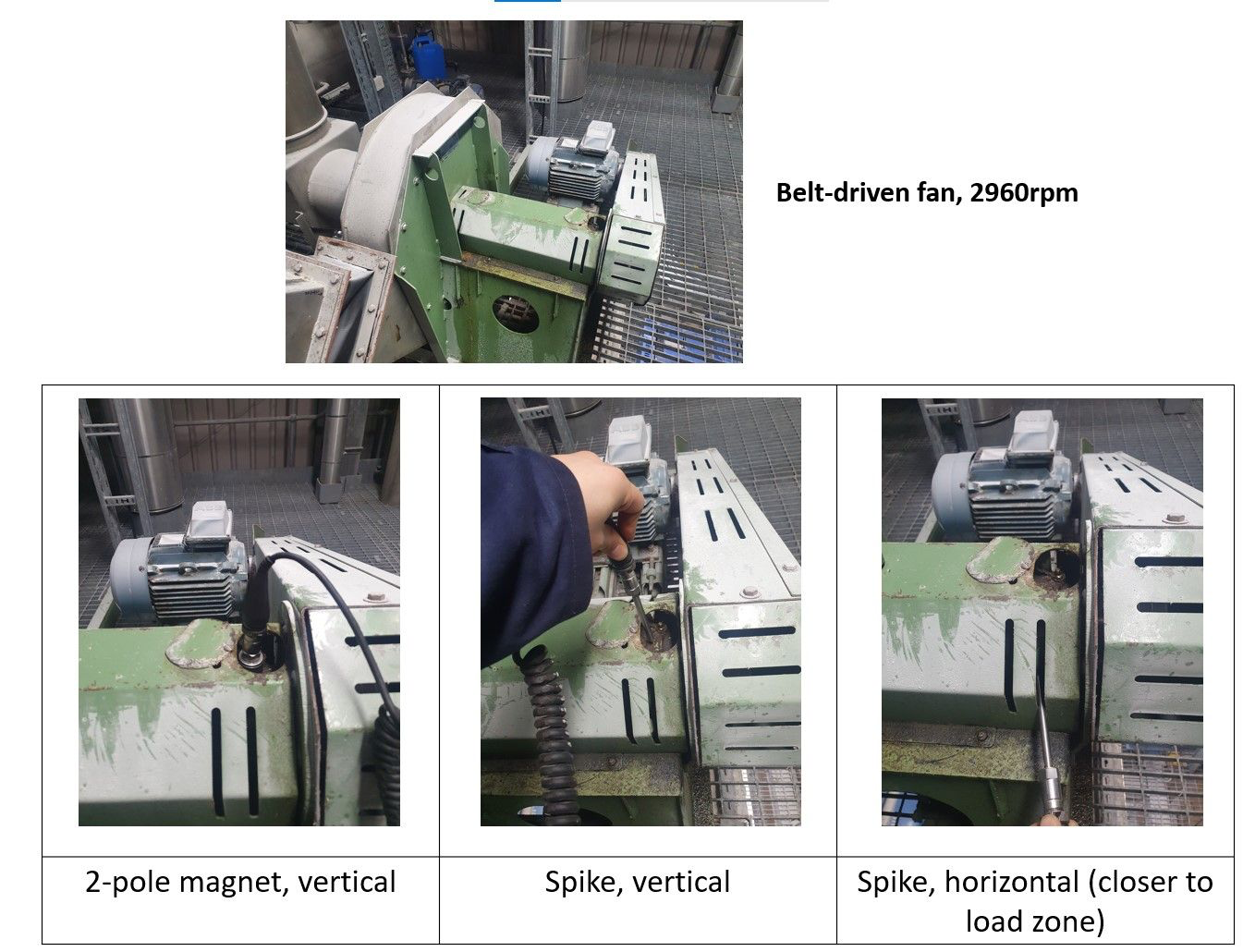
The importance of having a good mechanical transmission path is always emphasised on in #conditionmonitoring / #vibrationanalysis data collection. So I thought to carry out a little experiment at site when I came across a potential #bearing defect / lubrication-related issue.
Variables:
1. Mounting type - 2-pole magnet vs Stinger probe / Spike
2. Measurement axis: Horizontal (spike only, no access for magnet) vs vertical, on top of the housing
3. Peakvue pre-filter: 1kHz vs 2kHz
Also shown is how the feature #Peakvue Plus can help to illustrate the degree of potential mechanical (bearing) faults and/or lubrication issue on the spot.
Results are summarised below where we can appreciate the importance of having a good mechanical transmission path as well as getting close to the load zone. Quality data is fundamental after all in the decision-making process in any hashtag#reliability and hashtag#maintenance strategy.
Noticeable difference between horizontal and vertical location as well as the Peakvue prefilter used, but the most significant change comes from the mounting type (from 2g to 10g Pk as seen in the waveform)
Feel free to add to this little experiment or correct where necessary!
-snuck in an amazing cloud inversion view en route to site to add colour to the post :) near a village called Sabden, Lancashire
Additional Images