Compressor Bearing Water Contamination
A compressor operating at 3500rpm exhibited high vibration levels, primarily from the input shaft. Analysis revealed water contamination as a likely contributing factor to the premature failure of the angular contact bearings.

These bearings came from a compressor operating at ~3500rpm. Site contacted me for a callout saying there was a noise coming from the electric motor.
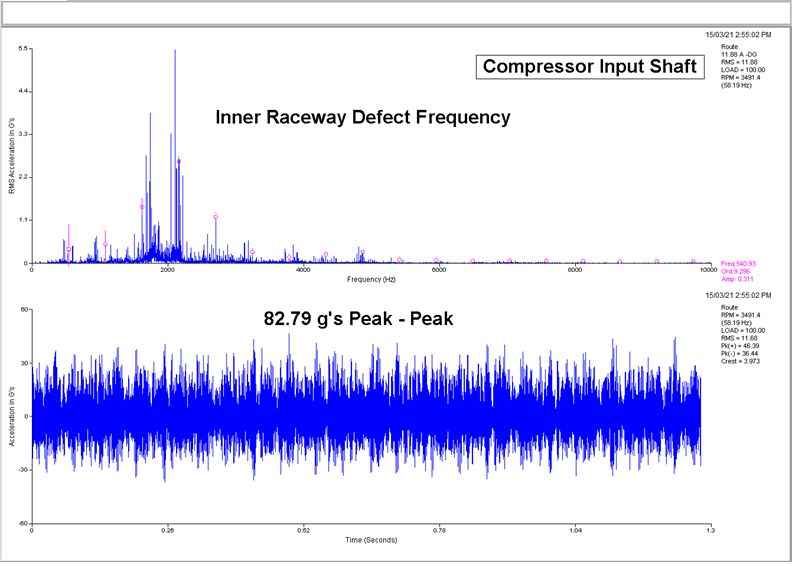
Started by completing a full survey of the machine and noticed the highest energy was infact coming from the input shaft of the compressor. A whopping 82.79 g's! Using the fault frequencies in the 2140 I was able to identify the BPFI in the spectrum.
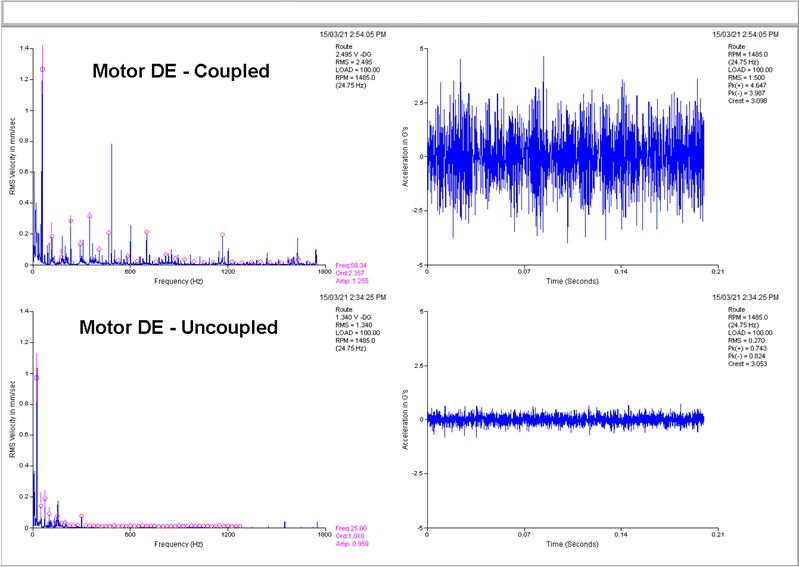
Knowing this compressor was belt driven I recommended we drop the belt to see what happens to motor vibration when uncoupled (Image 3). Quite clearly shows the waveform energy, compressor shaft speed and bearing frequencies decrease significantly.
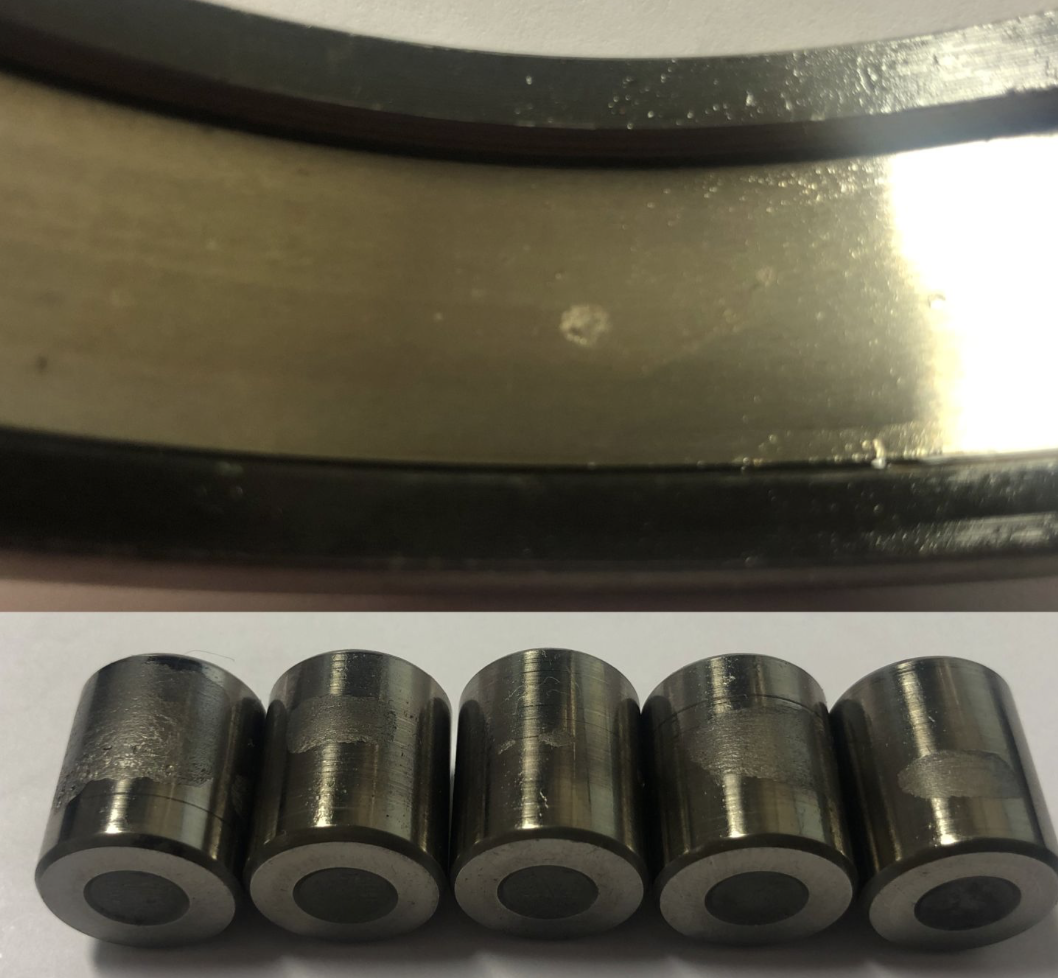
The compressor was changed out the following day and we recieved all the bearings from site. Most significant damage was on the input shaft angular contact bearings. With some less significant damage on the front end cylindrical roller.
A few key take aways from this job were:
- To not get tunnel vision on the motor. Start with the whole picture and focus in from there.
- Dropping the V-Belts/Couplings. It can take some effort but in this case it offered great evidence that the defect was in fact in the compressor.
- Internal details are key. Having the bearing details and correct shaft speeds allows for a thorough analysis at the machine.
A more thorough failure analysis is definately required to determine root cause but one main contributing factor in my eyes is water contamination. Oil sampling history showed consistent levels of 1500+ ppm water.
Service life of these compressors is ~40'000 hours. I'll update this post if/when I find out the service life of this compressor before it was replaced.
Additional Images