Vibration Analysis for Fault Detection in Bearings
Vibration analysis for fault detection in bearings is complex, with real-world scenarios often deviating from textbook examples due to factors like slip and combined faults. Advanced techniques and time-waveform analysis are crucial for accurate diagnosis.
Bearing #faultdetection is not new in #vibrationanalysis . Analysts are well aware with the patterns.
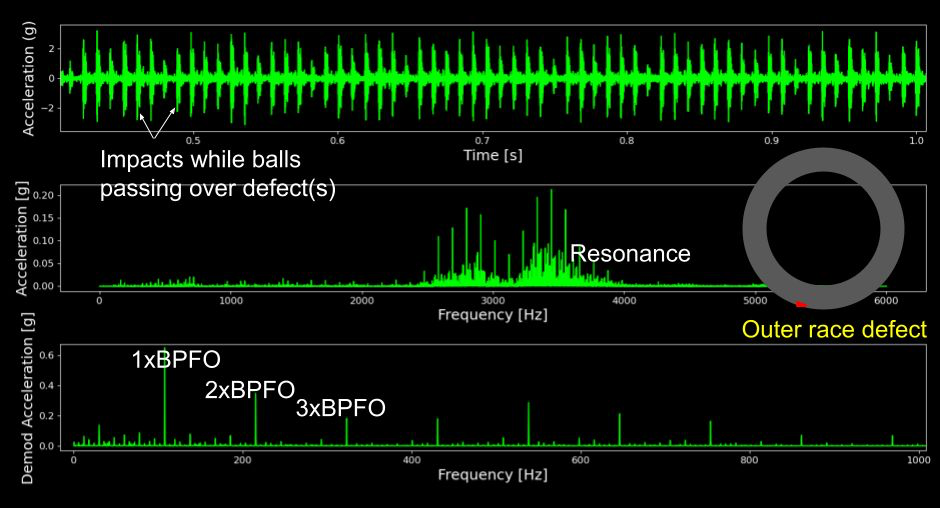
Outer race fault - pulses in waveform, no modulation; Envelope spectrum: BPFO and harmonics.
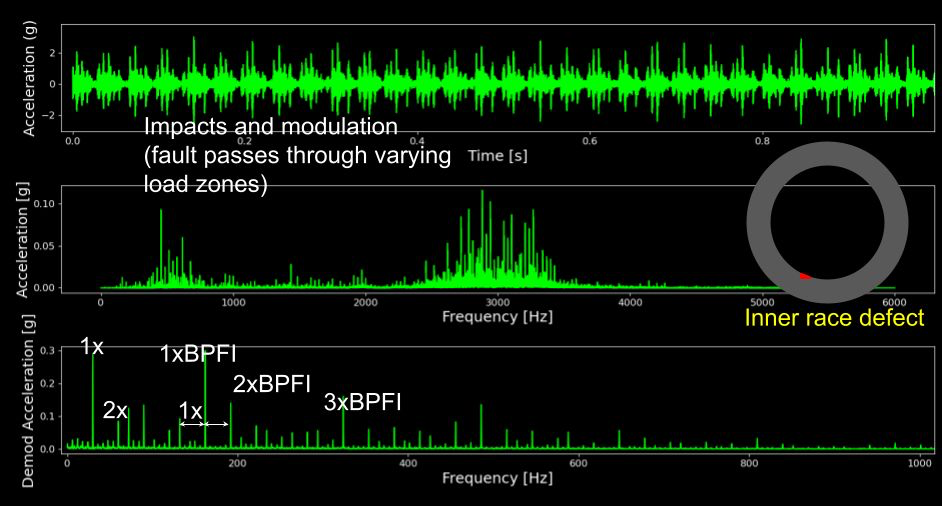
Inner race fault - amplitude modulation and pulses; Envelope spectrum: BPFI and harmonics, 1x sideband around BPFI. (same for ball defect, but modulating component is ftf).
Useful analysis techniques and features - Peak, Crest Factor, Kurtosis, Envelope Spectrum
But, real-world scenarios aren't always textbook perfect! Why?
a) Slip might alter defect frequency location in spectra
b) Combined fault cases may hide the fault
Don't rely solely on the classics!
Learn advanced techniques and yes, try to study time-waveforms.
Always explore, learn, and adapt to the nuances of the field. The real excitement lies in the challenges!
Additional Images