Low Speed Vibration Analysis - The Importance of the Right Setup
A suitable collection setup for low-speed bearings (5 RPM) enabled the identification of faults in the Magnetic Separator. This allowed for preventive bearing replacement, avoiding unexpected stops and increasing reliability.
⚙️ Low-Speed Vibration Analysis – The Importance of the Right Setup
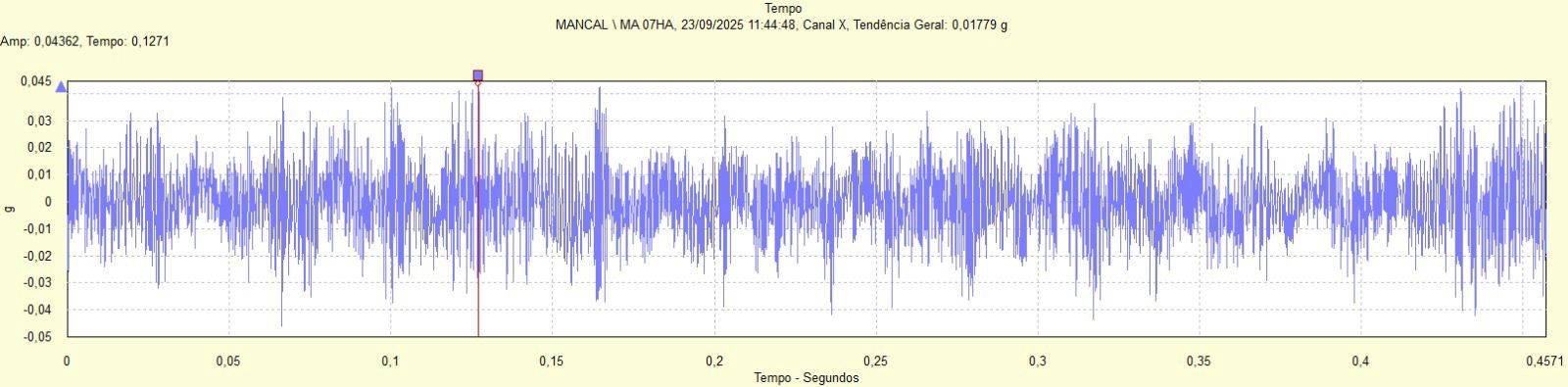
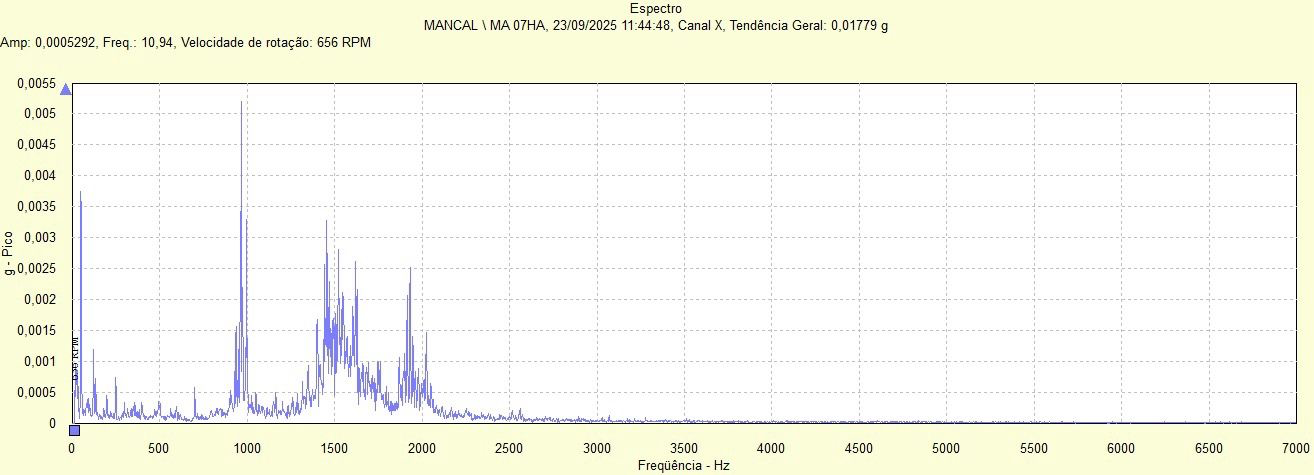
During a recent inspection of the Magnetic Separator, we were able to identify faults in low-speed bearings operating at 5 RPM.
📊 This result was only possible thanks to the use of a collection setup suitable for low speeds, which allowed:
Increase signal acquisition time by capturing subtle details of the vibrational response;
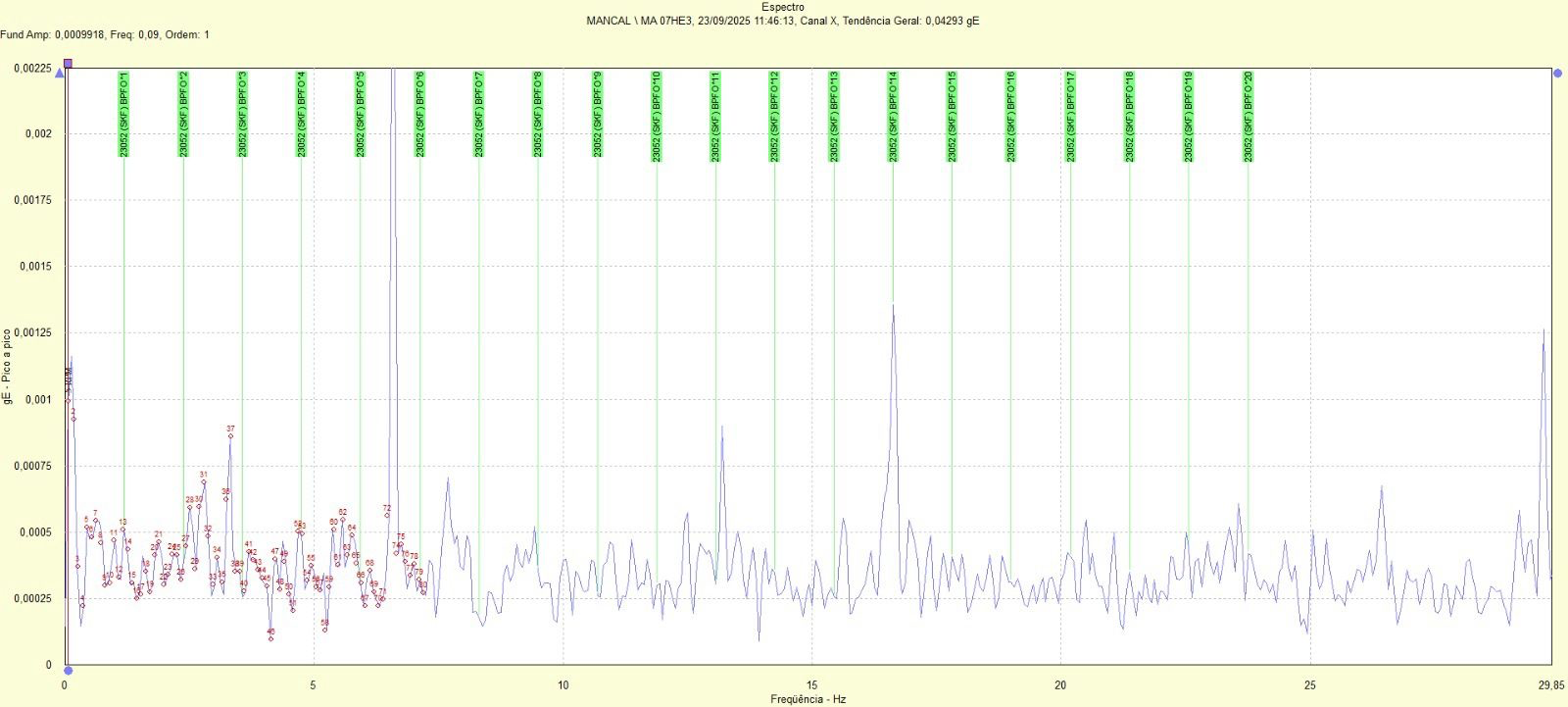
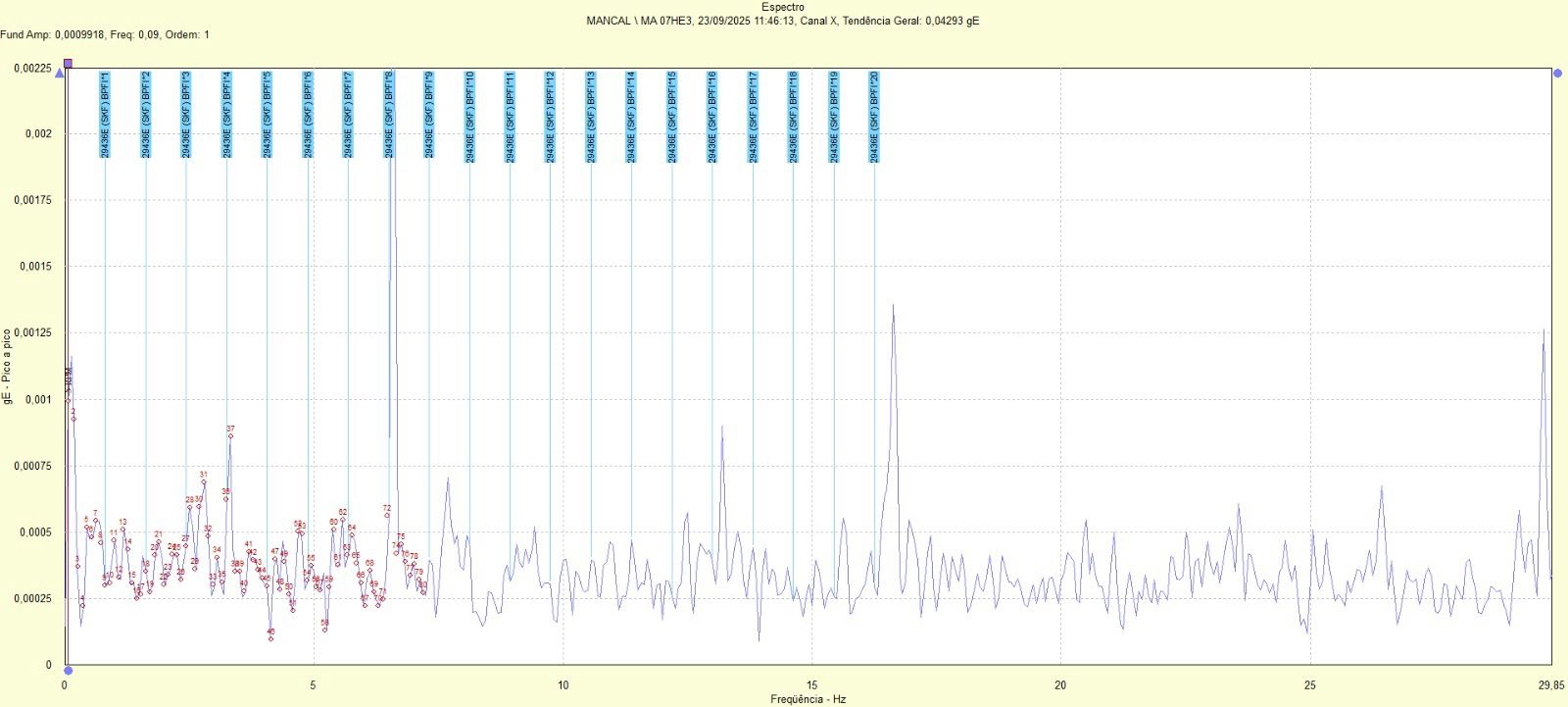
Ensure sufficient spectral resolution to identify characteristic frequencies (BPFO – outer raceway of bearings 23052 and 29436);
Evidence friction abnormalities and lubrication failures that would go unnoticed in a conventional setup.
🔍 Why does this matter?
In low-speed equipment, the fault energy is extremely low, making the signal difficult to detect. Without the correct adjustment of parameters (collection time, resolution lines, filters, and adequate sensors), the analyst may not identify an incipient failure, compromising reliability.
📌 Direct benefit:
With the proper adjustment, we are able to recommend the preventive replacement of the bearings, avoiding unexpected stops and increasing operational reliability.
🚀 Further proof that the quality of the collection is just as important as the analysis itself – especially in low-speed machines.
Additional Images