Compressor Rotor Failure due to Fouling at Qatargas Condensate Refinery
LP compressor performance degradation was observed six months after commissioning, with efficiency dropping from 65% to 35% within 20 months. The failure was attributed to pitting corrosion of the impeller caused by ammonium chloride deposits, exacerbated by insufficient process controls and a malfunctioning vibration trip function. Water injection was implemented to mitigate fouling, resulting in stable compressor efficiency and excellent internal condition after three years of service.
The Problem
• About six months after commissioning in September 2009, LP compressor performance degradation was observed
• Degradation was slow initially accelerated with time
• Compressor efficiency dropped from 65% (new) to 35% (failure)
LP Compressor Failure
• July 2011, after about 20 months in service, a sudden increase of LP compressor vibration from 10 mic to 75 mic at DE
• BN ADRE was installed on machine vibration rack to analyze the data
• However, meanwhile vibration quickly increased to danger levels (beyond 1000 mic) at DE
• Machine was manually shutdown because vibration trip did not function
Internal Inspection
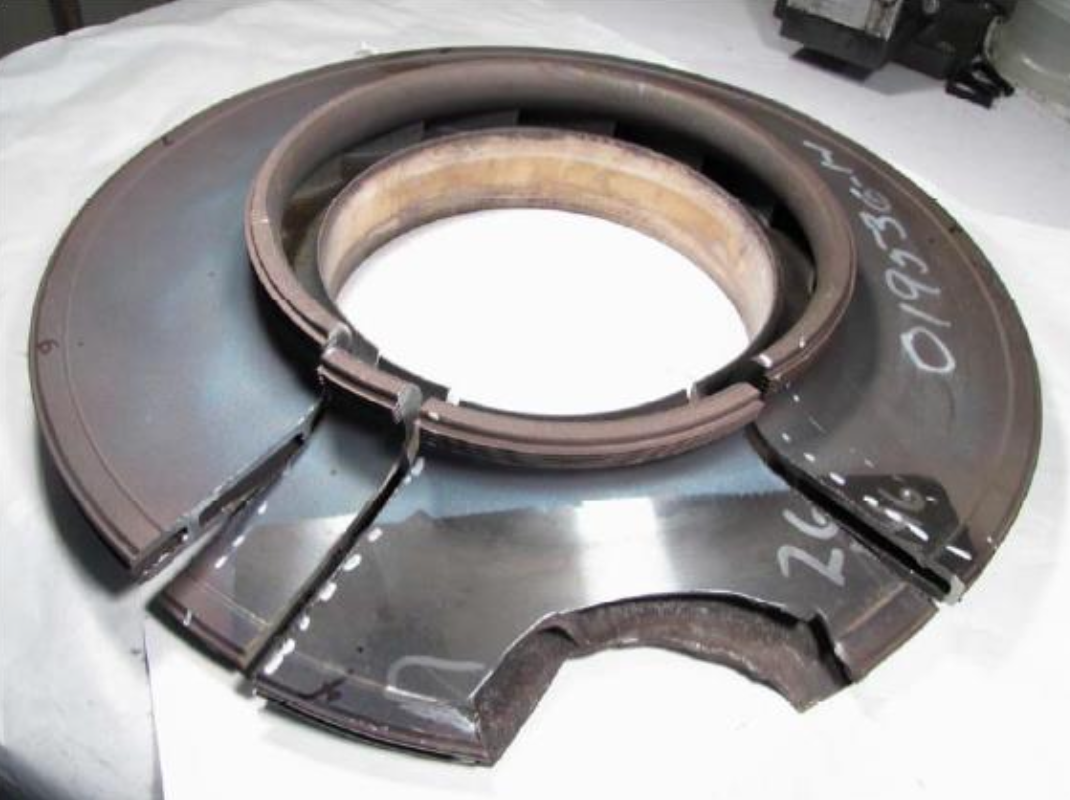
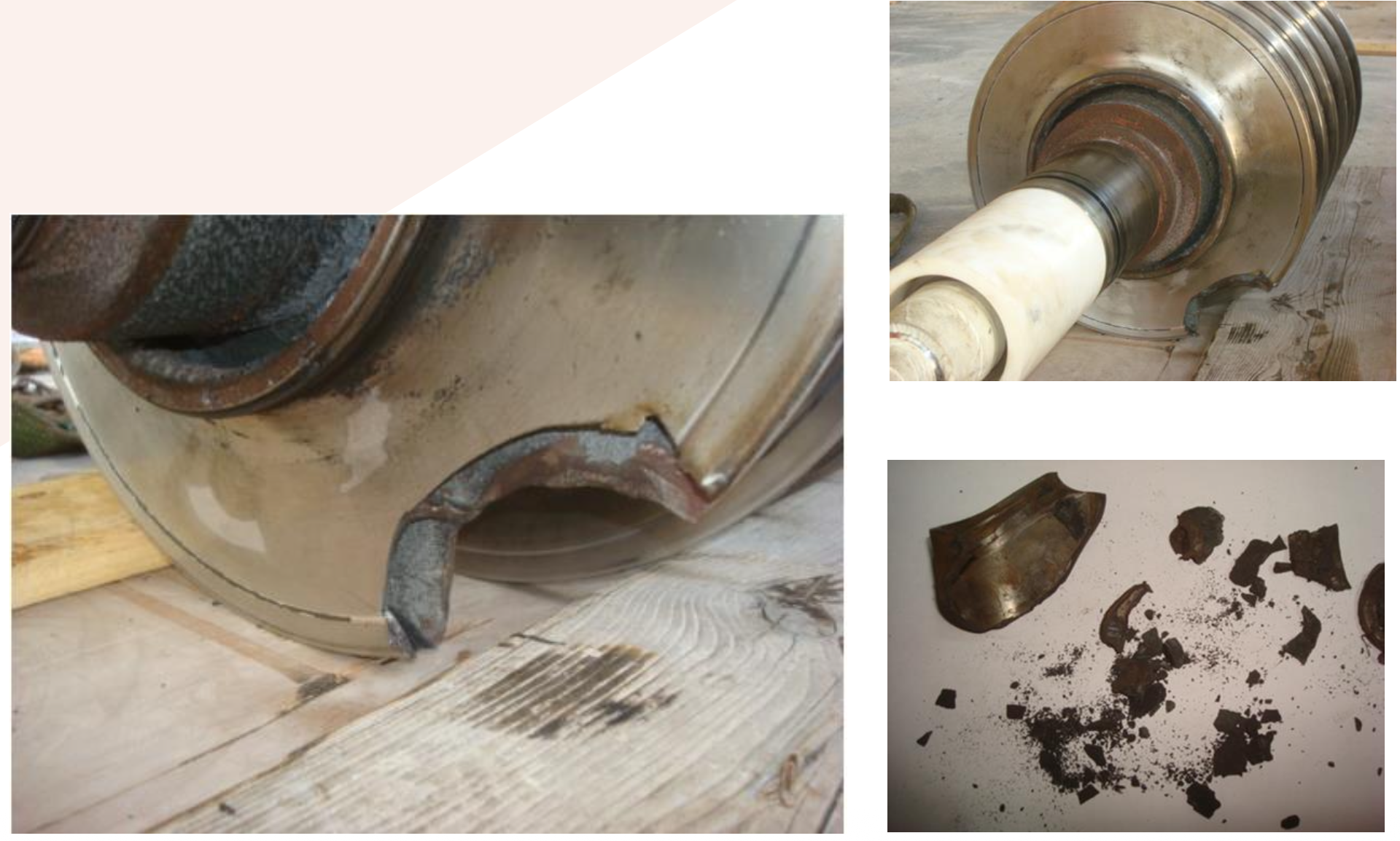
• First stage impeller found broken
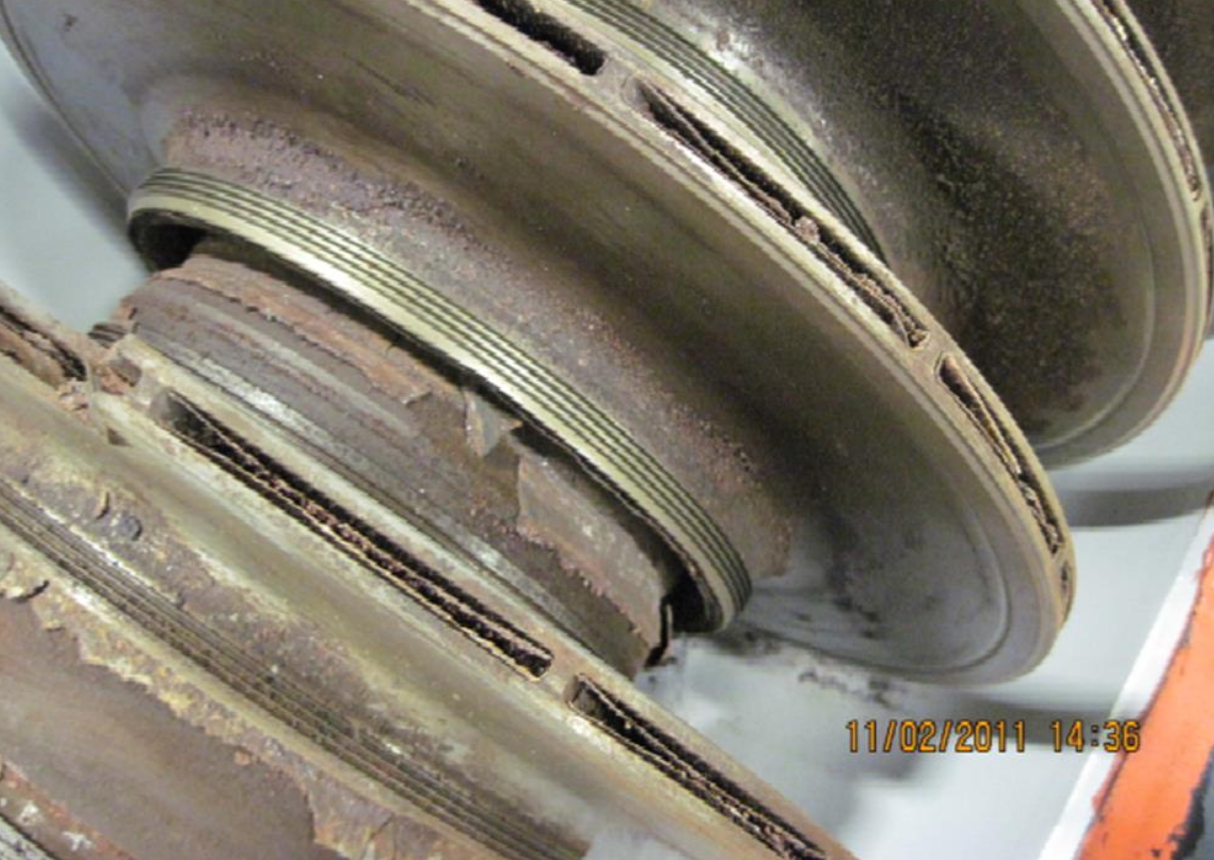
• Heavy deposits / fouling of impellers and diffusers
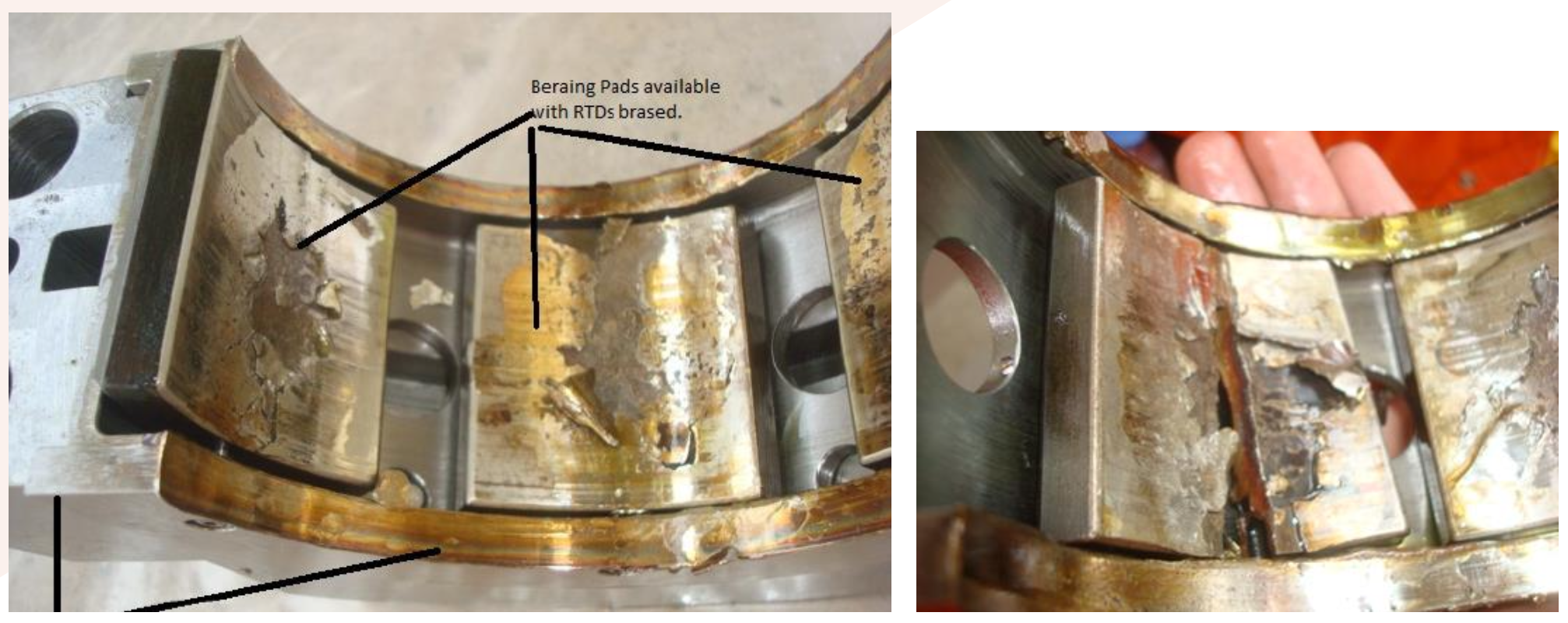
• Damaged Journal bearings, DE was severe
Note: HP Compressor was not dismantled based on vibration, bearings temperatures and thermodynamic performance data analysis
Investigation Deposits Analysis
o The deposits were mainly Ammonium Chloride per laboratory analysis
o Ammonium Chloride is produced in traces in the reactor due to the presence of N2, H2 and chlorides in feed
Investigation Root Cause of Failure
• Under deposits pitting corrosion of 17-4 PH SS impeller by chlorides
• The impeller failure was attributed to stress corrosion cracking and possibly combined with high cycle fatigue resulting from flow irregularities caused by excessive fouling of the gas flow passages and pitting.
Investigation Contributory Causes of Failure
• Lack of understanding of fouling service and its harmful nature
• Insufficient process controls to prevent deposits formation
• Incomplete execution of vibration trip function by project team. BN3500 not connected to compressor ESD for trip on high vibration or journal bearings temperature
Resolution
• Compressor reassembled with spare rotor
• Vibration and bearing temp trip function commissioned per OEM guidelines
• Water injection upstream of compressor started on alternate days
• Compressor efficiency was closely monitored to see the effectiveness ………. remained steady at 65%
• After 3 years of service,
o max 2% efficiency dropped, indicating water injection was working very good
o Compressor was opened for inspection in a planned outage and the internals were in excellent condition which was in line with the efficiency trends
o Rotor NDT revealed no defects
Lessons Learned
• In addition to reducing throughput of centrifugal compressors, fouling can result in serious damage to vital components and cost heavy production loss
• Thorough understanding of process stream constituents and impact on equipment is very important for reliable plant operation
• Equipment surveillance for performance and mechanical health parameters can help in early detection of problem and preventing failures
• Process and Rotating engineers collaboration is important
• Gaps in project QA/QC
Additional Images