Gearbox Tooth Failures Because of Overload
A gearbox experienced repeated tooth failures on the last stage pinion, causing production losses. Vibration analysis revealed high impact forces, leading to a recommendation for gearbox inspection and replacement. The root cause was identified as overloading due to increased bucket weight from repairs, prompting the OEM to supply a higher-rated gearbox.
MOTOR MAKE: SIMENS
MOTOR KW: 50.5KW
GEARBOX DETAILS:
MAKE: FLENDER
GEAR BOX TYPE: H4DH11
OIL: ISO VGO 460
COUPLING DETIALS:
MAKE: FLENDER
FLEXIBLE COUPLING + FLUID COPLING
FLEXIBLE COUPLING DETAILS: EUPEX (BUFFER ELEMENTS-H225)
FLUID COUPLING DETAILS: FLUDEX(FAD-395)
History: This gearbox has a long history of tooth failure of last stage pinion. From 2008 to 2019 almost 4 times this gearbox has failed which cause a heavy production loss to our grinding section. Before 2017
this plant doesn’t have conditioning monitoring techniques to access their machine health condition. In 2017 a special conditioning monitoring department was established on pilot bases. So as a vibration analyst our first target is to keep an eye on the critical machines and machines which
are having a long breakdown history. So this gearbox is our first target our team has a very close eye on this particular gearbox.
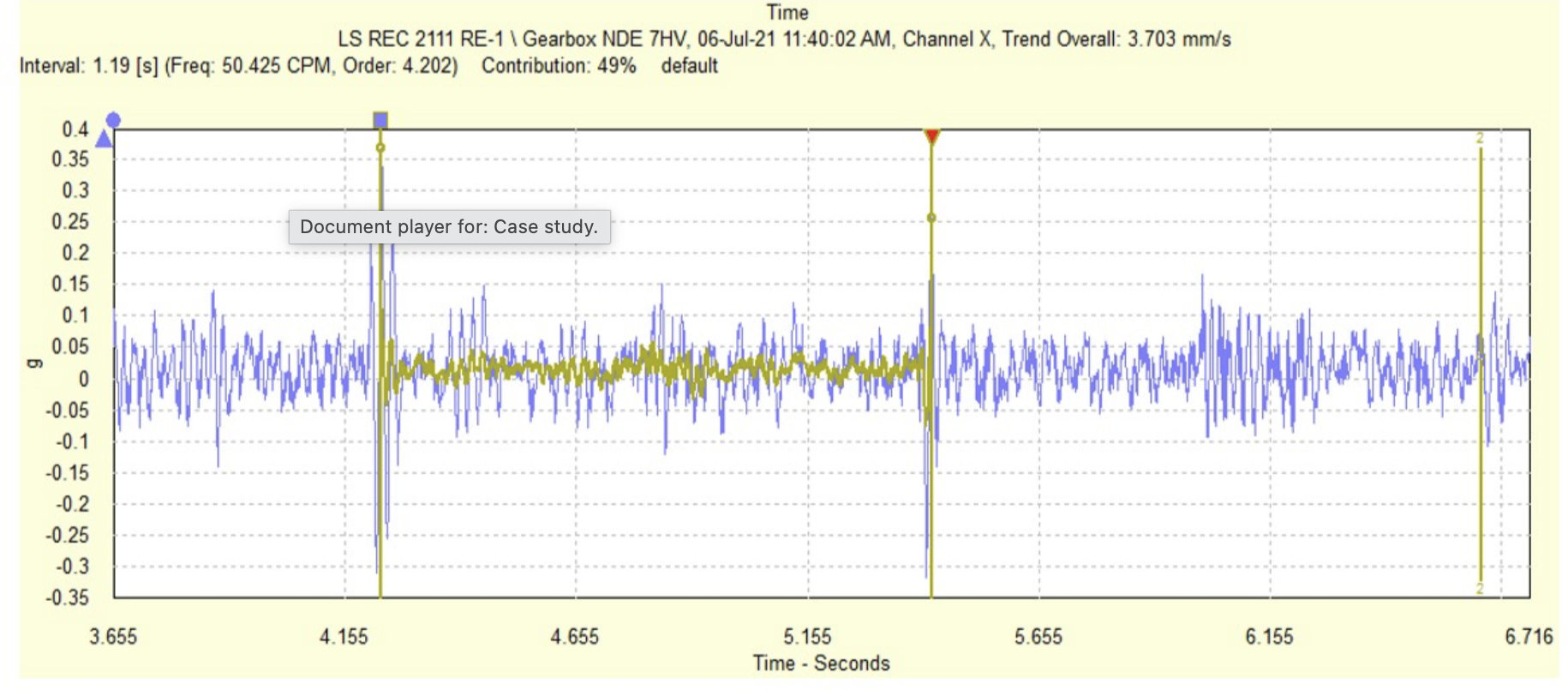
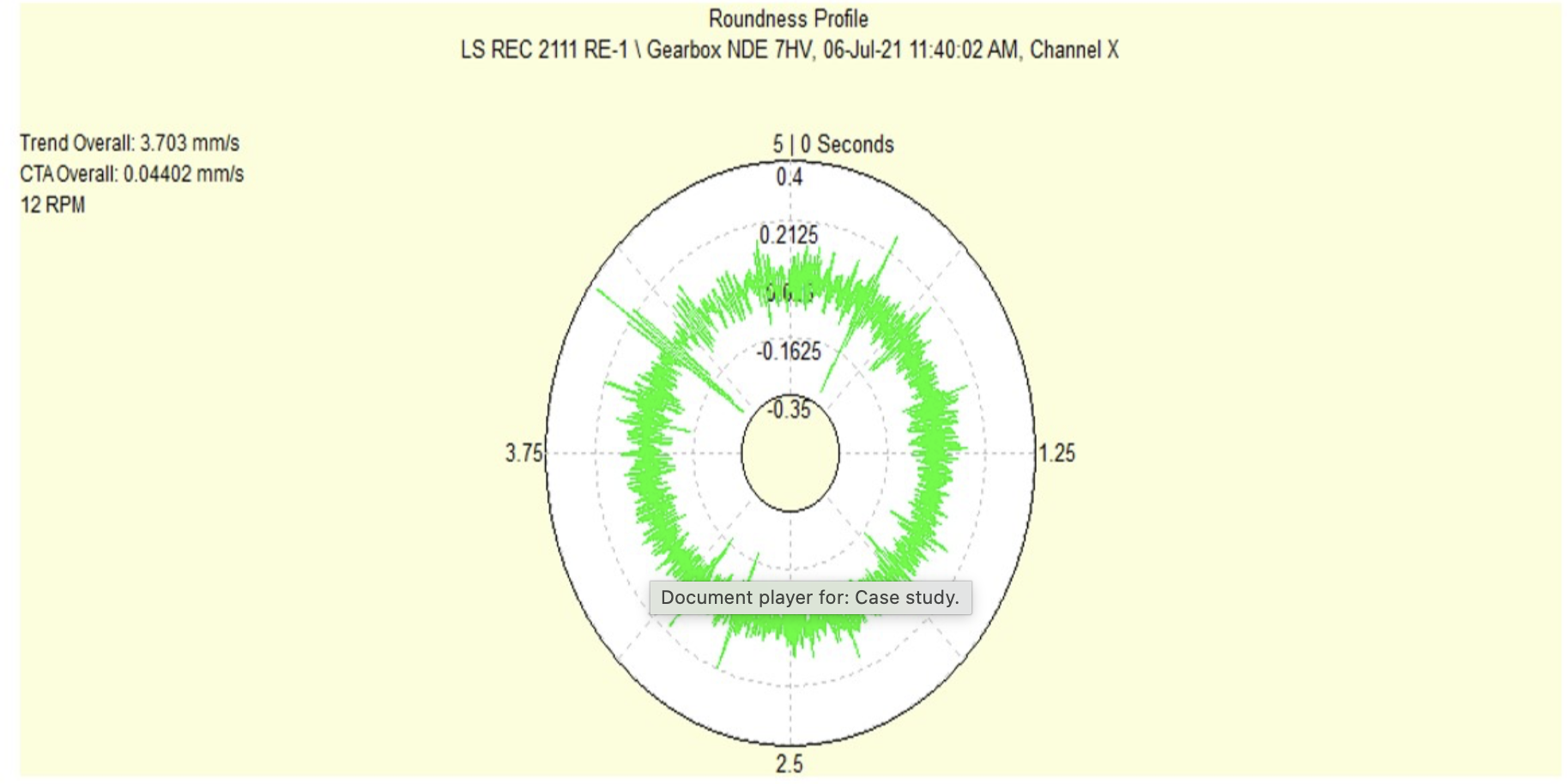
Observation: so in 2021 during the normal vibration data collection high impact was observed in the gearbox from fourth measuring position of the gearbox’s the speed of the fourth pinion is very low i.e. 44RPM so we need a high resolution data to confirm the severity and possible defect. So a high resolution data was taken and a detailed vibration analysis was performed. As we all know time wave form is the best tool for gearbox analysis. During analysis It was observed that there is a continue impact in TWF with a difference of 44RPM.
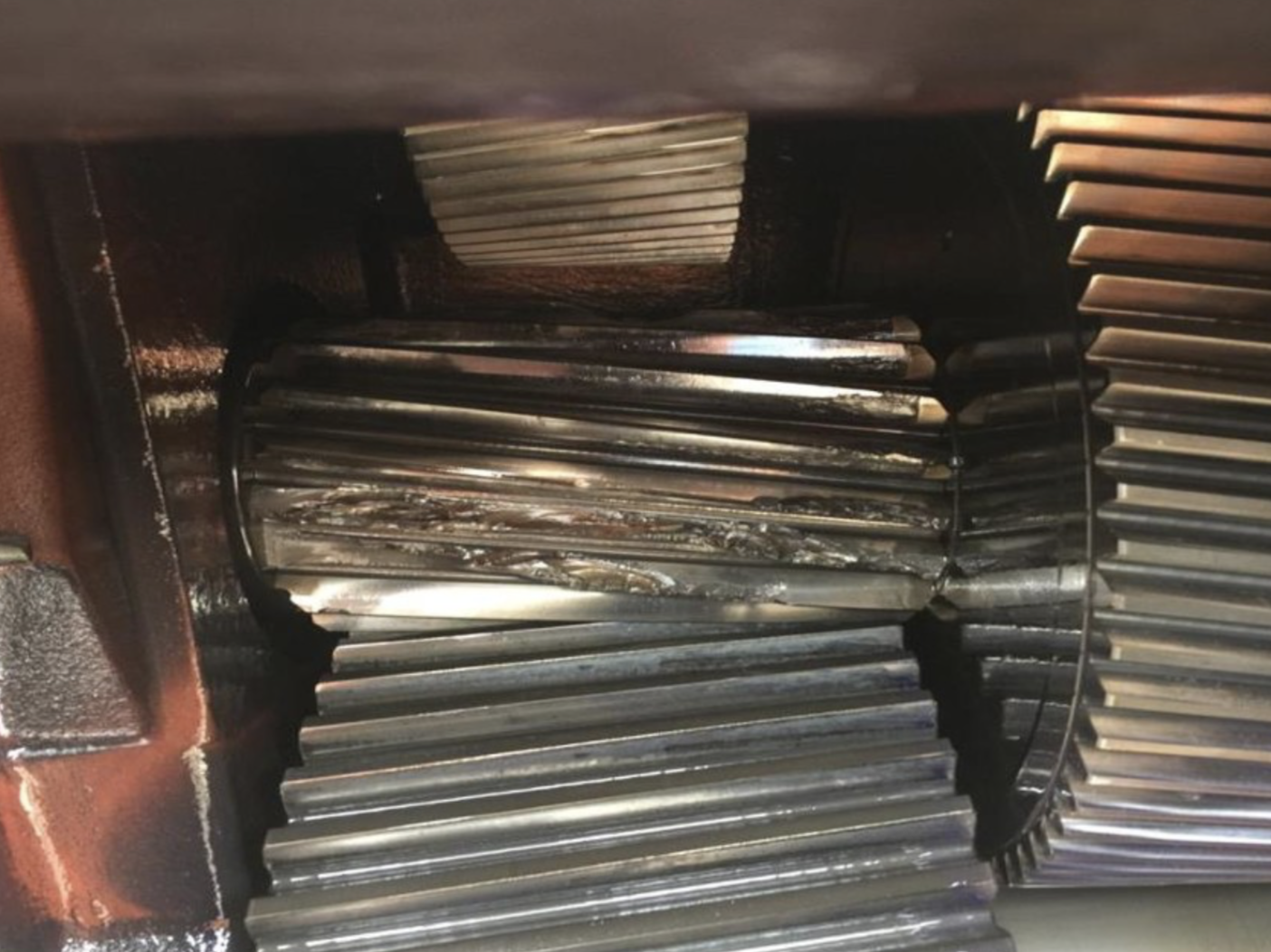
Recommendation: it was recommended to inspect the gearbox internals and plan for replacement. During the inspection broken tooth was found on fourth stage pinion.
So it’s time to dig out the root cause failure of this gearbox as all the bearing and other internals are in good condition. And from the picture it was clear that there are high bending stress on this particular gear which caused the continue failure of this gear.
So where these extra forces are coming:
- They can be from the output shaft (drawing is attached for your reference)
- A bend in the output shaft
- Misalignment between the shaft and the gearbox.
- A high driven torque
Run out test was perform on the scrapper chain shaft, no run out was found. Alignment was found ok between the scrapper chain shaft and the gearbox. So a torque test was performed on the scrapper chain shaft with the help of strain gauge and a running torque 34,870Nm was found. But in manual this gearbox was designed for 31,672Nm so we have almost 3000 Nm extra where it’s coming from?
OEM was called to answer this question, so finally we got our answer actually there are 52 bucket on the scraping chain their main function is to carry the hard limestone and feed it on to the conveying belt.so over the period of time these buckets got wear out and the local maintenance team repair the buckets with the hardex plates. So here is the root cause by repairing, each bucket weight was increased which caused the overloading of the gearbox and ultimately tooth failure due to continue overloading.
So we can’t replace a bad bucket every time with new one because of production demand, so we convinced the OEM by our process and operation parameter to supply us a high rating gearbox with increased service factor and torque. After many technical discussion they supply us next suitable size of gearbox according to our technically specification. And this new gearbox is performing well since 2021
Additional Images