Detailed Analysis of Two Stage Planetary Gearbox Vibration
A two-stage planetary gearbox experienced bearing and bolting failures due to an overload. After repairs, a no-load spin test revealed an audible noise, and vibration analysis identified the likely source as fragments of a bearing race embedded in a ring gear tooth.
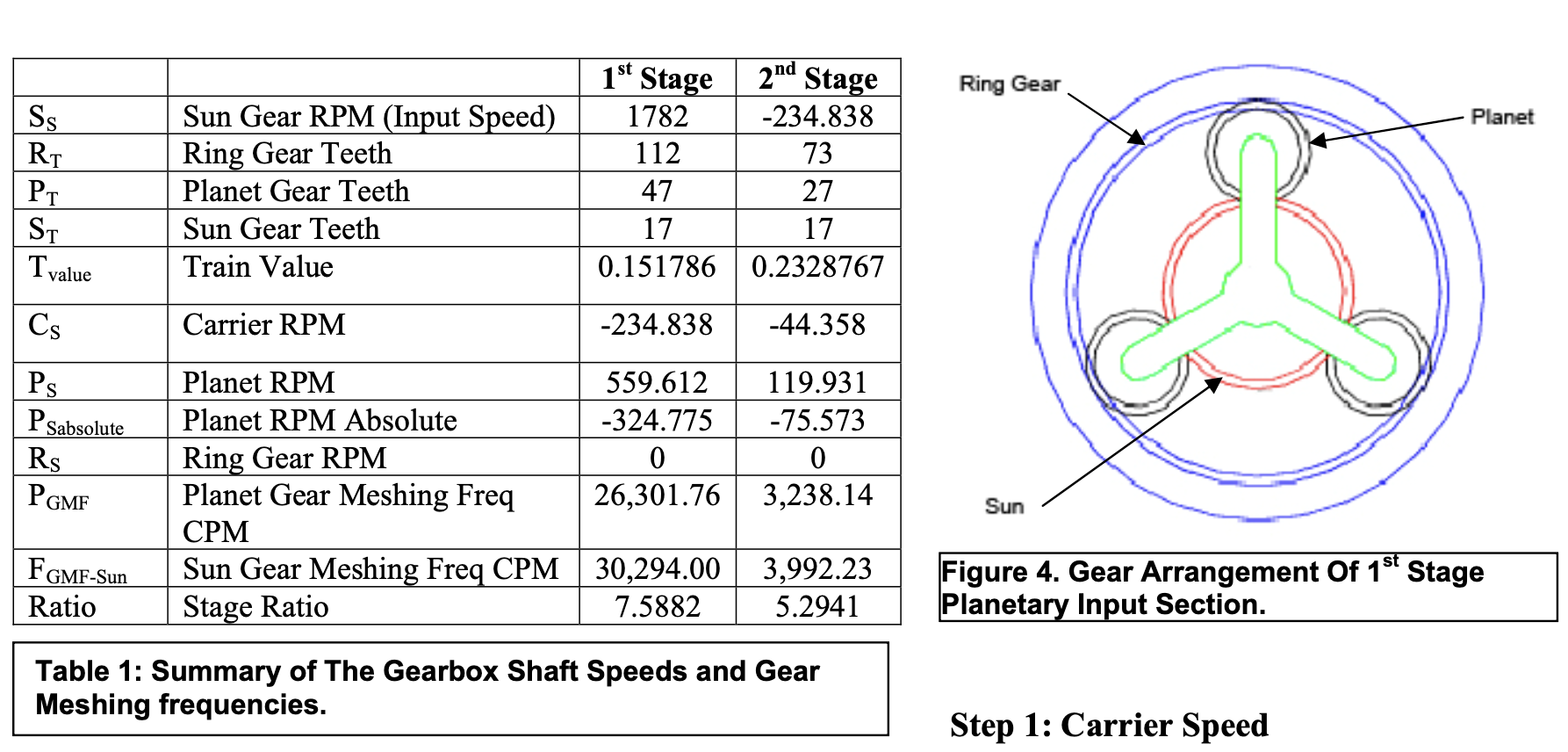
A two stage planetary gearbox used in underground coal mining experienced an overload in service which caused bearing and bolting failures. The gearbox was repaired and underwent a no load spin test. A very audible noise was present in the vicinity of the 1st stage gear set. Vibration analysis was used to determine the source of the vibration. The equations for calculating the planetary gear shaft speeds, gear meshing frequencies, and bearing frequencies in the gearbox are provided.
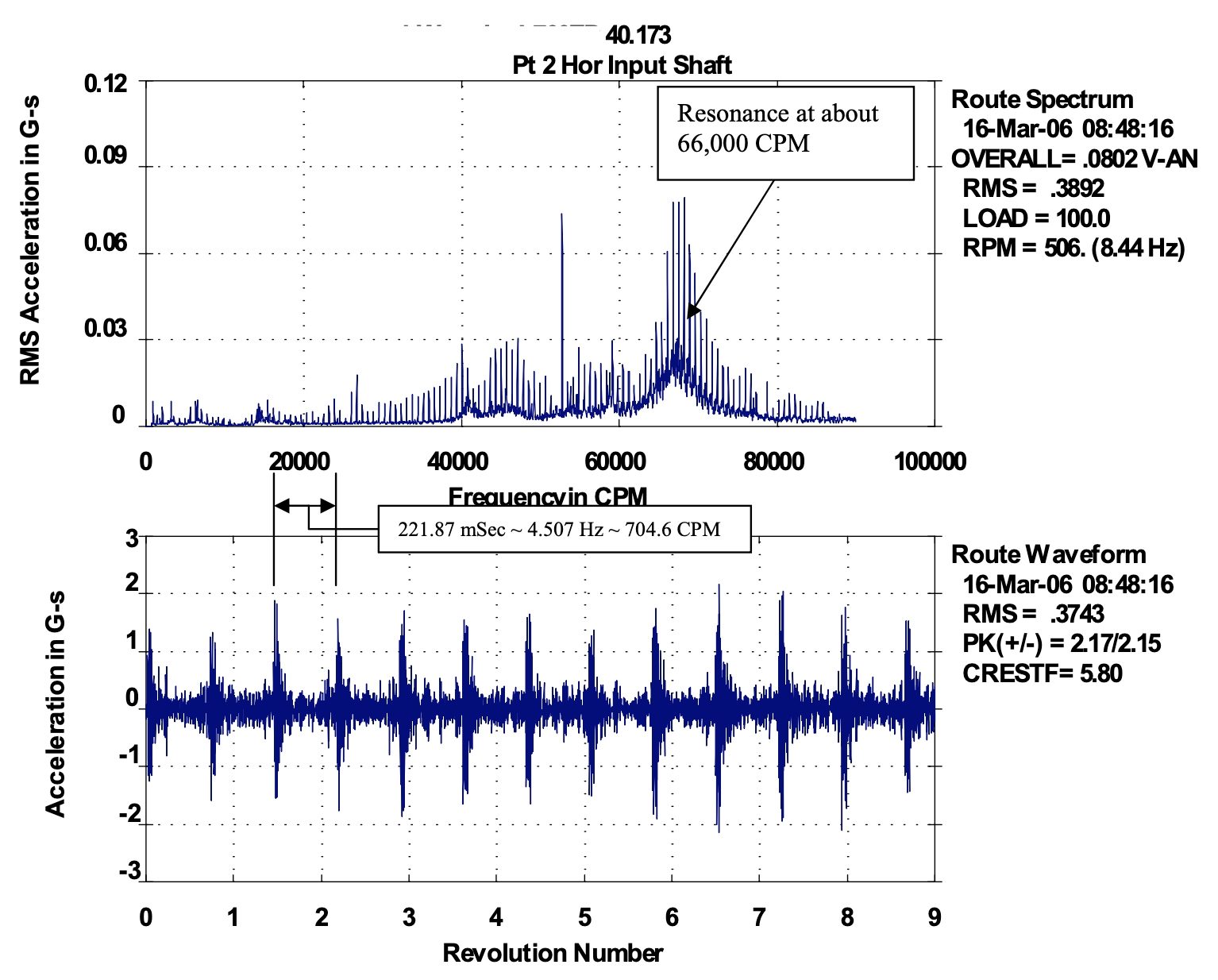
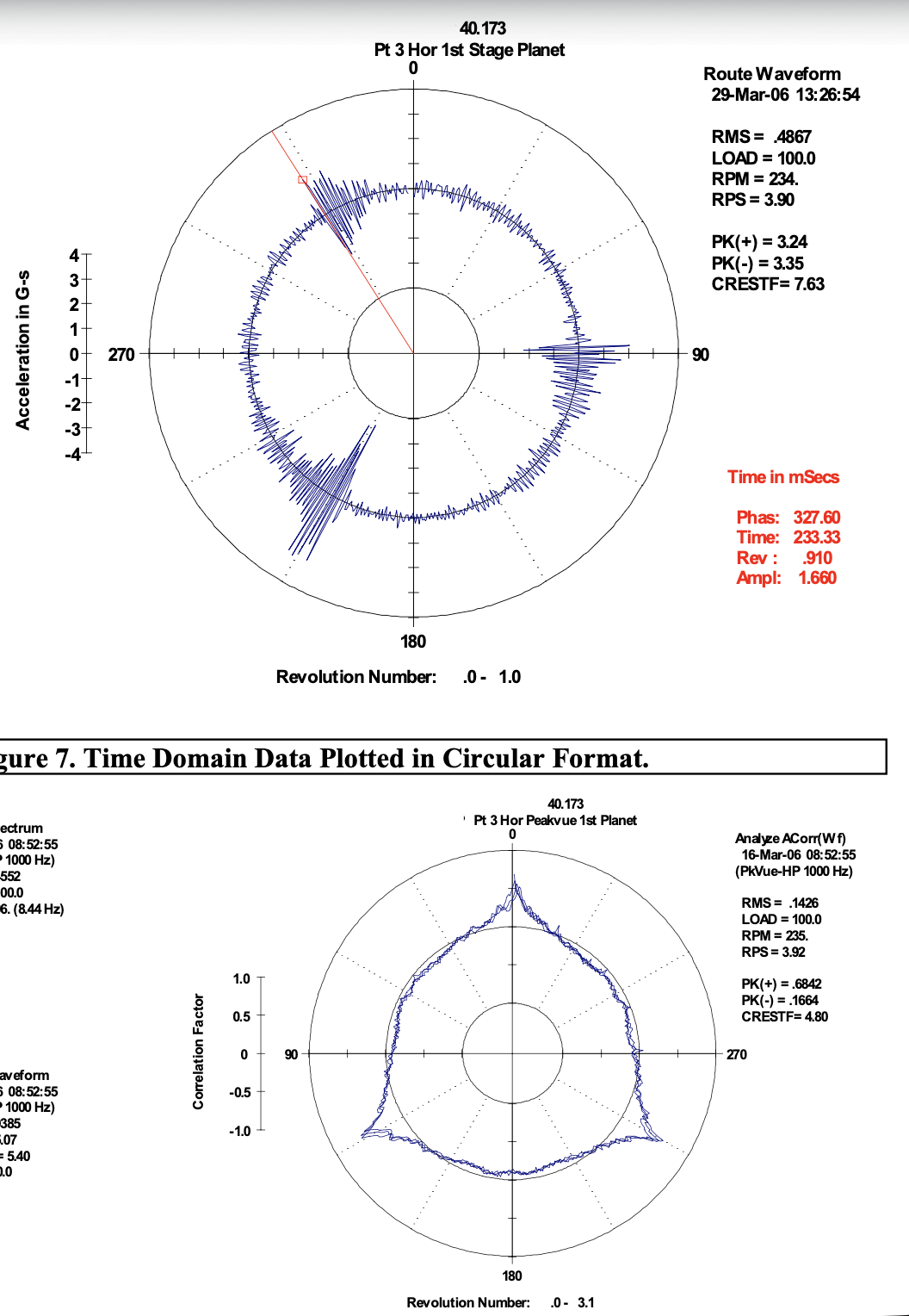
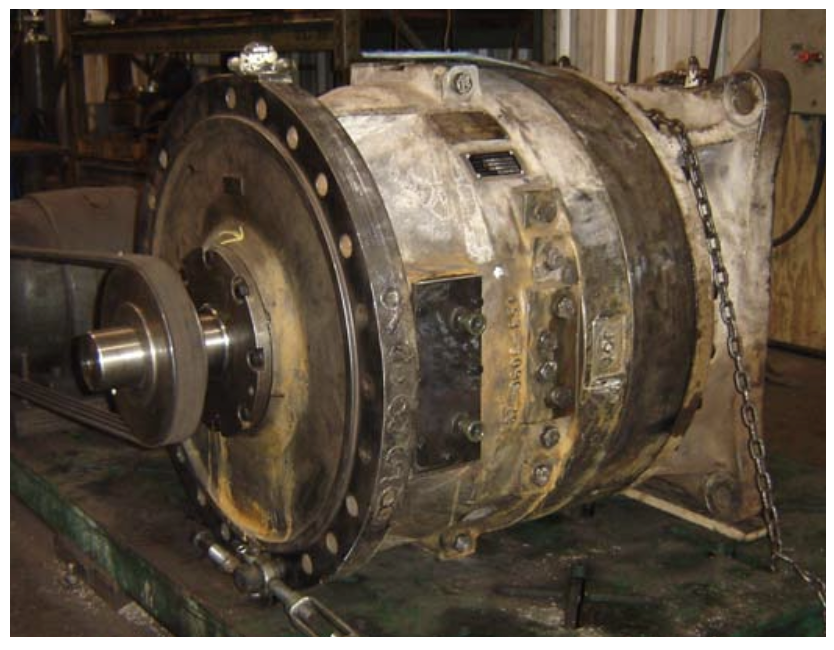
Gearboxes used in underground coal mining are of compact design. A typical two stage planetary gearbox, 800 HP, 40.173:1 Ratio with 1800 RPM input is shown in Figure 1. The unit was received by a repair facility for rebuild following failure from an overload incident. It was reported that the bearings were replaced and that one bearing had broken into many fragments. Following repairs a no load spin test of the gearbox was performed as a check for bearing faults, Figure 2. There was an audible impacting type noise from the input planetary section.
Conclusions:
This article describes the process that was used to analyze impacting type vibration of a two stage epicyclic planetary gearbox during a post-repair unloaded spin test. The forcing frequencies were calculated and identified the probably source of the vibration. Inspection of the ring gear identified fragments of a bearing race embedded in the unloaded side of a ring gear tooth.
Additional Images