Importance of Cepstrum in Gearbox Fault Detection
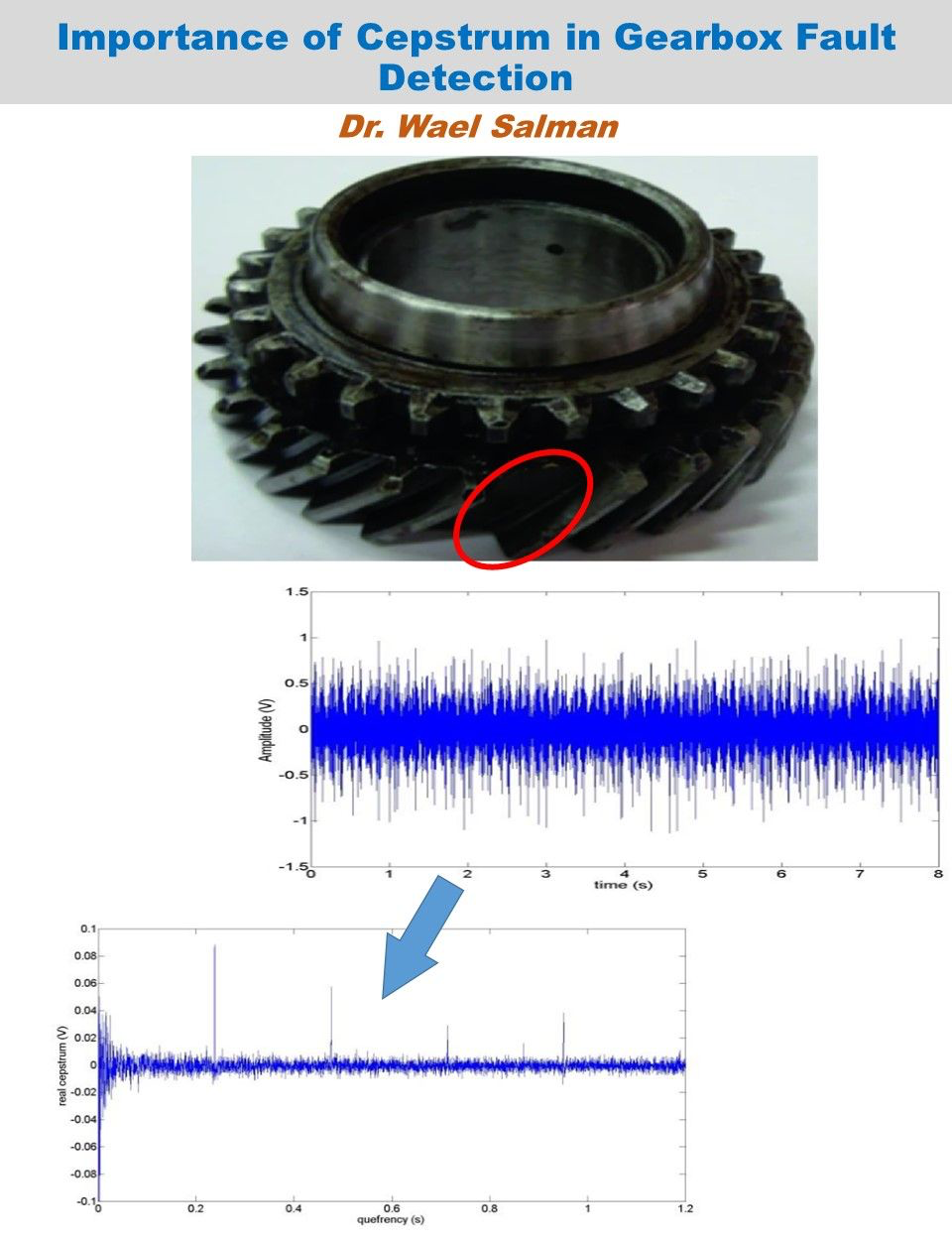
Cepstrum analysis, derived from the inverse DFT of the log magnitude of a signal’s DFT, detects periodicity in frequency spectra. It is useful for fault diagnosis, such as identifying broken teeth in gearboxes.
Definition:
Cepstrum is defined as the inverse of Discrete Fourier Transform (DFT) of the log magnitude of the DFT of a signal. The term "Cepstrum" appears to have been first coined from "spectrum" along with similarly derived terms such as "quefrency", "saphe", and "rahmonics" from "frequency", "phase", and "harmonics", respectively.
Analysis:
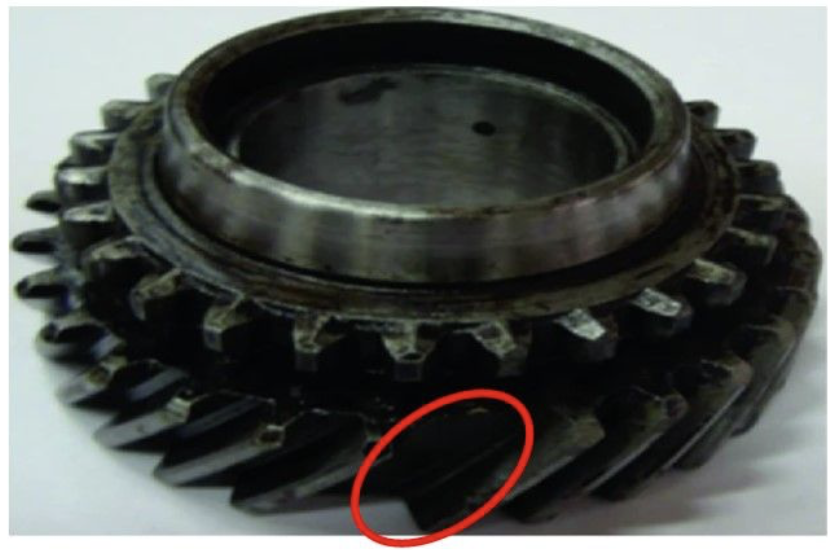
Cepstrum analysis is a tool for the detection of periodicity in a frequency spectrum. In case a broken tooth gearbox, the pattern of time waveform appears as pulses each time the broken tooth mating the healthy gear. Sometimes, the severity of broken tooth (teeth) does not appear clearly in the time waveform since the broken tooth causes high clearance and low friction between two mated gears. Due to the functionality of Cepstrum in detecting the repeated events, group of rahmonics can be displayed in the Cepstrum signal indicating the fault as shown in the represented figure. Furthermore, you have not to neglect this useful tool in fault diagnosis.
Additional Images