1X Peaks, Mysterious Sidebands, and the Power of Phase Analysis : A Pump Case Study
A between-bearing amine pump exhibited a distinctive vibration pattern, prompting a detailed analysis. Phase analysis revealed a compromised connection between the motor and pump, as well as base looseness, leading to the discovery of partially loose bolts. After re-torquing, vibration levels significantly decreased, demonstrating the effectiveness of phase analysis in identifying and resolving persistent vibration issues.
1X Peaks, Mysterious Sidebands, and the Power of Phase Analysis : A Pump Case Study”
A between-bearing amine pump driven by a 1500 kW sleeve-bearing motor had been under vibration monitoring for years.
Unlike other pumps in the plant, this one showed a very distinctive and persistent pattern:
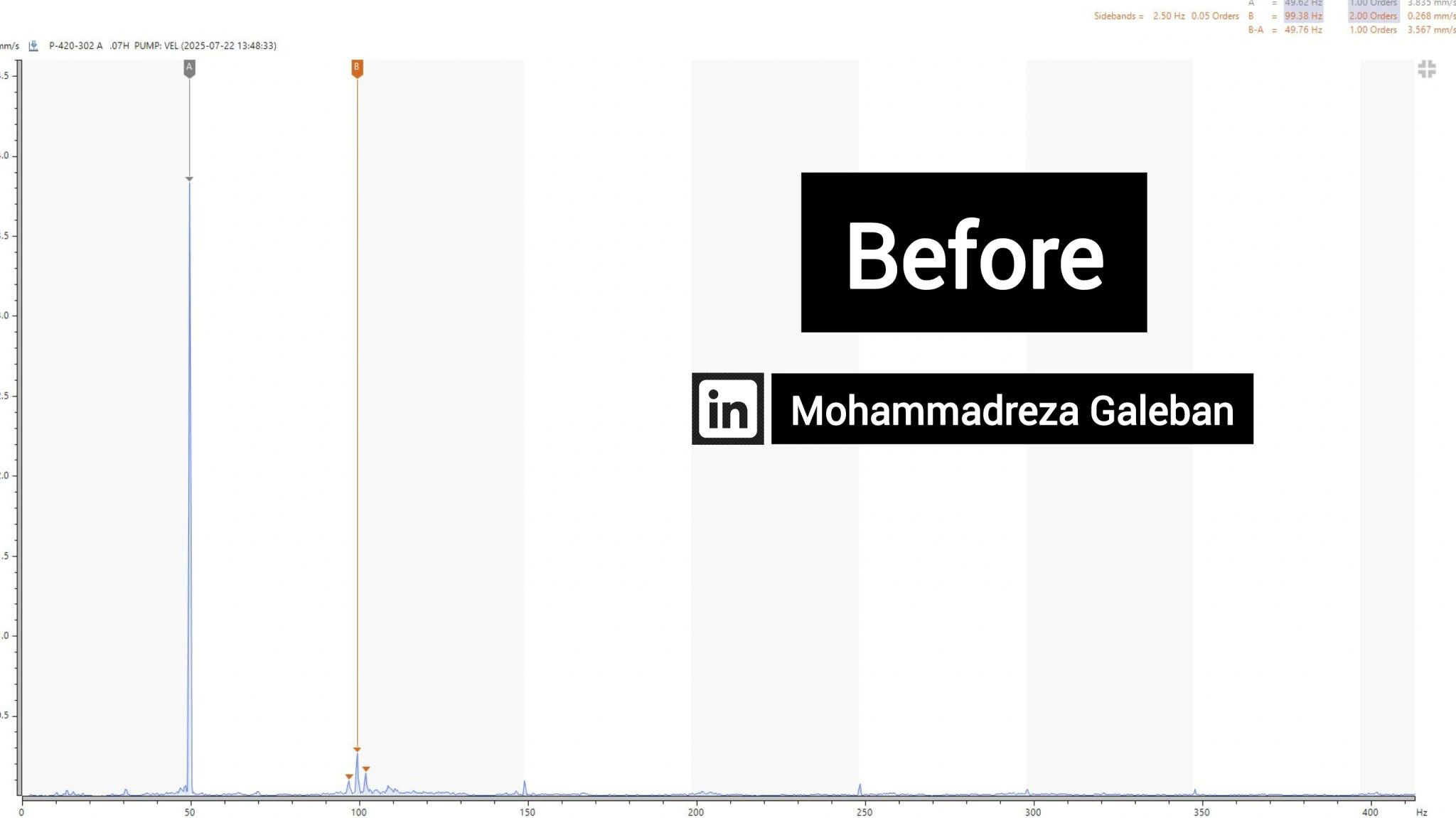
Point 7 (Pump DE) → Strong horizontal 1X vibration with unusual modulation.
Point 8 (Pump NDE) → Similar trend but lower amplitude.
Stable ~2.5 Hz sidebands around 2X, unchanged for a long time.
📊 Following the Clues
When a vibration pattern stays constant, you look for a mechanism that is always active. That’s where phase analysis became key:
H7–H8 ≈ 3° and V7–V8 ≈ 8° → Bearings (Points 7 & 8) moved nearly in phase, showing rigid-body motion.
H6–H7 = 135° → Significant phase shift between motor DE and pump DE, pointing to a compromised connection.
H7–V7 = –170° → At Point 7, horizontal & vertical were nearly opposite, clear sign of rocking from base looseness.
📌 In vibration diagnostics, when bearings move together but the structure rocks vs. the foundation — and H/V ≈ 180° — the prime suspect is foot or base looseness.
⚙️ Why the Modulation?
Loose bolts allow micro-separation and re-contact at the base.
This creates amplitude modulation of 2X, visible as low-frequency bands (~2.5 Hz) around it. Like a steady tone being “shaken” by a slow beat.
🛠 The Fix
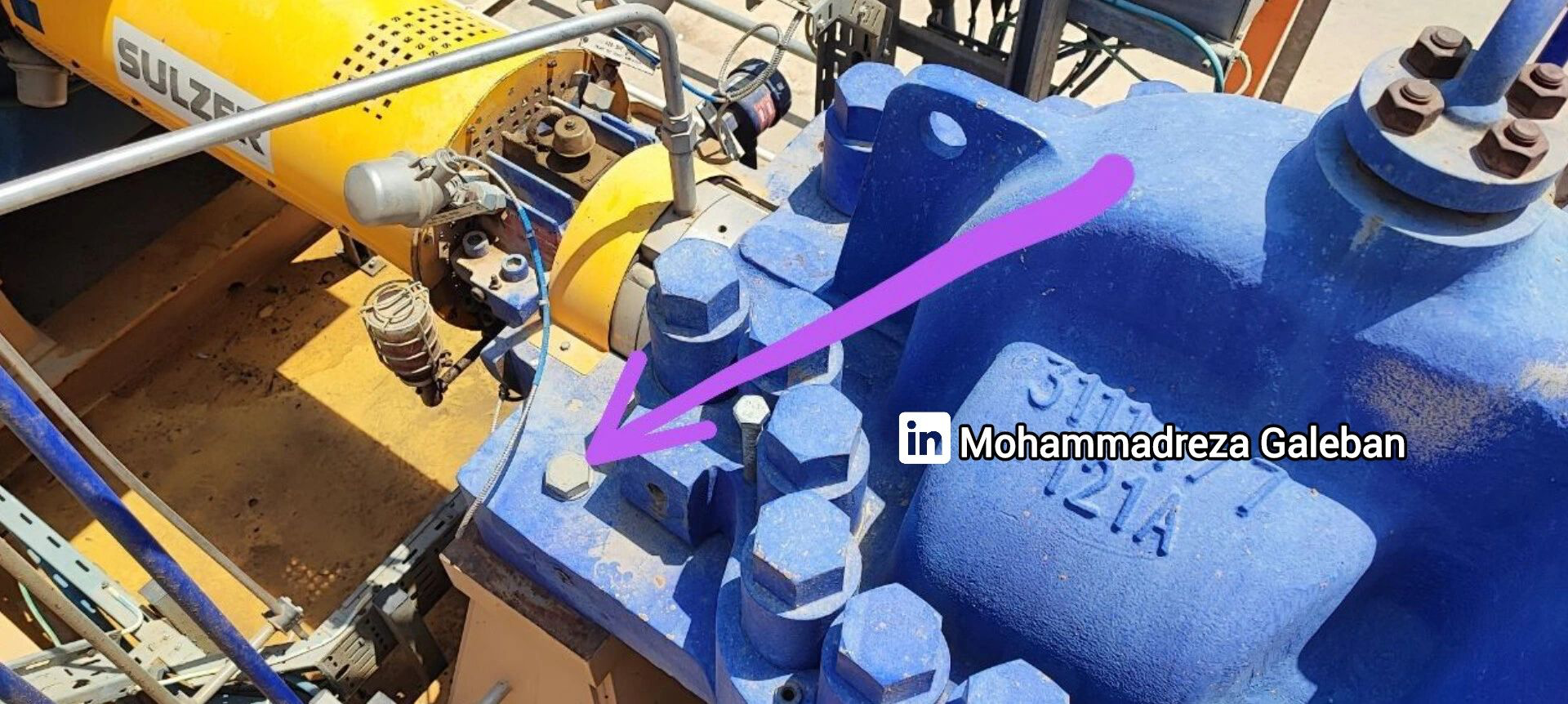
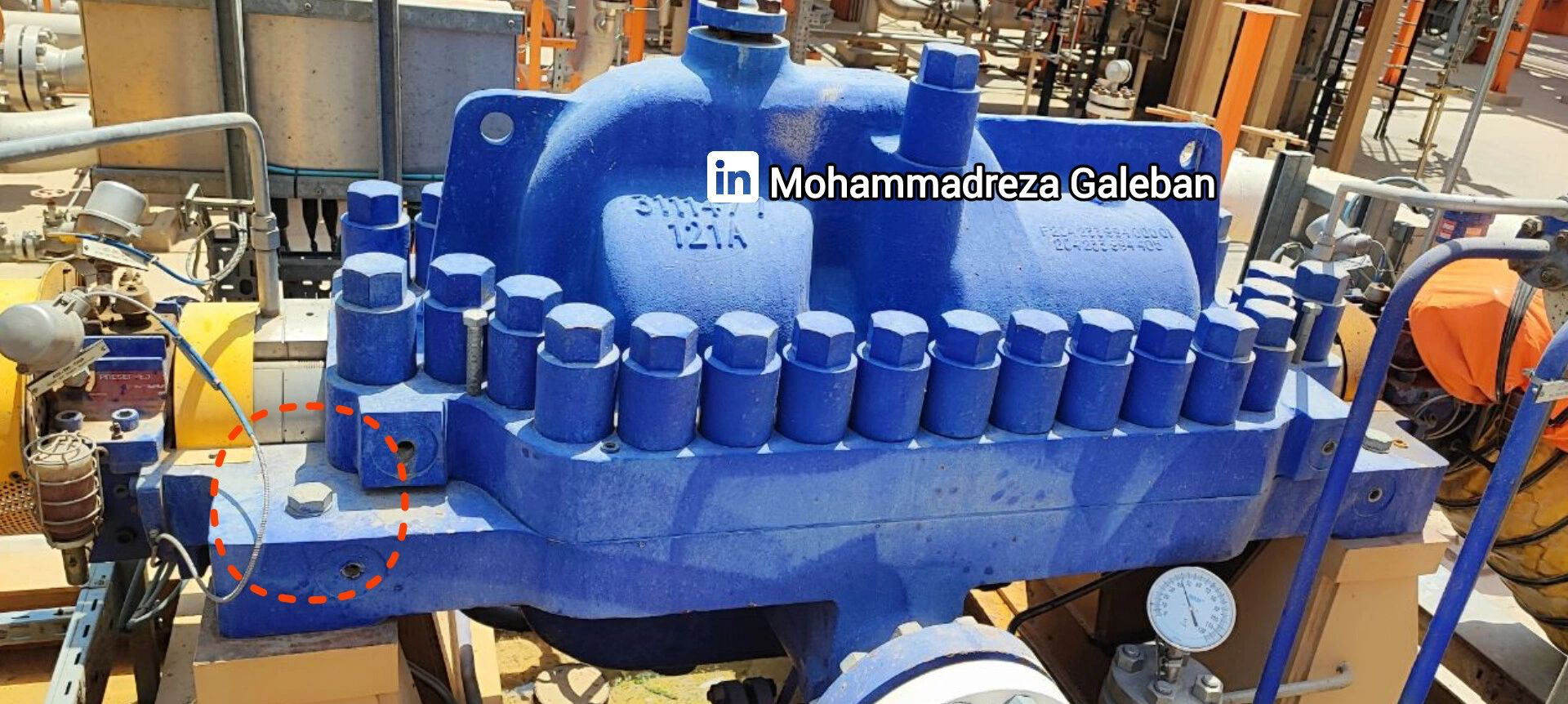
Inspection revealed partially loose bolts at Point 7 (pump DE).
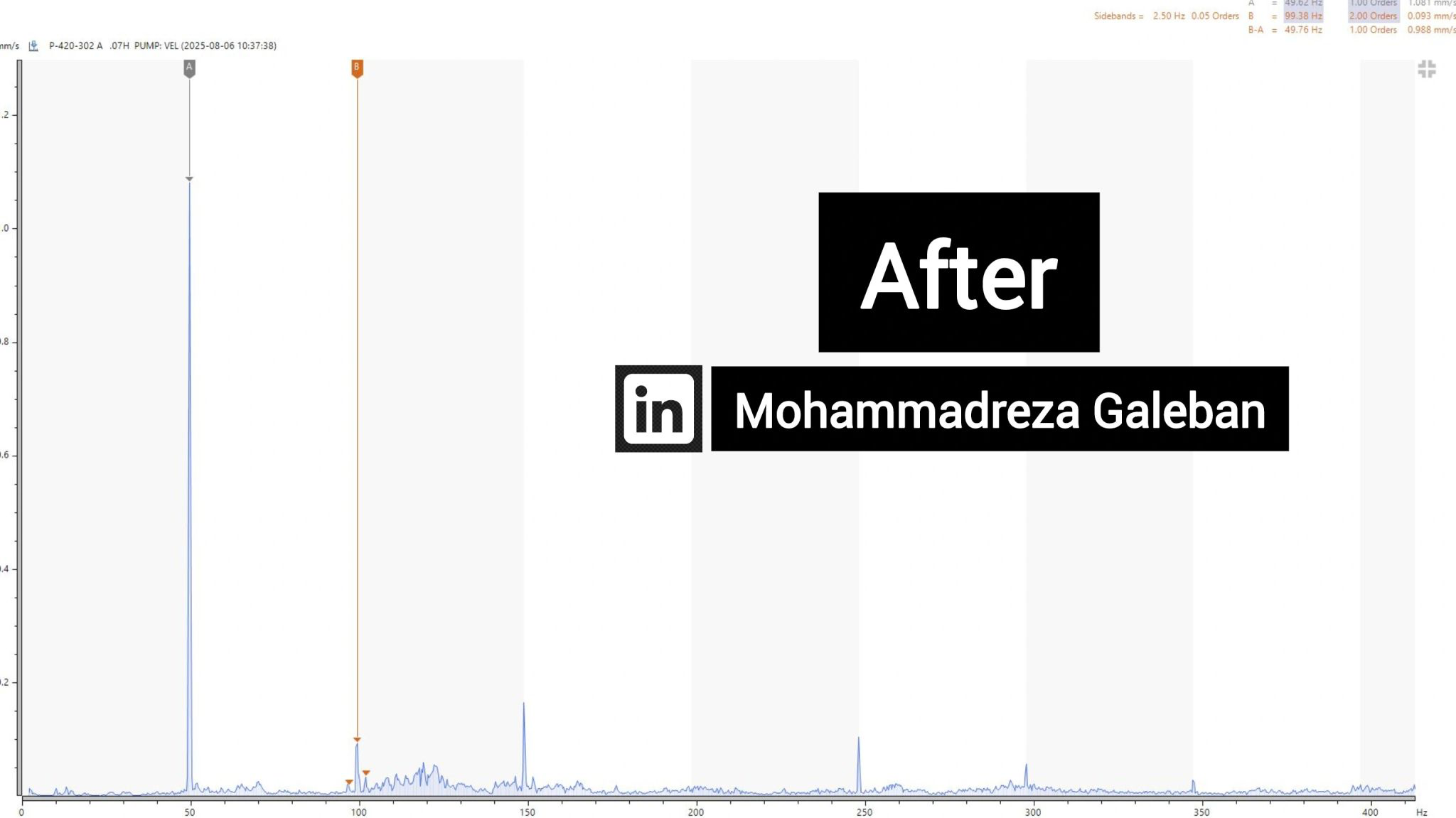
After re-torquing, vibration dropped dramatically.
📉 Results
1X at Point 7H fell from ~3.3 to ~1.0 mm/s RMS.
Sidebands around 2X nearly disappeared.
Phase confirmed improved stiffness.
🎯 Key Takeaways
1. Sidebands are golden clues → Often linked to looseness or structural interaction.
2. Phase is powerful → H/V and inter-bearing shifts expose causes FFT alone can’t.
3. Persistent patterns = persistent faults → Problems don’t vanish without action.
💡 This case shows how basic phase checks plus spectra can lead straight to the root cause.
With experience in vibration diagnostics & condition monitoring, I provide consulting, troubleshooting, and training to cut downtime and extend asset life.
📢 If your equipment has a stubborn vibration “signature” you can’t explain, let’s solve it together.
Message me here on LinkedIn or email me at "mohammadreza.galeban@gmail.com"
Additional Images