Dryer Bearing Outer Race Fault Case
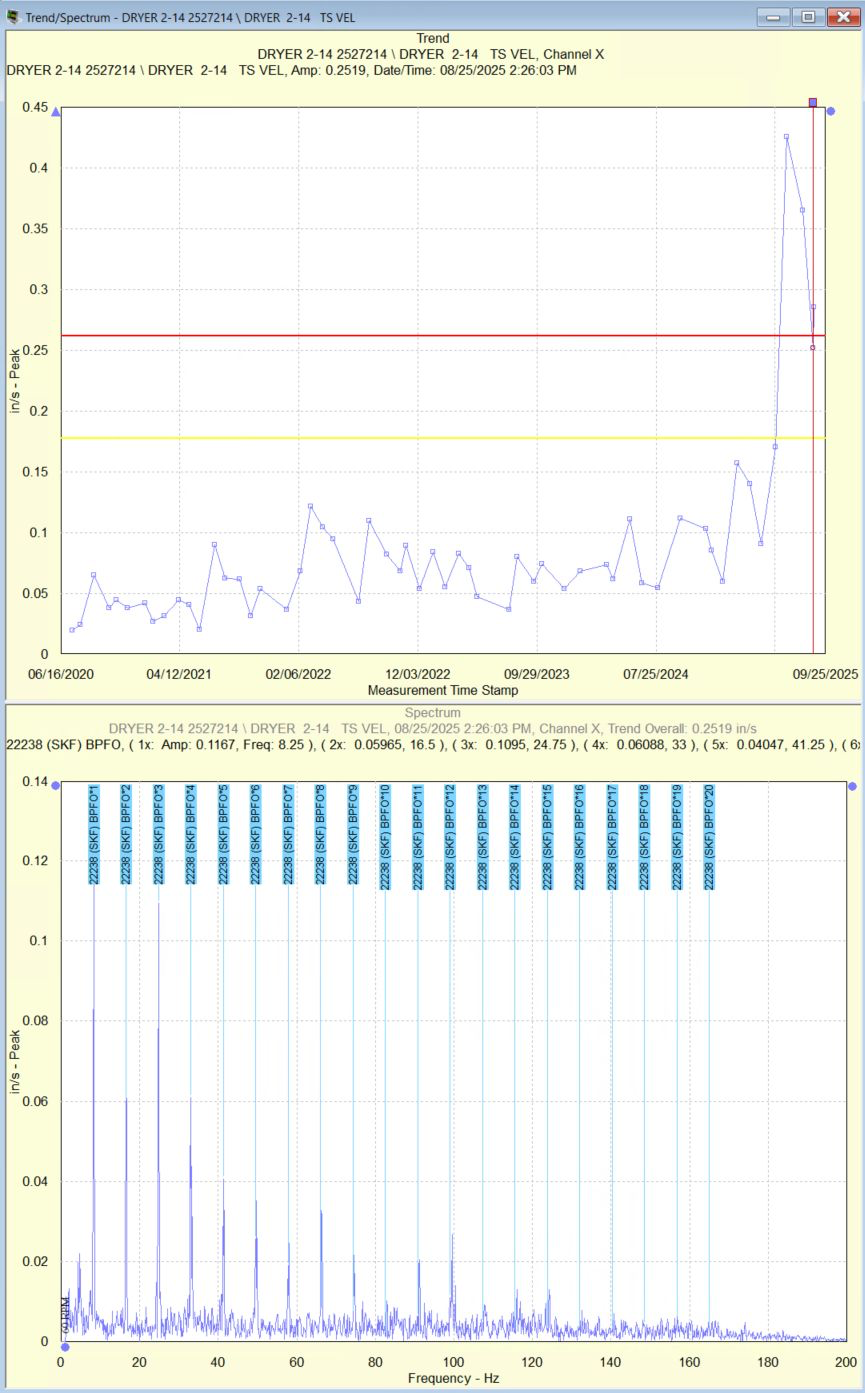
Vibration analysis on Dryer 2-14’s TS bearing detected a rapid increase in velocity readings, exceeding the alarm threshold. Spectrum analysis confirmed outer race defect signatures, leading to the discovery of severe damage upon bearing removal.
🔧 From Data to Reality: Vibration Analysis in Action 📊⚙️
Over the past months, I’ve been monitoring the vibration trend on Dryer 2-14 (TS bearing, SKF 22238C). The velocity readings showed a sharp increase from a stable baseline (~0.02–0.12 in/s pk) to peaks above 0.42 in/s pk, clearly exceeding the alarm threshold of 0.26 in/s pk.
The spectrum analysis revealed strong fault frequencies, including BPFO (outer race defect) and its harmonics, confirming damage progression. What caught my attention was that these harmonics were already visible in the velocity spectrum (a clear indication that the bearing condition had deteriorated significantly).
📈 Findings:
Rapid step change exceeding alarm limits.
Outer race defect signatures with multiple harmonics.
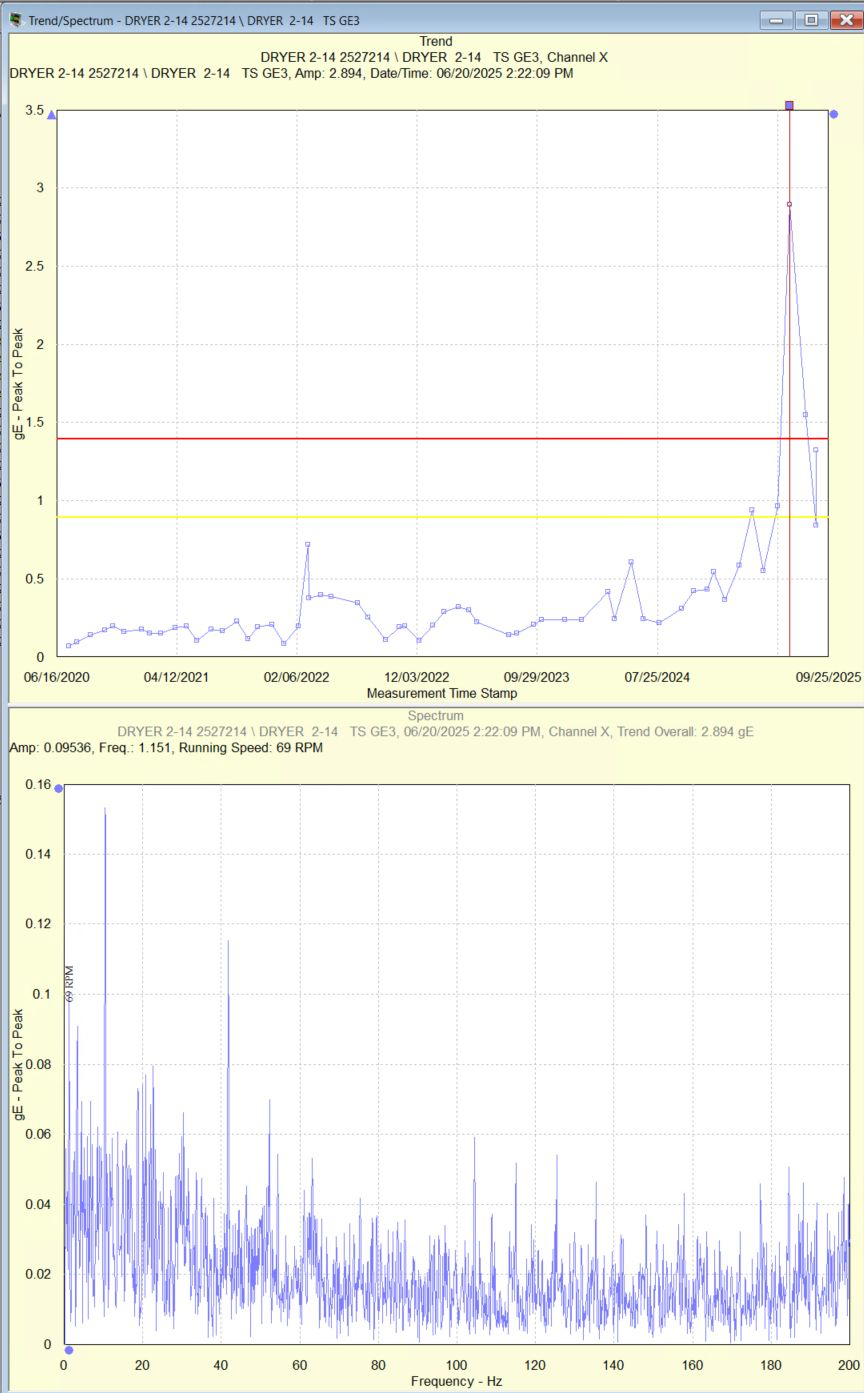
Envelope (gE) values > 2.8, confirming advanced bearing damage.
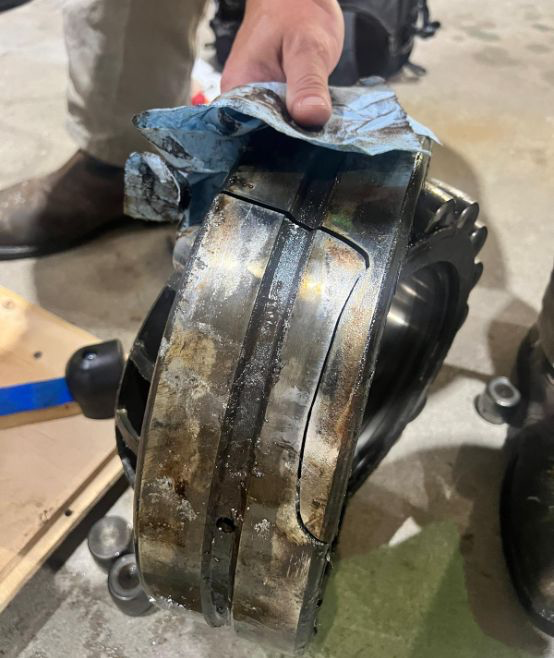
When the bearing was finally removed, the visual inspection matched the vibration diagnosis perfectly:
👉 Severe outer race spalling.
👉 Cracks and fragmentation of the raceway.
👉 Evidence of prolonged fatigue and material failure.
This is a perfect example of how condition monitoring and predictive maintenance not only prevent unexpected downtime but also provide undeniable proof of the value of vibration analysis in reliability engineering.
📌 Takeaway: Data tells the story first, the hardware confirms it later.
Additional Images