Knowing your Frequencies
The importance of accurate speed calculations for machinery, particularly complex ones like gearboxes, is emphasized. A case study is presented to demonstrate how thorough research and data analysis can lead to correct diagnoses and recommendations.
I recently had a discussion about the importance of knowing the correct speeds for an application. I have had this same conversations for year with people that tell me they can calculate that on their own from the spectrum. I will agree on things like Direct Drive Pumps or Fans or Hammer MIlls. However when it comes to more complex machines like gearboxes it becomes much more difficult when there are multiple speeds in the same machine. I was asked to comment on a write up for a bad gearbox and the request to change it out. Anyone that knows me also knows I am a stickler for doing my machine research and building out my libraries. The attached case study is my attempt to demonstrate how important both of these are when we look at our data and make our recommendations.
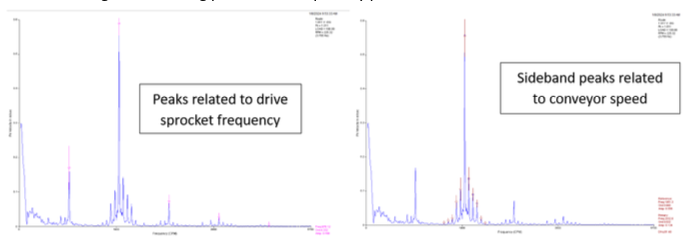
I will not say I am never wrong as I have made mistakes but that is also why I stress the need to do your research. In this case instead of the gearbox having an issue all my data and calculations point to a drive sprocket frequency. All the gearbox frequencies I had in my library and its set up to adjust them based on the input speed of the gearbox. So in the matter of 1 or 2 minutes I had access to every frequency in this gearbox and quickly calculated the drive sprocket frequency based on actual speed.
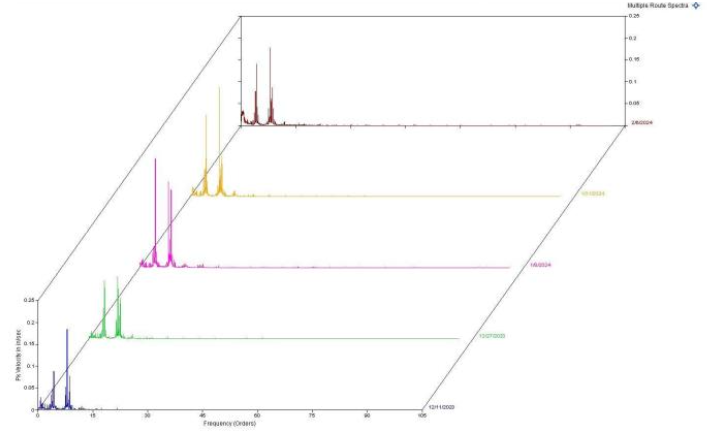
I would be interested in hearing others thoughts on the pattern and sidebands described in this case study.
Additional Images