Failure: Bearing but Root Cause: Looseness
Vibration analysis can identify the effects of mechanical looseness, such as harmonic patterns and amplitude modulation, but cannot pinpoint the exact physical defect. In a case study, a bearing rotating inside its housing was identified as the root cause of looseness, despite low overall vibration levels. This highlights the importance of physical inspection in confirming the source of faults.
🔍 Vibration Analysis Isn’t Magic — We Diagnose Effects, Not X-Ray Machines: A Looseness Case Study
A few days ago, I encountered a case that perfectly illustrates a crucial concept in vibration analysis.
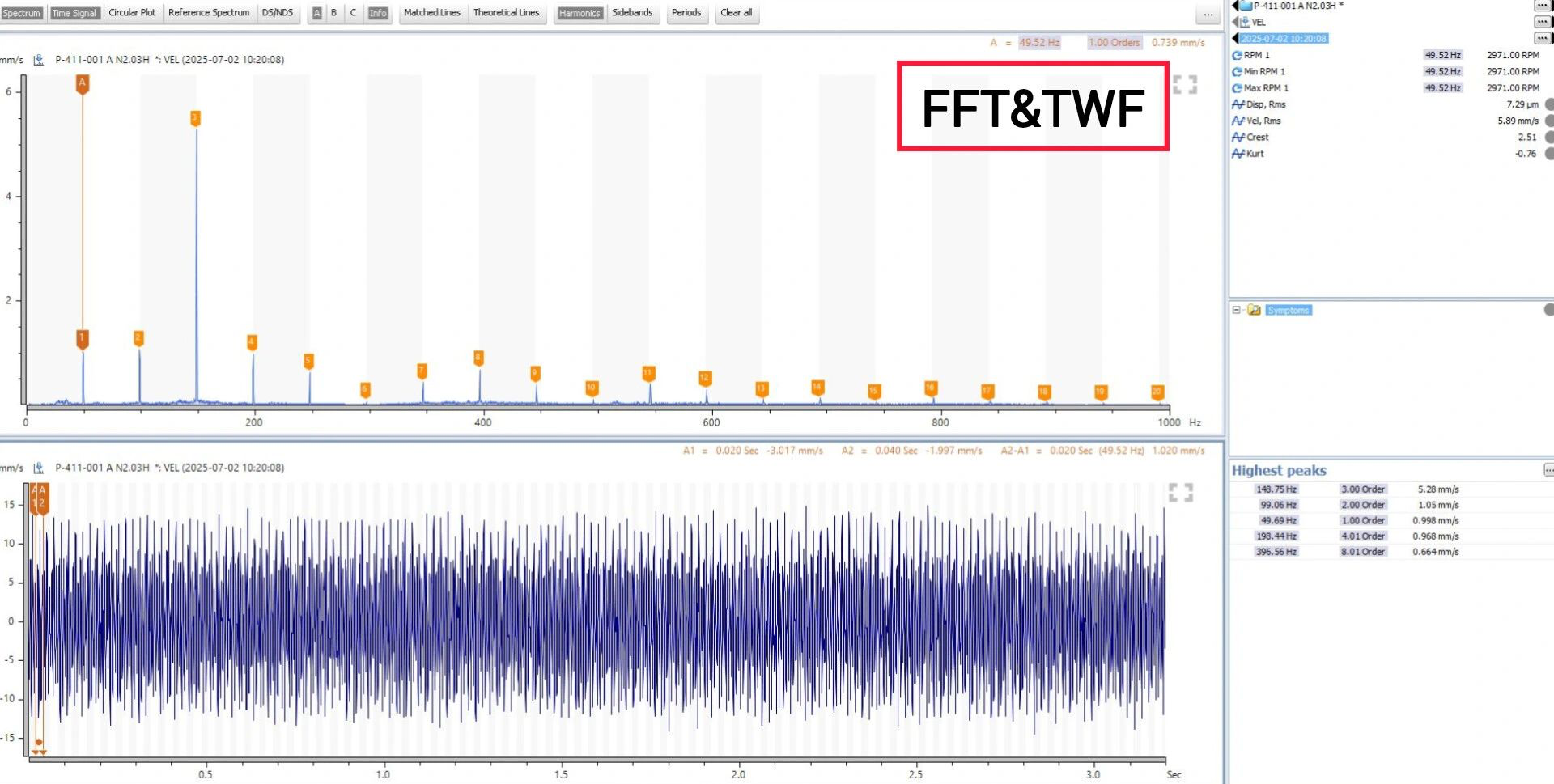
📅 From day one of startup, I noticed a clear looseness pattern in the frequency spectrum — multiple harmonics extending up to high orders — but the overall vibration RMS was low.
I reported that Rotating Looseness exists, but at that moment, it wasn't severe enough to affect operations.
📈 Over time, vibration amplitudes gradually increased, and so did the harmonic peaks.
That’s when the machinery team started pushing:
➡️ “Tell us where exactly the looseness is!”
➡️ “Which component is loose?”
🧠 And here’s where a common misconception arises.
---
🎯 Vibration Analysts Don’t See the Physical Defect – We See Its Effects.
🔎 We observe symptoms like:
🔹 Harmonic Patterns
🔹 Amplitude Modulation
🔹 Impacting in the Time Waveform
But we cannot see if a bearing is spinning in its housing, if the shims are damaged, or if there's a crack in the casing.
That requires physical inspection.
🛠️ We did try alignment corrections, which slightly reduced overall vibration levels.
But the looseness pattern in the spectrum remained unchanged.
➡️ This was a clear sign that misalignment was a secondary issue — the root cause was mechanical looseness.
Eventually, I insisted:
👉 “You have to open the pump and inspect the internal fits.”
🔍 Upon disassembly, they discovered:
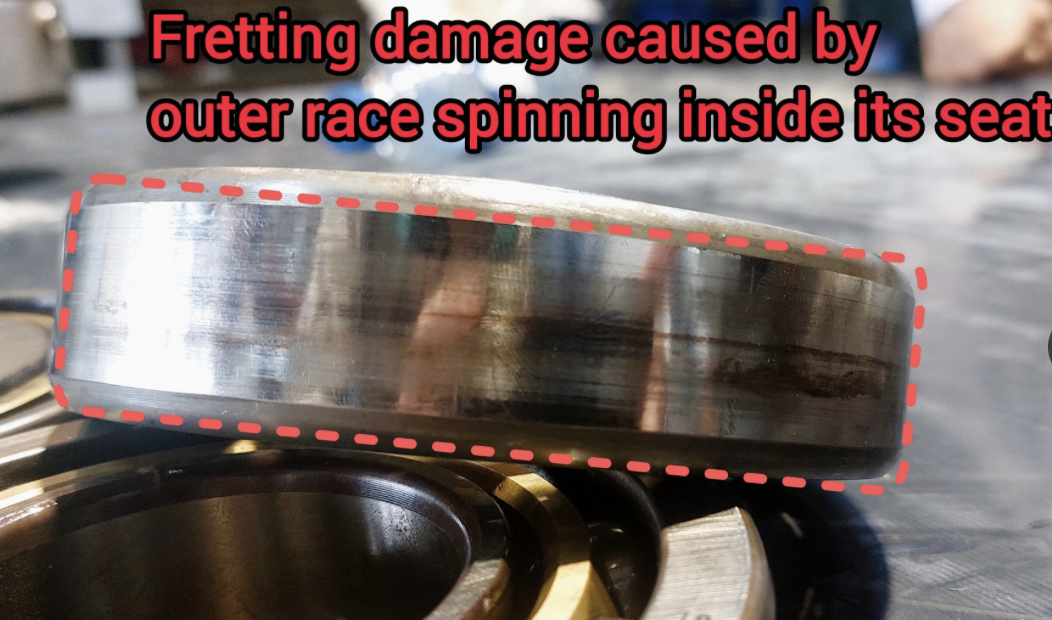
⚠️ One of the bearings was rotating inside its housing, leaving clear fretting marks on the outer race.
---
🛑 Takeaway:
Condition Monitoring gives you the map of where to look.
It highlights the effects of faults.
But sometimes, the root cause can only be confirmed through physical inspection.
🧰 In this case, at least the inspection team had a clear direction:
➡️ LOOK FOR LOOSENESS.
---
❓ Question for you:
📌 Have you ever faced a situation where you saw a clear fault signature, but the team expected you to pinpoint the exact physical defect?
How did you handle it?
Additional Images