Vertical Pump Wear in the Bushings
A vertical pump experienced increasing vibration levels, indicating wear in the bushings. Despite initial low vibration readings on the ball bearing, the issue escalated to dangerous levels, necessitating dismantling and revealing the extent of the damage.
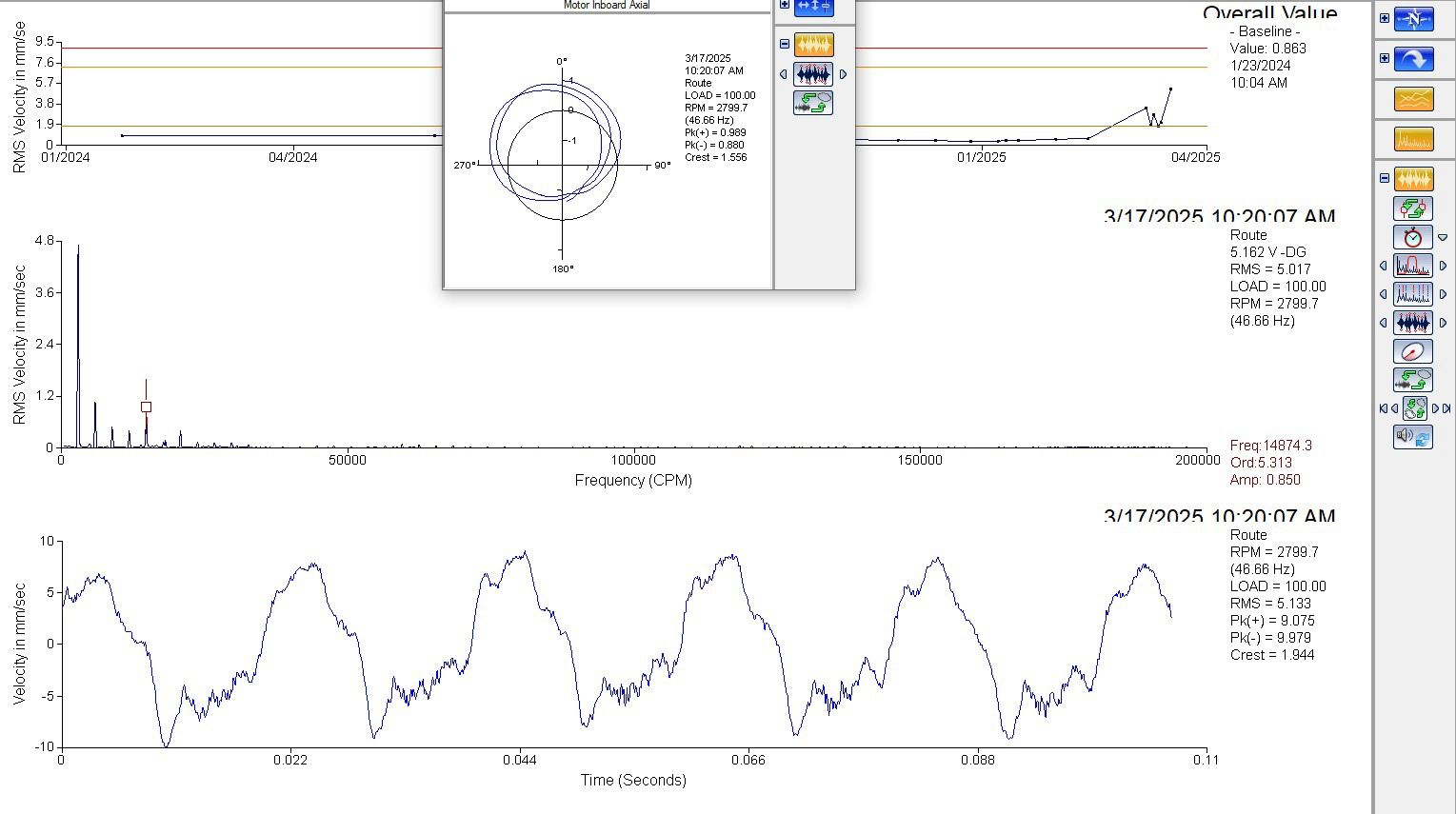
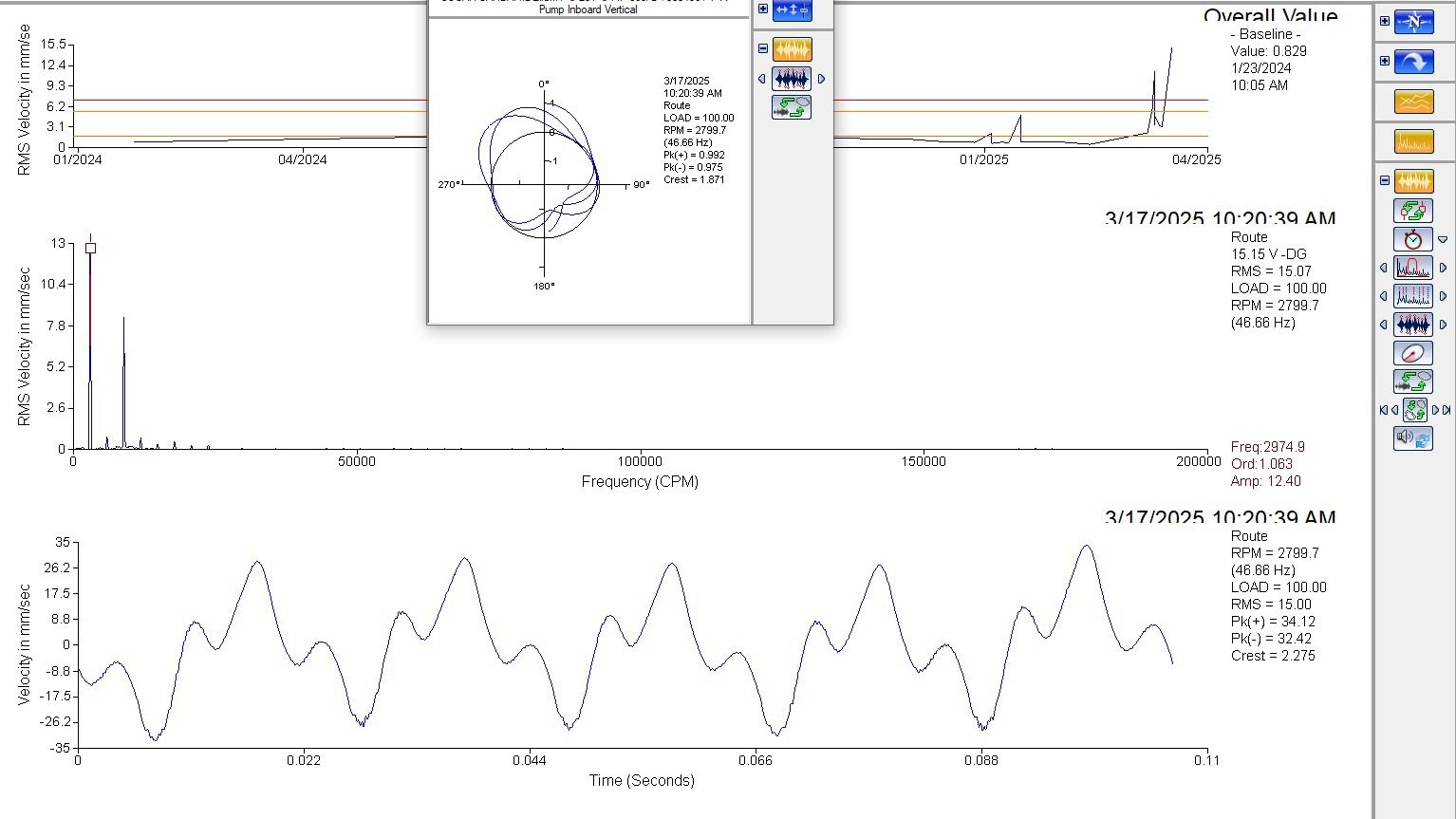
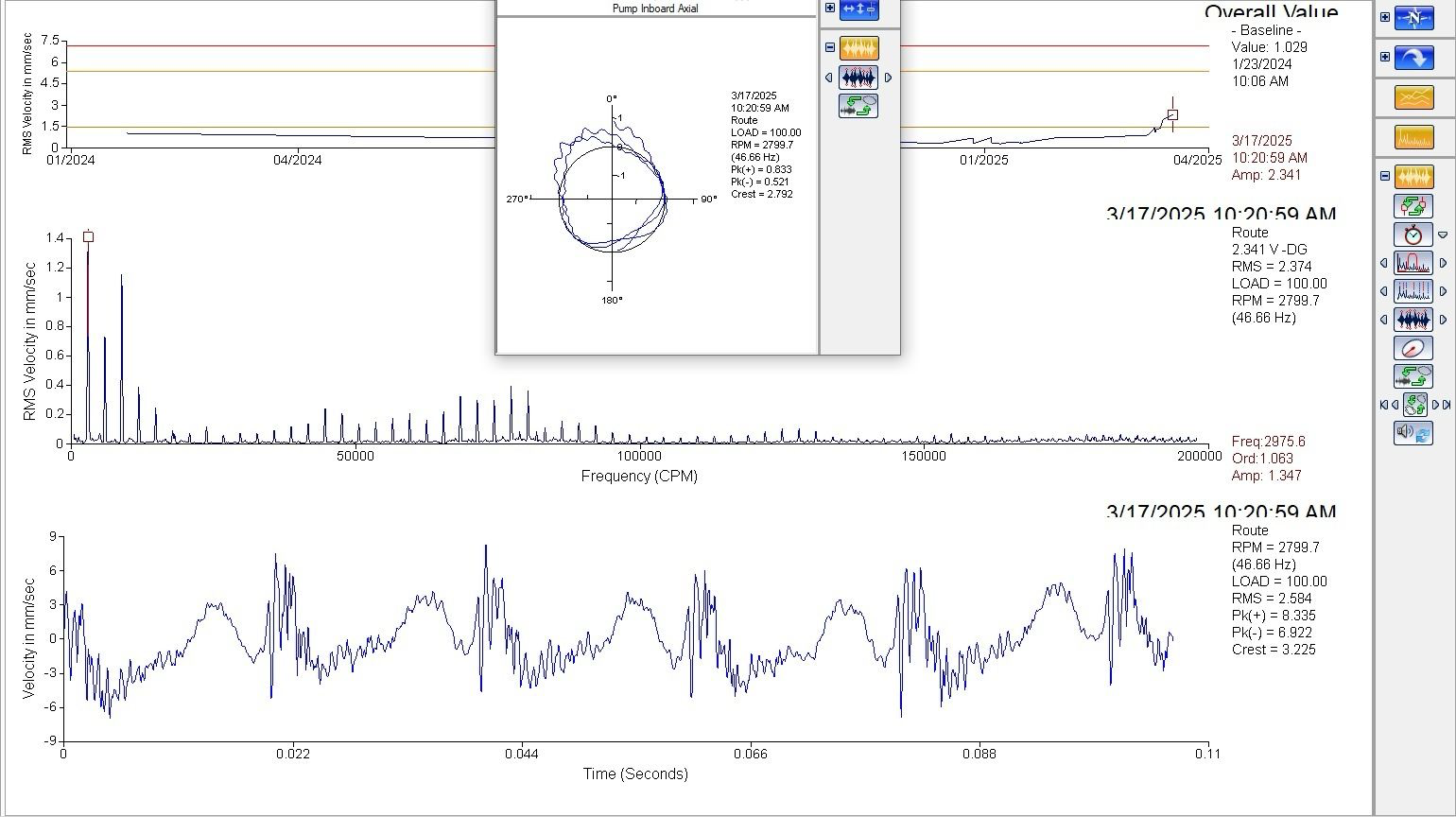
Today I want to share a story about a vertical pump. This issue has happened multiple times. The first time, I didn’t exactly know what was going on with this goddamn pump, because I couldn’t measure the bushings located deep inside. If you can’t even access and measure them, how can you confidently say there’s a problem, right? But after seeing a few similar cases, I started to recognize the symptoms through experience. I can only measure vibration on the motor and the pump’s ball bearing. Initially, the motor was running with an unbalance, showing 5–6 mm/s RMS vibration. However, the vibration on the pump’s ball bearing was still low, not even reaching 1 mm/s RMS.
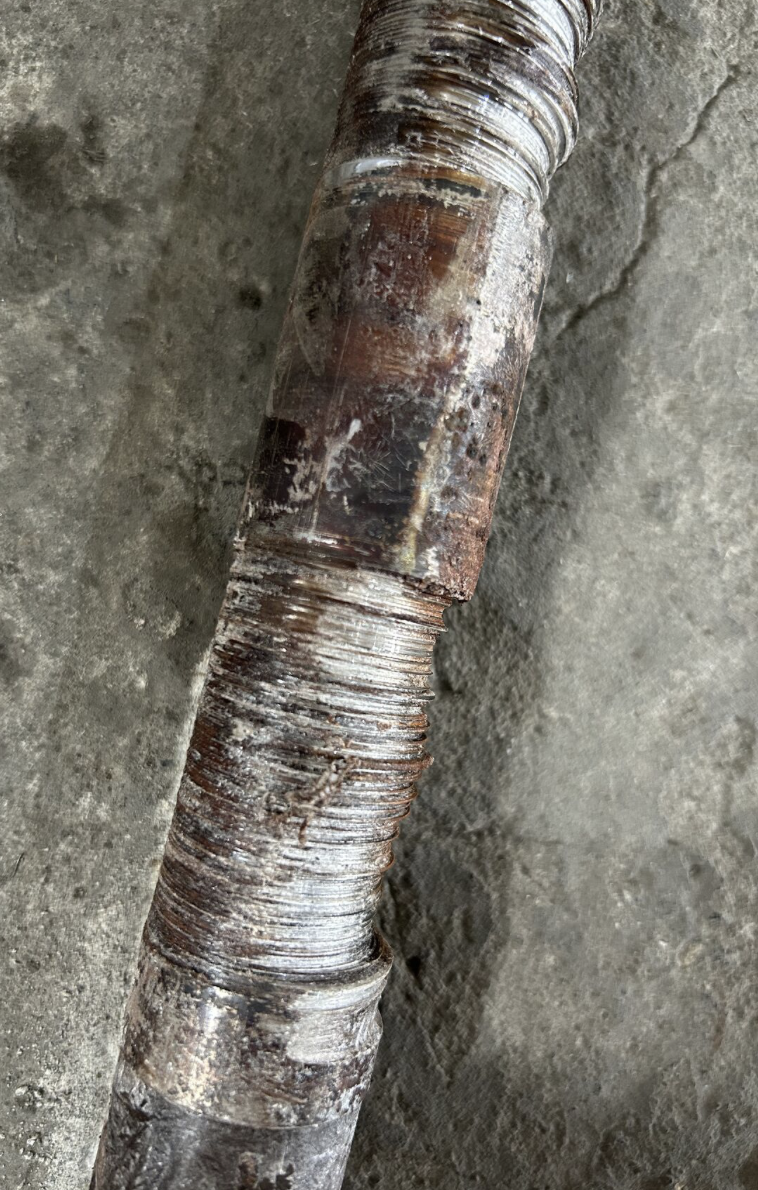
Despite this, I felt something was wrong. When a motor runs unbalanced, it usually means the pump bushings are already starting to wear. Still, I had to wait — because 1 mm/s RMS on the bearing wasn’t enough to justify an official report. Nevertheless, I shared my observations with other teams. Day by day, the vibration increased to 10 mm/s on the motor and 3–4 mm/s on the ball bearing. On top of that, the pump was no longer retaining oil, so we had to add oil every day just to keep it running temporarily. Eventually, the vibration levels reached (on verticals) 45 mm/s RMS on the motor and 15 mm/s RMS on the pump. At this point, the equipment could have failed completely at any moment and caused a serious accident. So u can see the pictures of the equipment after it was dismantled, along with some spectrums, time waveforms (TWF), and trend data.
Additional Images