Multistage Pump - Misjudging Data Case
A multistage pump exhibited unusual vibration signals after a bearing replacement, with impacts and modulation at 1X rotational frequency and 3.13 Hz. After 24 hours of operation, the signals normalized, suggesting the transient behavior was due to factors like axial float adjustment, mounting stress, or settling components. This case highlights the importance of patience and re-monitoring in condition monitoring to avoid misjudging data.
A pump, a bearing replacement, and vibration signals telling a story…
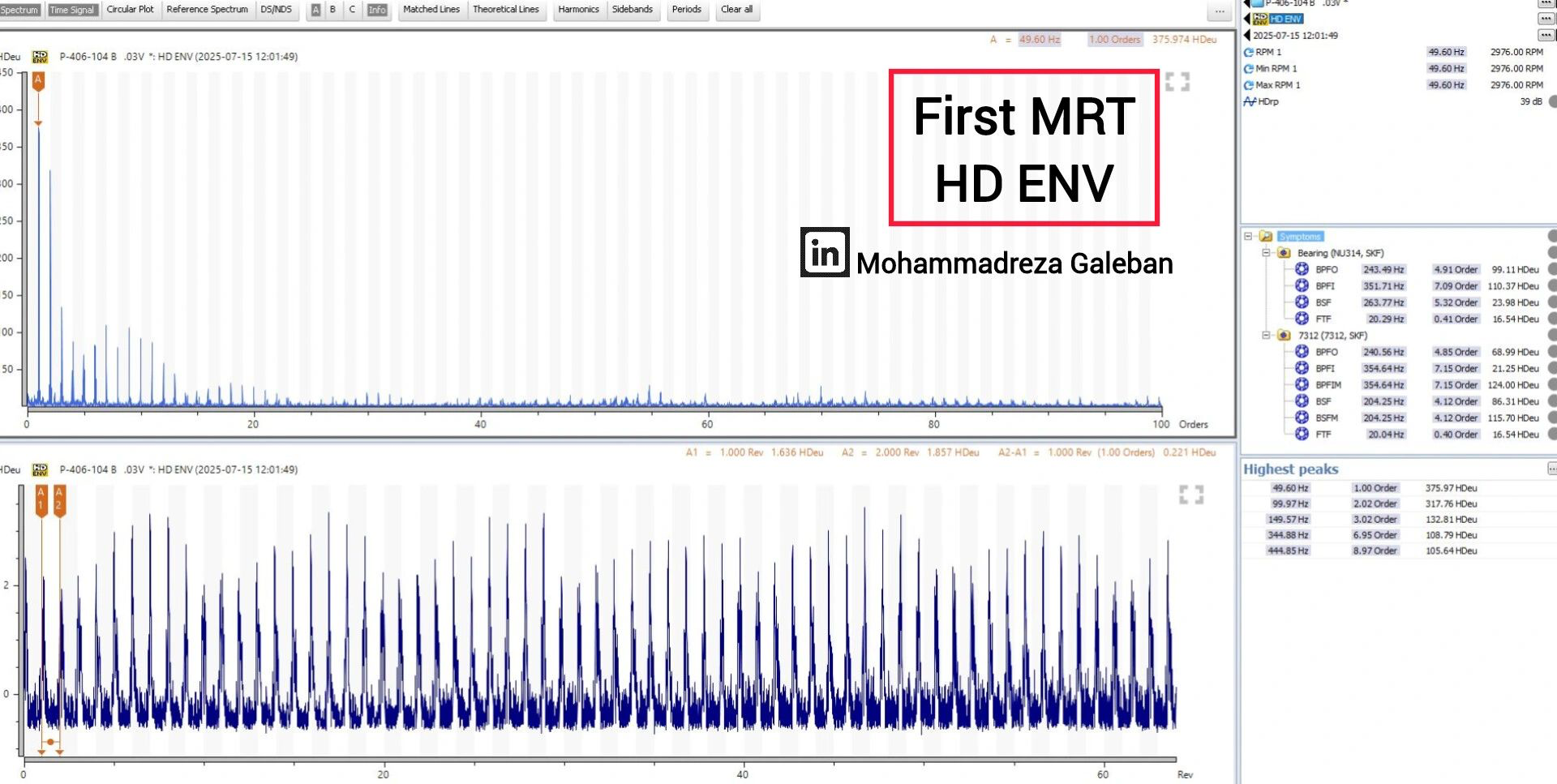
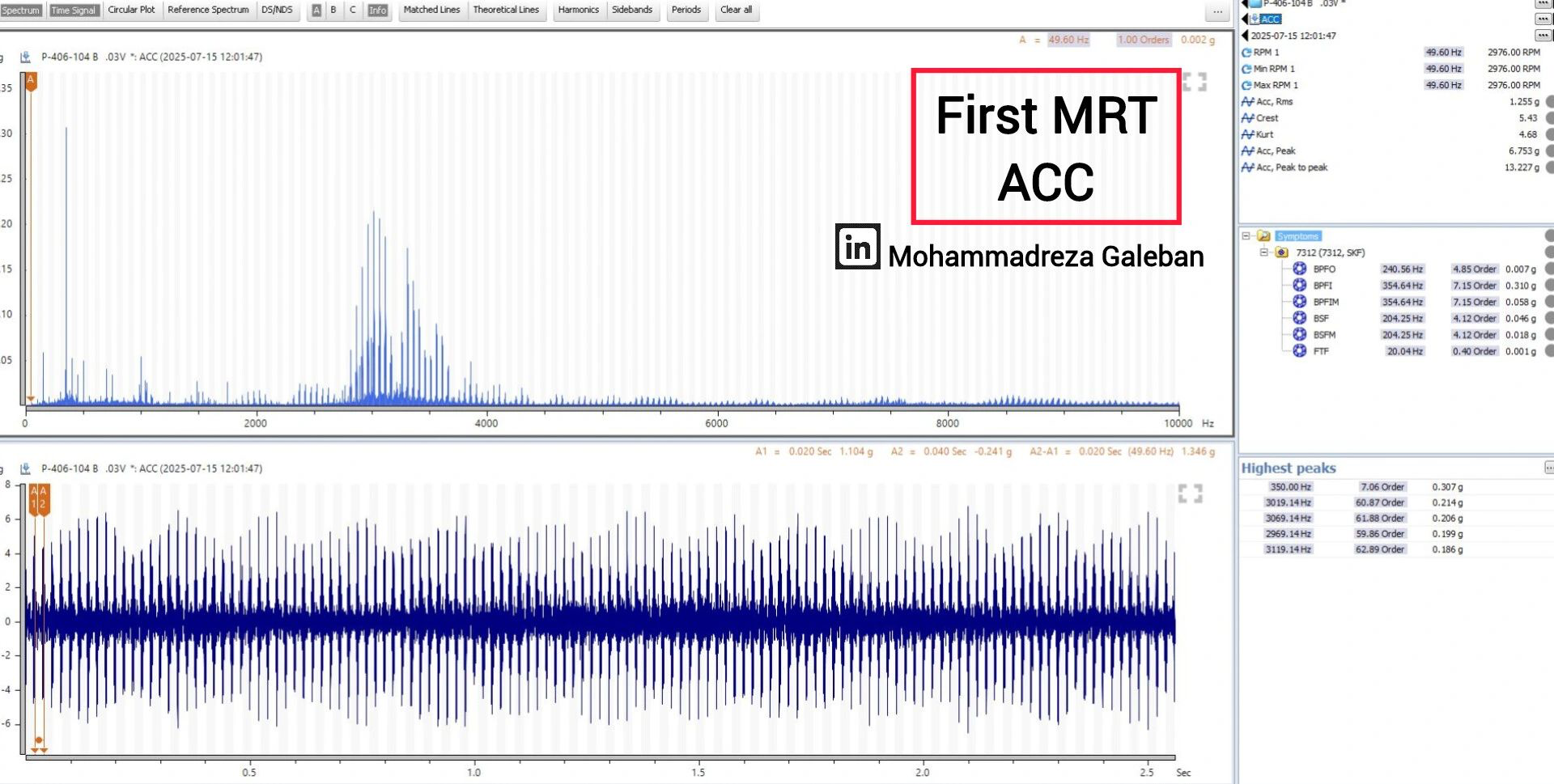
A few days ago, we returned a between-bearing multistage pump to service after replacing the DE-side bearing (NU314). But right after the MRT, the vibration signals began telling a very different story:
📉 In the time waveform, distinct impacts appeared at 1X rotational frequency.
🎯 More interestingly, these impacts were amplitude-modulated at around 3.13 Hz.
🔊 In the frequency spectrum, clear sidebands surrounded the rotational frequency.
🌀 In the circular plot, impacts were clearly visible — with strongly nonlinear behavior.
❓The big question was:
The bearing was brand new — so where were all these impacts and modulation coming from?
---
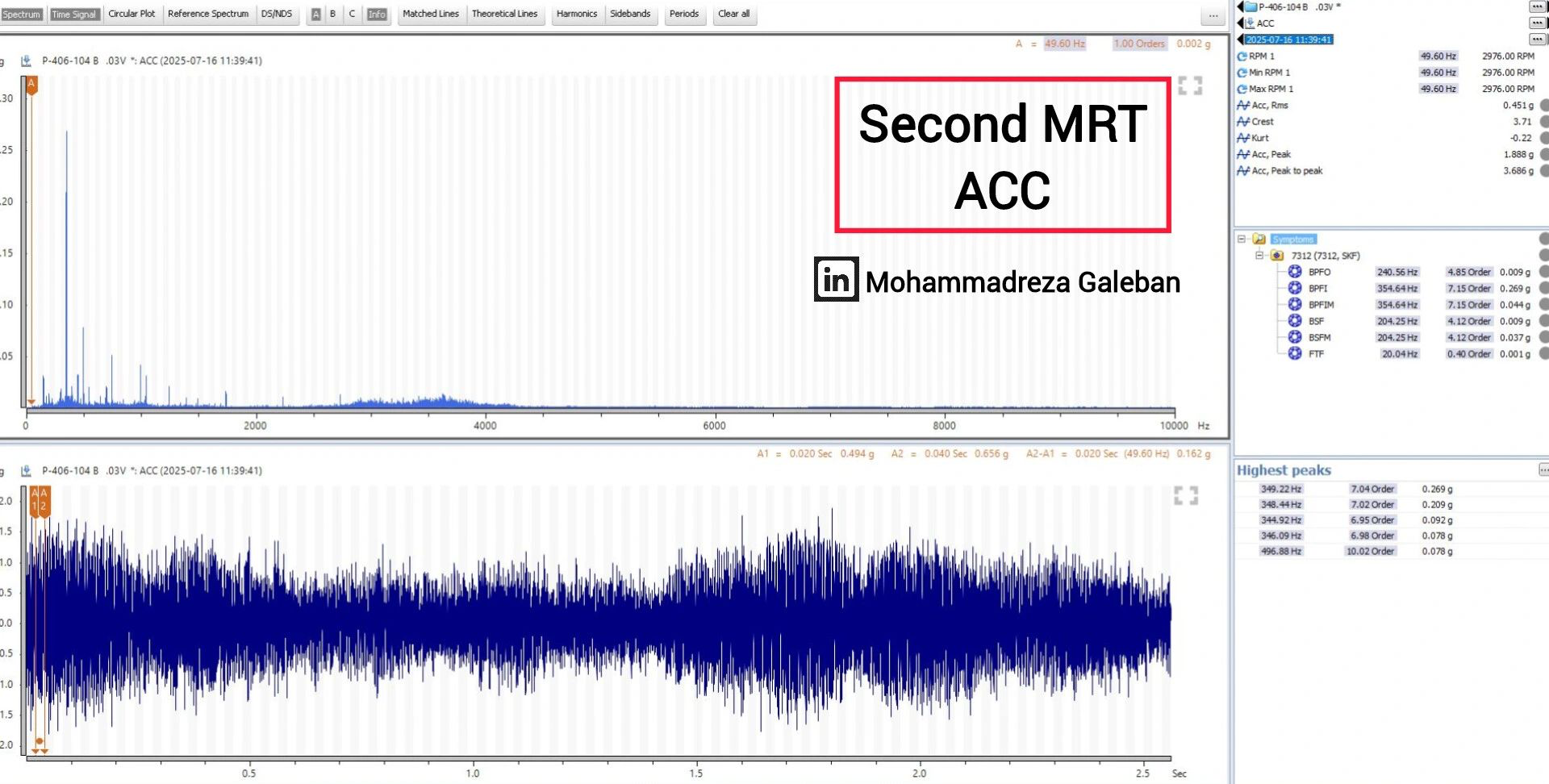
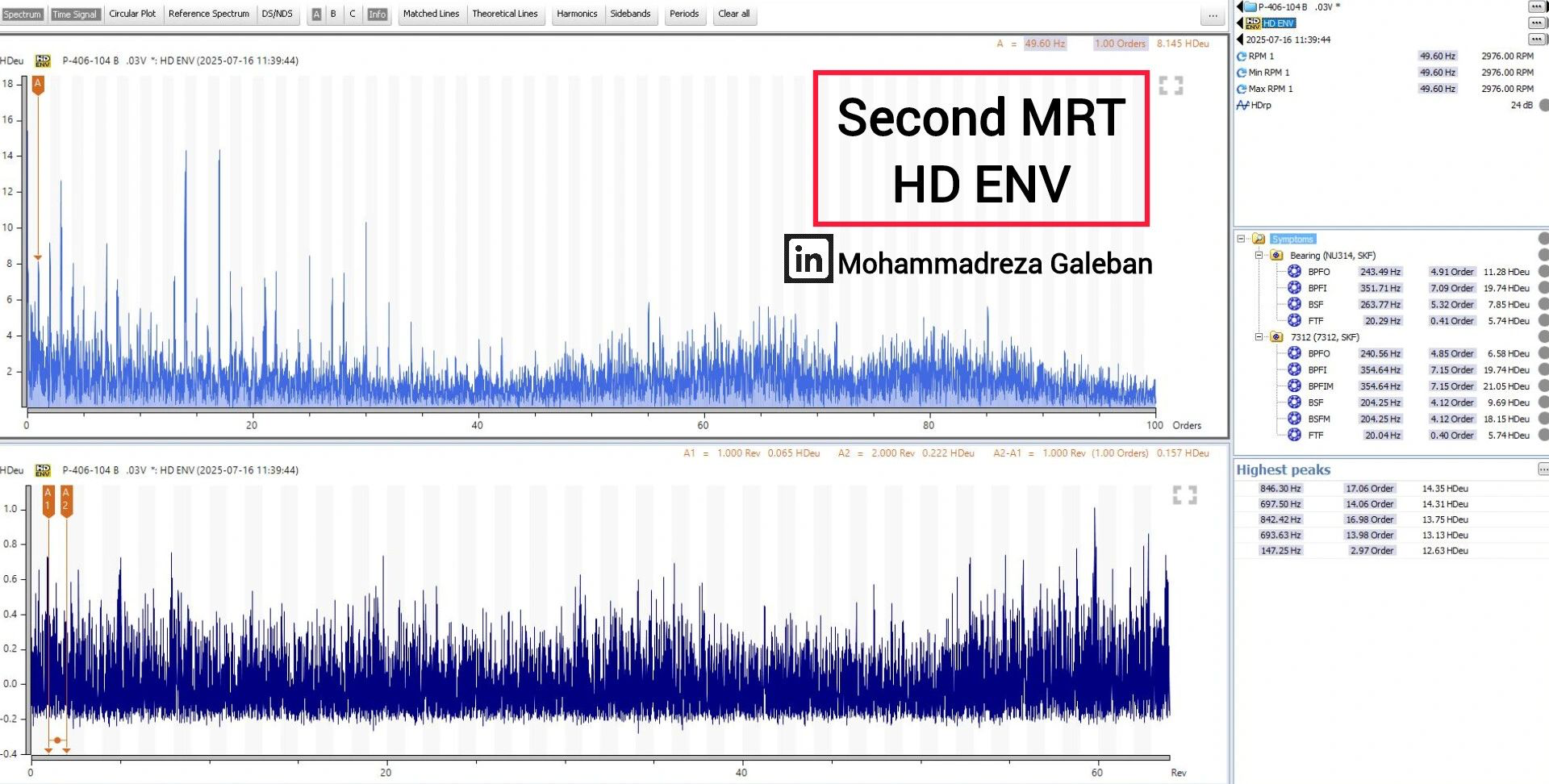
✅ But just one day later, after 24 hours of continuous operation and a new set of data:
❌ No impacts
❌ No sidebands
❌ No modulation
📊 The signals had fully returned to normal.
---
🔬 Our interpretation? This transient behavior could have come from a few potential scenarios:
1️⃣ Imperfect axial float adjustment:
With NU314 bearings, if axial clearance or shaft positioning isn't set correctly during assembly, it can cause initial dynamic imbalance — which stabilizes after components warm up and settle.
2️⃣ Preload or mounting stress in the bearing:
If the bearing was installed with excessive radial or axial stress, it may create transient impacts or modulation — which disappear as internal stresses relax during operation.
3️⃣ Settling of coupling or base mounts:
Slight misalignment in shimming or coupling can generate cyclic forces during startup — but stabilize after a few hours of operation.
4️⃣ Transient behaviors like cavitation or trapped air:
Temporary flow instabilities can lead to modal excitation or soft contact — disappearing once the flow becomes fully stable.
---
🔄 But what about that 3.13 Hz frequency?
It was most likely modulation caused by axial rotor oscillations or internal transient pressure variations — disappearing as the system reached dynamic equilibrium.
---
🛠️ Key takeaways from this case?
✅ A new bearing doesn't mean it's faulty — sometimes it’s just new.
✅ Not every peak is a defect — sometimes it’s just an unsettled setup.
✅ Most importantly:
In condition monitoring, rushing = misjudging.
🧠 A professional analyst knows that sometimes, the best response to a suspicious signal is patience and re-monitoring under more stable conditions.
---
📌 When the data seems to be screaming...
...the truth might be quietly waiting just a few hours ahead.
Additional Images