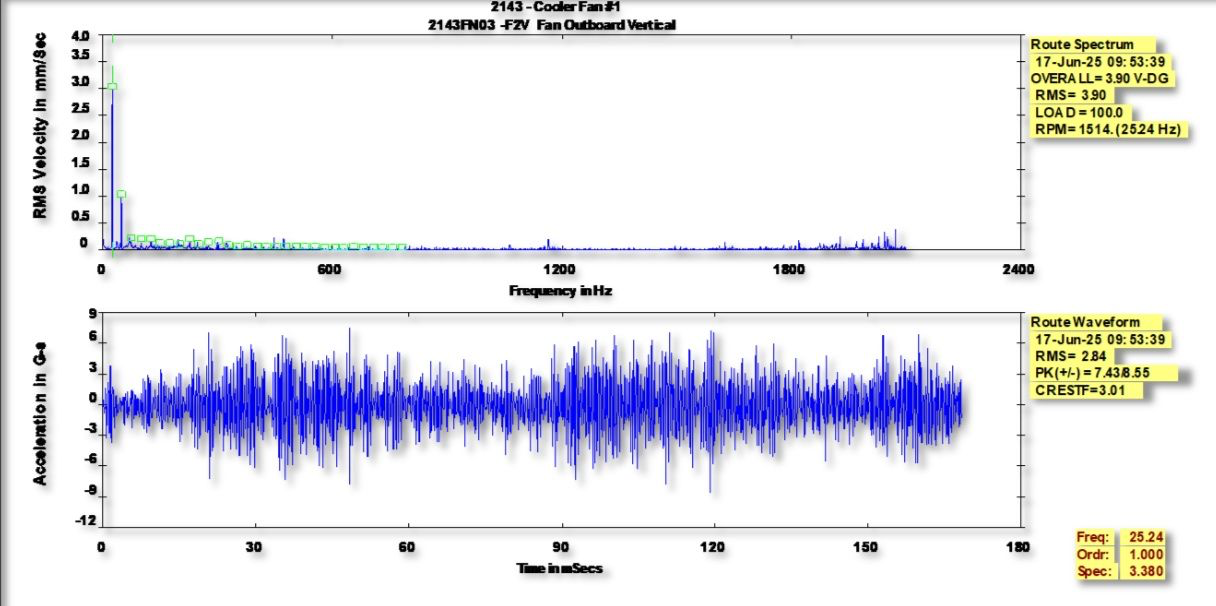
Early Stage Internal Bearing Distress
Early vibration analysis, particularly time waveform and high-frequency data, identified internal bearing distress despite normal RMS values. This highlights its advantage in detecting localized issues early.
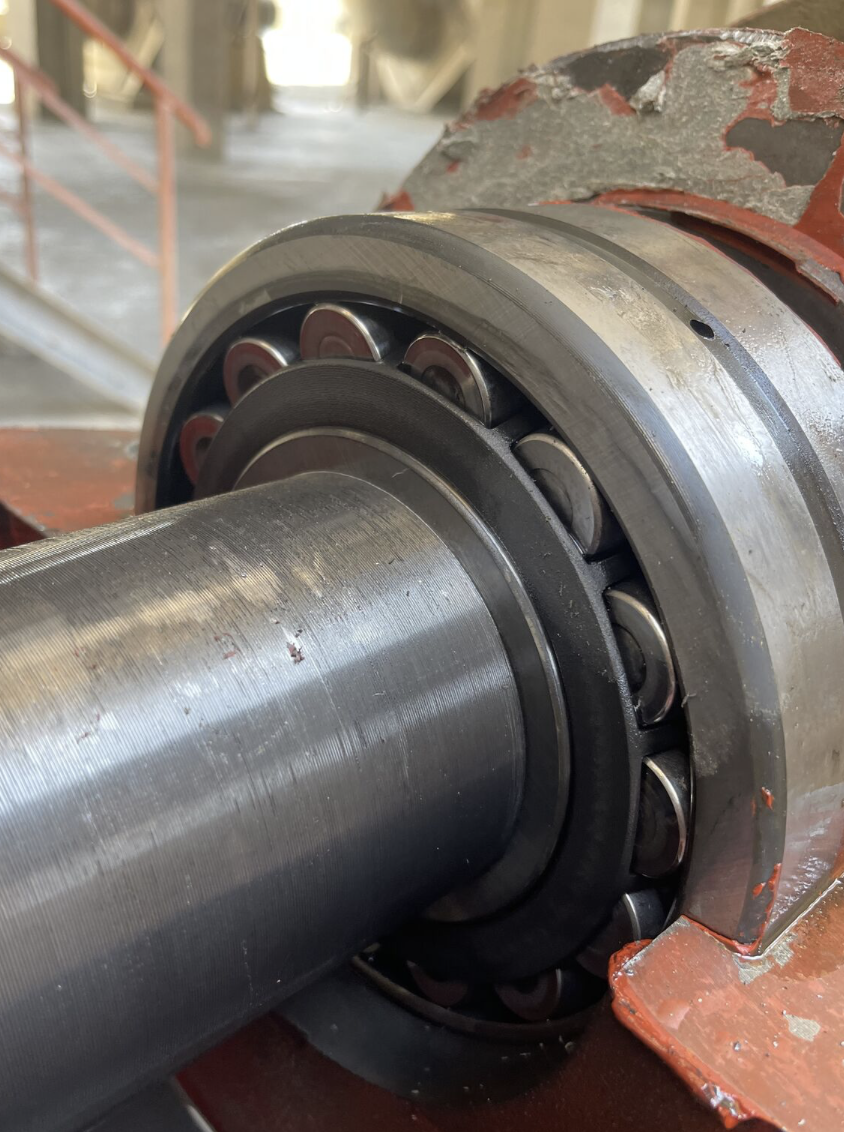
Even though overall vibration levels were not significantly elevated, early-stage vibration analysis particularly through time waveform and high-frequency acceleration data proved critical in identifying internal bearing distress. Distinct high-g impacts captured in the time waveform were consistent with the presence of heavy clinker particulates discovered during physical inspection. This case highlights the advantage of early vibration analysis in detecting localized issues before they escalate, even when traditional RMS values remain within acceptable limits.
Additional Images