Vertical Pump Motor Structural Resonance
A vertical pump motor experienced excessive vibration due to structural resonance. A Dynamic Vibration Absorber (DVA) was designed and installed, reducing vibration by 85% and mitigating the risk of failure.
Reliability Improvement Through Structural Resonance Mitigation
High vibration levels in rotating equipment are not just a maintenance concern—they are a serious reliability threat that may lead to premature failure and costly downtime.
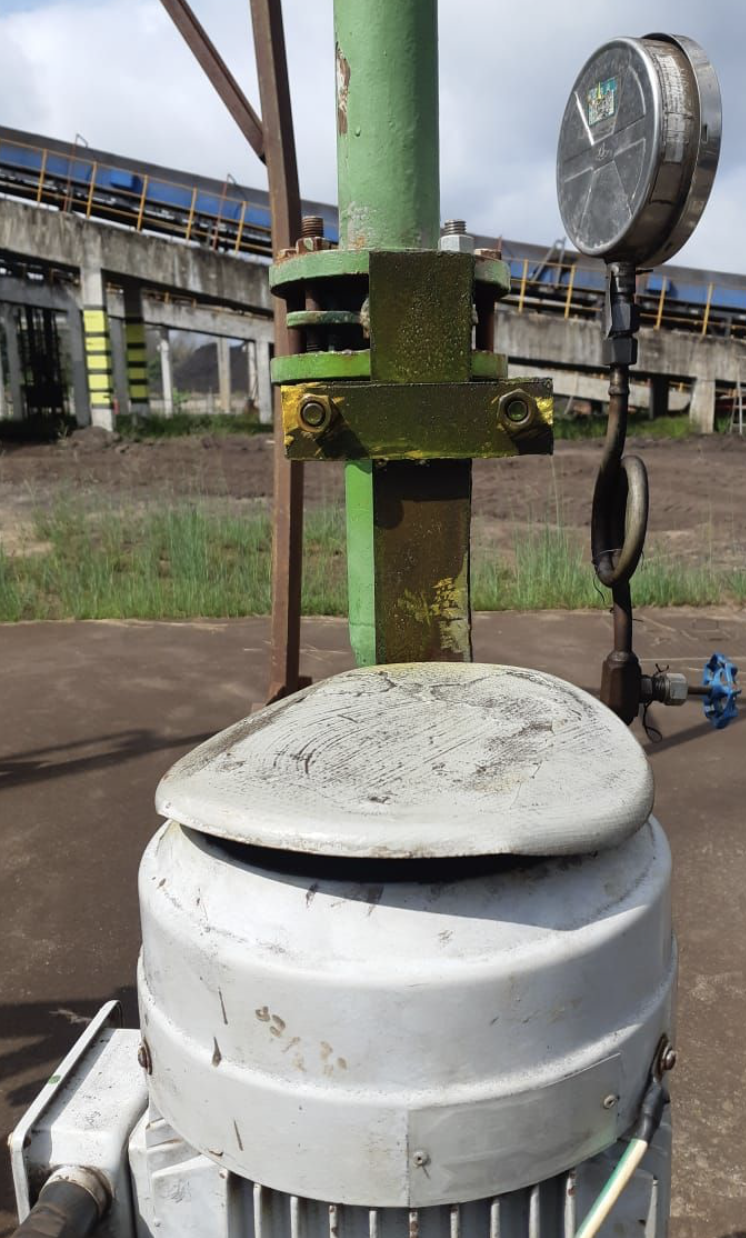
Recently, We have the opportunity to lead a reliability improvement project involving a vertical pump motor (2980 RPM) installed in the coal contain system, which experienced excessive vibration at the Non-Drive End (NDE) horizontal direction. The vibration reached 11.01 mm/s RMS, placing the equipment in the "Danger" zone based on ISO 10816-3 standards.
📊 Root Cause Analysis
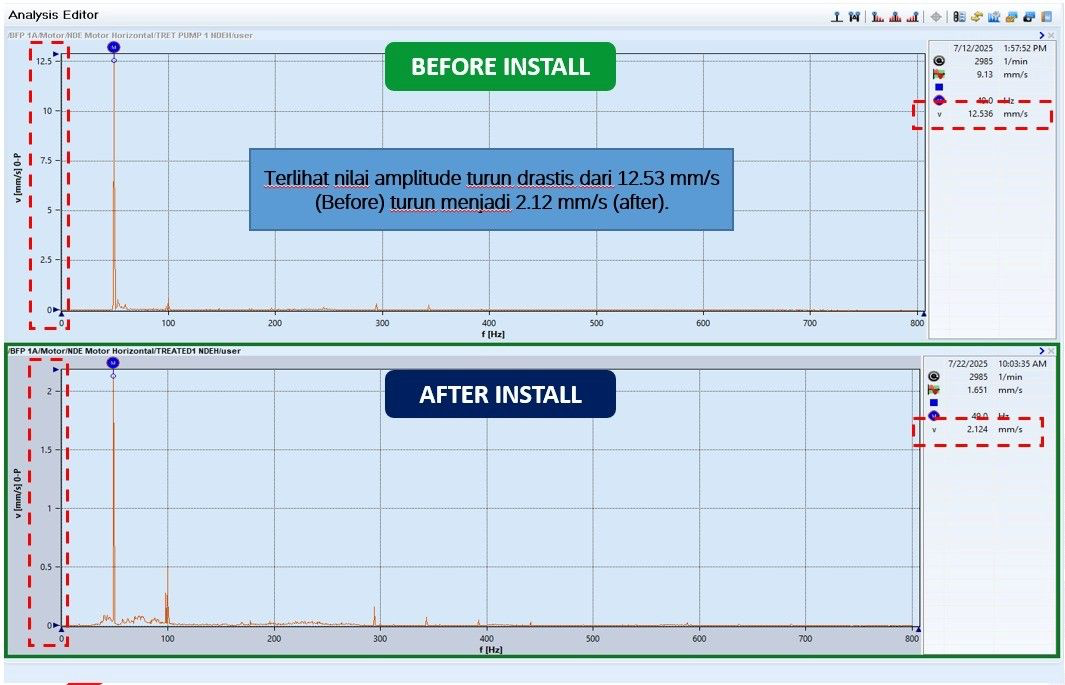
Using a combination of frequency spectrum analysis and bump test (impact testing), the root cause was identified as structural resonance. The natural frequency of the support structure was found to be 47 Hz, closely matching the motor’s 1× running speed at 49 Hz—a classic case of resonance amplification.
🛠️ Engineering Solution – Dynamic Vibration Absorber (DVA)
To resolve this issue, We designed and implemented a Dynamic Vibration Absorber (DVA) tuned specifically to the problematic frequency. The process included: Natural frequency identification via bump test , Calculation of optimal mass and stiffness for the DVA, Frequency simulation using SolidWorks Simulation to validate the design, Precision fabrication and validation testing of the DVA. Final installation on the motor’s NDE horizontal structure
📉 Results
After the DVA installation:
Vibration reduced from 11.01 mm/s RMS to 1.65 mm/s RMS – an 85% reduction. Spectral amplitude at 1× running speed decreased from 12 mm/s to 2.1 mm/s. Equipment status shifted from "Danger" to "Normal"
Risk of failure and downtime significantly mitigated.
🎯 Takeaway
This project reinforced the importance of dynamic analysis and proactive design in resolving resonance-related issues. It also demonstrated how combining simulation tools with field diagnostics can lead to data-driven, effective, and sustainable engineering solutions.
This initiative will now serve as a reference model for similar resonance cases across the plant, as we move towards more predictive and precision-based maintenance strategies.
Additional Images