Centrifugal Compressor Diffuser Stall - Aerodynamic Instability
Diffuser stall, an aerodynamic instability, can damage centrifugal compressor rotors by causing a non-uniform pressure profile. This instability, often indicated by sub-synchronous vibrations, can lead to rotor failure, especially in low flow conditions. Mitigation strategies include risk assessments, process simulations, predictive data analysis, and periodic inspections.
𝗔𝗲𝗿𝗼𝗱𝘆𝗻𝗮𝗺𝗶𝗰 𝗜𝗻𝘀𝘁𝗮𝗯𝗶𝗹𝗶𝘁𝘆 𝗖𝗮𝘂𝘀𝗶𝗻𝗴 𝗥𝗼𝘁𝗼𝗿 𝗙𝗮𝗶𝗹𝘂𝗿𝗲 🌟🚀
𝘿𝙞𝙛𝙛𝙪𝙨𝙚𝙧 𝙎𝙩𝙖𝙡𝙡: 𝘼 𝙎𝙞𝙡𝙚𝙣𝙩 𝙏𝙝𝙧𝙚𝙖𝙩 𝙩𝙤 𝘾𝙚𝙣𝙩𝙧𝙞𝙛𝙪𝙜𝙖𝙡 𝘾𝙤𝙢𝙥𝙧𝙚𝙨𝙨𝙤𝙧𝙨
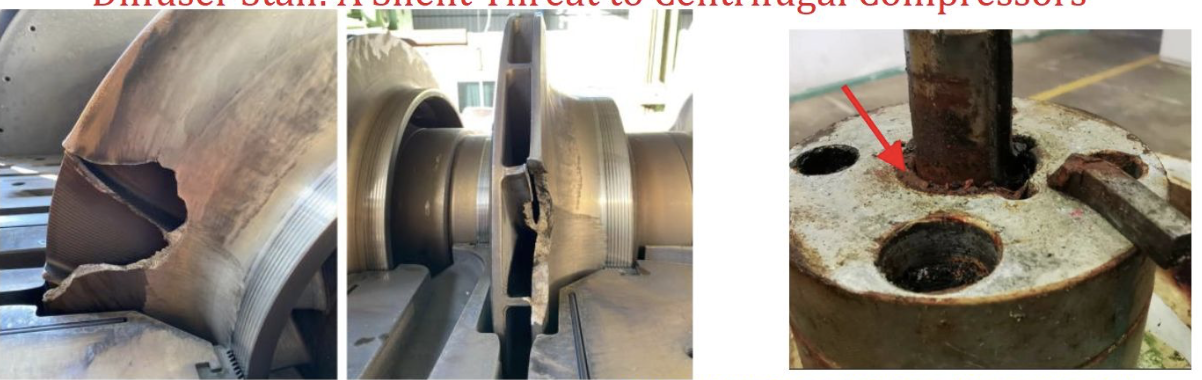
Diffuser stall is one of the aerodynamic instabilities that can damage a centrifugal compressor rotor. When operating near the predicted surge line, the flow becomes unstable, initiating a non-uniform pressure profile across the impeller tip and diffuser inlet. While short-term exposure (a few hours) might not be problematic, prolonged exposure (months or more) can be detrimental.
𝗖𝗮𝘀𝗲 𝗦𝘁𝘂𝗱𝘆: 𝗥𝗼𝘁𝗼𝗿 𝗙𝗮𝗶𝗹𝘂𝗿𝗲 𝗗𝘂𝗲 𝘁𝗼 𝗗𝗶𝗳𝗳𝘂𝘀𝗲𝗿 𝗦𝘁𝗮𝗹𝗹
A centrifugal compressor rotor failed after operating for over six months at reduced throughput due to production well depletion. A diffuser stall likely occurred, exciting the impeller shroud's natural frequency, leading to the failure of the impeller shroud. This failure can accelerate with increased moisture in the hydrocarbon gas.
𝗗𝗲𝘁𝗲𝗰𝘁𝗶𝗼𝗻 𝗮𝗻𝗱 𝗠𝗼𝗻𝗶𝘁𝗼𝗿𝗶𝗻𝗴
Detecting diffuser stall is challenging. Vibration monitoring and diagnostics can help, as the diffuser stall may be indicated by sub-synchronous vibrations in 𝘵𝘩𝘦 0.1𝘹 𝘵𝘰 0.3𝘹 𝘧𝘳𝘦𝘲𝘶𝘦𝘯𝘤𝘺 𝘳𝘢𝘯𝘨𝘦 and at the vane pass frequency. Attention is needed for any centrifugal compressor showing these vibration signatures and operating at lower throughput to avoid diffuser stall.
𝗠𝗶𝘁𝗶𝗴𝗮𝘁𝗶𝗼𝗻 𝗦𝘁𝗿𝗮𝘁𝗲𝗴𝗶𝗲𝘀
𝙎𝙝𝙤𝙧𝙩-𝙏𝙚𝙧𝙢 𝙈𝙞𝙩𝙞𝙜𝙖𝙩𝙞𝙤𝙣𝙨:
1- Conduct thorough risk assessments.
2- Perform process simulations to monitor moisture content and avoid Joule-Thompson effects.
3- Use predictive data analysis to identify parameters that could cause equipment to trip.
4- Conduct detailed vibroacoustic analysis to determine safe compressor speed ranges.
5- Adjust the surge control line margin to allow lower flow with a closed anti-surge valve.
6- Perform periodic inspections on the driver’s hardware and ensure spare parts availability.
7- Regularly inspect the anti-surge valve and ensure spare parts availability.
𝗟𝗼𝗻𝗴-𝗧𝗲𝗿𝗺 𝗠𝗶𝘁𝗶𝗴𝗮𝘁𝗶𝗼𝗻𝘀:
1- Re-rate the centrifugal compressor to accommodate depleting reservoirs.
2- Conduct feasibility studies to identify and mitigate process and equipment bottlenecks for low flow operation.
𝗖𝗢𝗡𝗖𝗟𝗨𝗦𝗜𝗢𝗡
Operating at low flow conditions can cause extensive damage and incur high repair costs. Implementing short-term and long-term mitigation strategies based on lessons learned can help ensure the integrity of equipment and production. If low flow conditions are expected to be permanent, long-term solutions should be put in place to maintain equipment and production integrity.
Additional Images
