Circulation Multi-Stage Pump Bearing Looseness
A case study demonstrates the application of vibration analysis in predictive maintenance (PdM) to save costs. By identifying the transferred vibration phenomenon, unnecessary bearing replacements were avoided, achieving PdM objectives of low spare parts, low labor, high productivity, and high machine reliability.
Are you consider the transferred vibration phenomenon to achieve one of the main objective of PdM in your industry (To save maintenance cost!!)?
It’s the time to convert the theoretical words of PdM features to practical actions. In this case study, benefits of performing professional diagnosis were presented based on robust knowledge in vibration analysis.
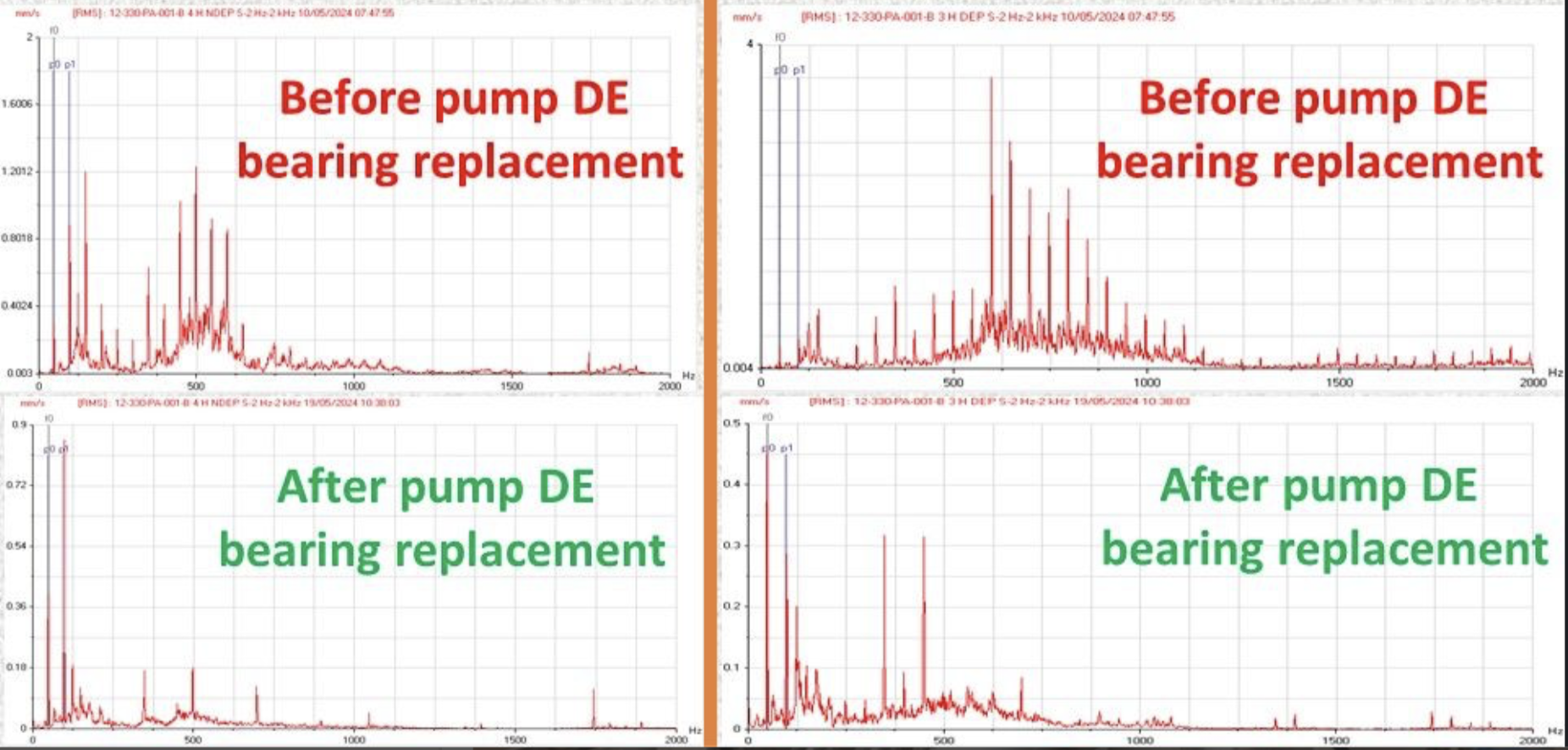
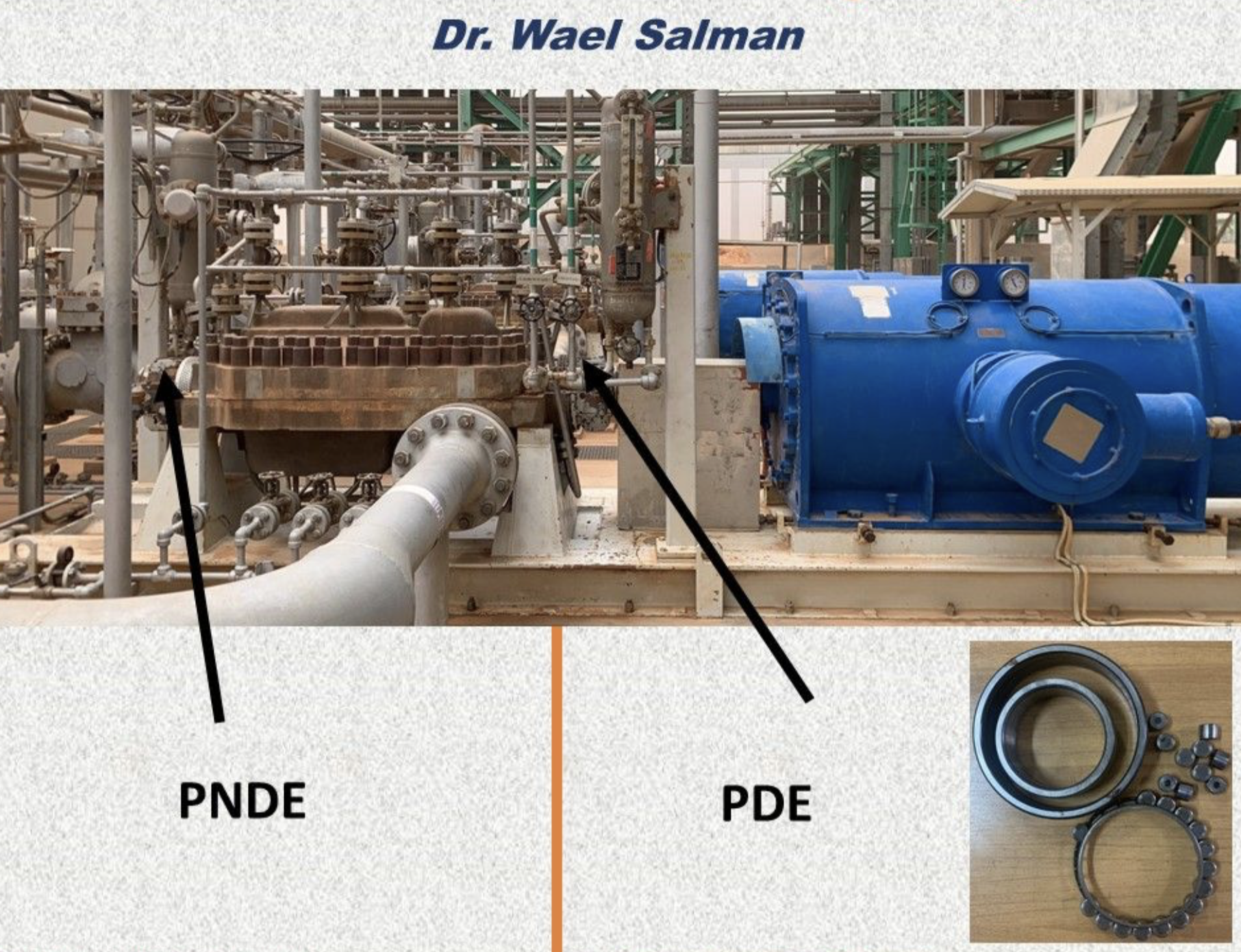
Lean amine circulation multi-stage pump had been installed in an oil and gas plant and suffered a sudden increase in vibration and noise. At the first instant, the DE and NDE pump bearings indicating a high vibration level due to a pattern of bearing(s) internal looseness (more harmonics in addition to floor noise). The quick recommendation is to change two pump bearings which leading to lost one of the main objective of performing PdM (to save maintenance cost). Furthermore, you have to do more thorough efforts in the diagnosis and apply the concepts of vibration analysis that the vibration is transferred from the defected component to other healthy components.
The DE bearing has a significant pattern for internal looseness and higher vibration levels compared to NDE bearing as shown in figures. So, the first decision is to replace just the DE bearing and keep monitoring. It was found that the pattern of internal looseness is completely disappeared in NDE bearing.
The features of PdM can be achieved from this case by:
1. Low spare parts
2. Low labors
3. High productivity by reducing machine downtime
4. High machine reliability by reducing unnecessary maintenance
Finally, you have to consider the theoretical knowledge alongside of practical works to go through successful tracks.
Additional Images