Rotary Dryer Gearbox Tooth Damage
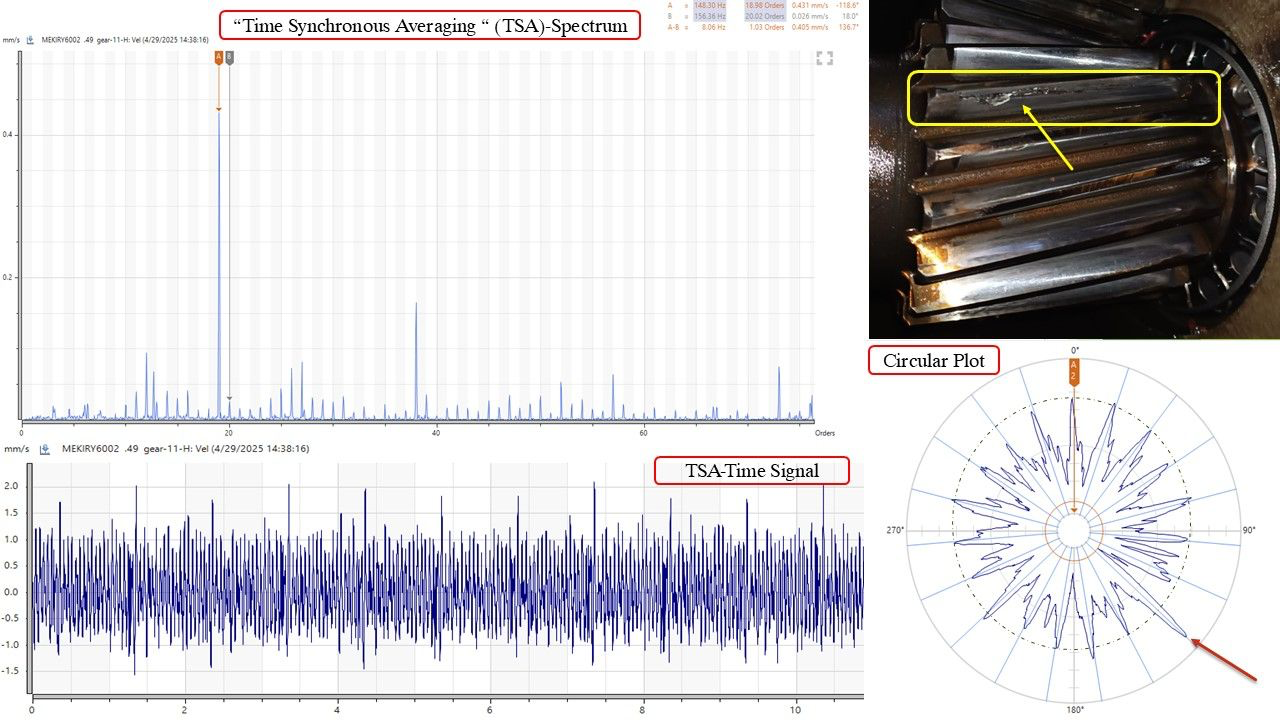
Time Synchronous Averaging (TSA) reduces noise in measurements by averaging waveforms in a time buffer before FFT calculation. TSA was used to assess the rotary dryer gearbox condition, revealing impact and damage to a tooth in the second stage.
CASE STUDY TIME: Using TSA for gear fault.
💠 “Time Synchronous Averaging” TSA
TSA is a fundamentally different process than the usual spectrum averaging that is generally done in FFT analysis. It is used to greatly reduce the effects of unwanted noise in the measurement. The waveform itself is averaged in a time buffer before the FFT is calculated, and the sampling of the signal is initiated by a trigger pulse input to the analyzer. If the trigger pulse is synchronized with the repetition rate of the signal in question, the averaging process will gradually eliminate the random noise because it is not synchronized with the trigger.
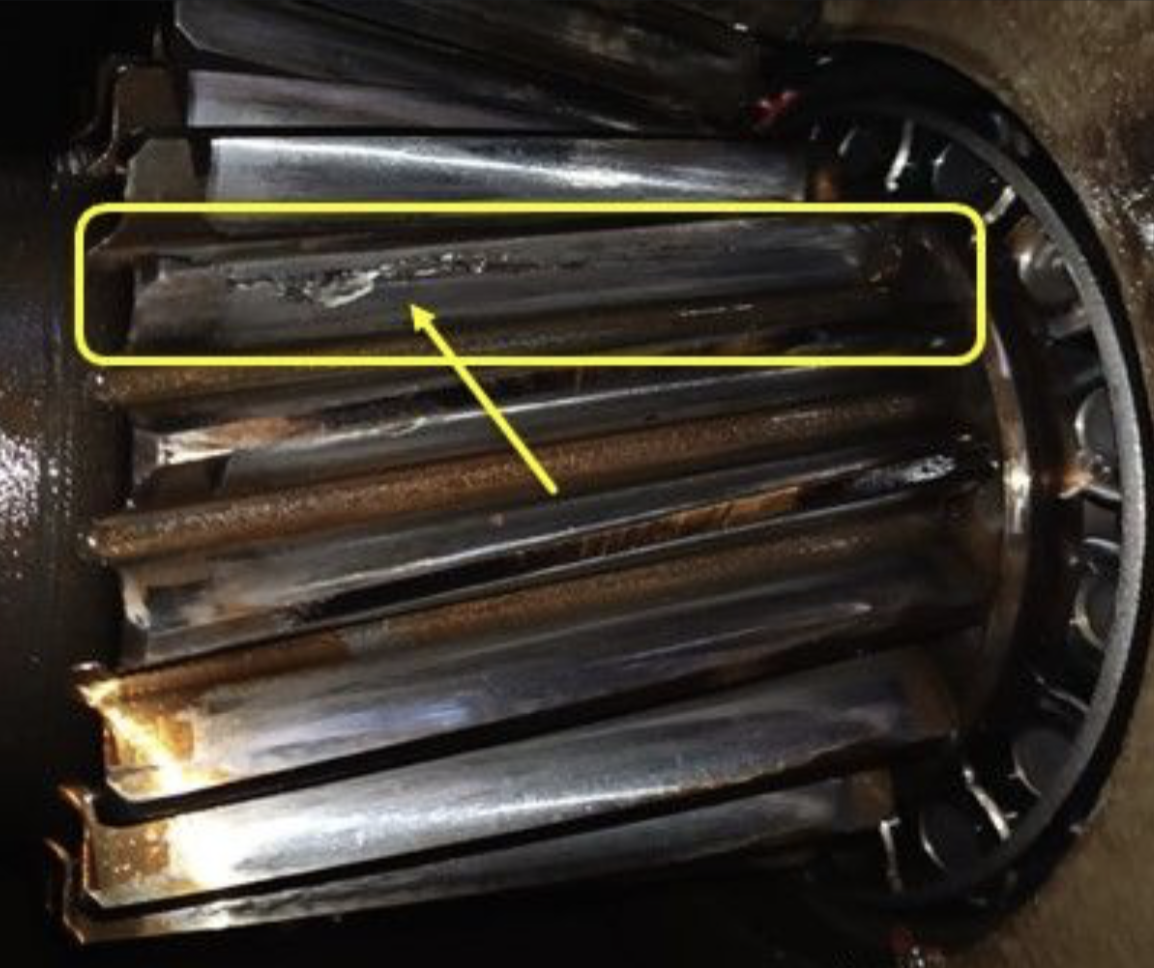
In the assessment of the rotary dryer gearbox condition monitoring using the TSA technique, the circular plot reveals the presence of impact and damage to one of the teeth in the second stage.
Additional Images