Predictive Maintenance in the Cement Industry
In the cement industry, where heat, dust, and heavy loads push machines to their limits, predictive maintenance plays a vital role. Using tools like vibration, oil, and thermal analysis, plants can detect early signs of wear and plan maintenance before catastrophic failures occur. The result: higher uptime, reduced costs, and safer, more efficient operations in one of the harshest industrial environments.
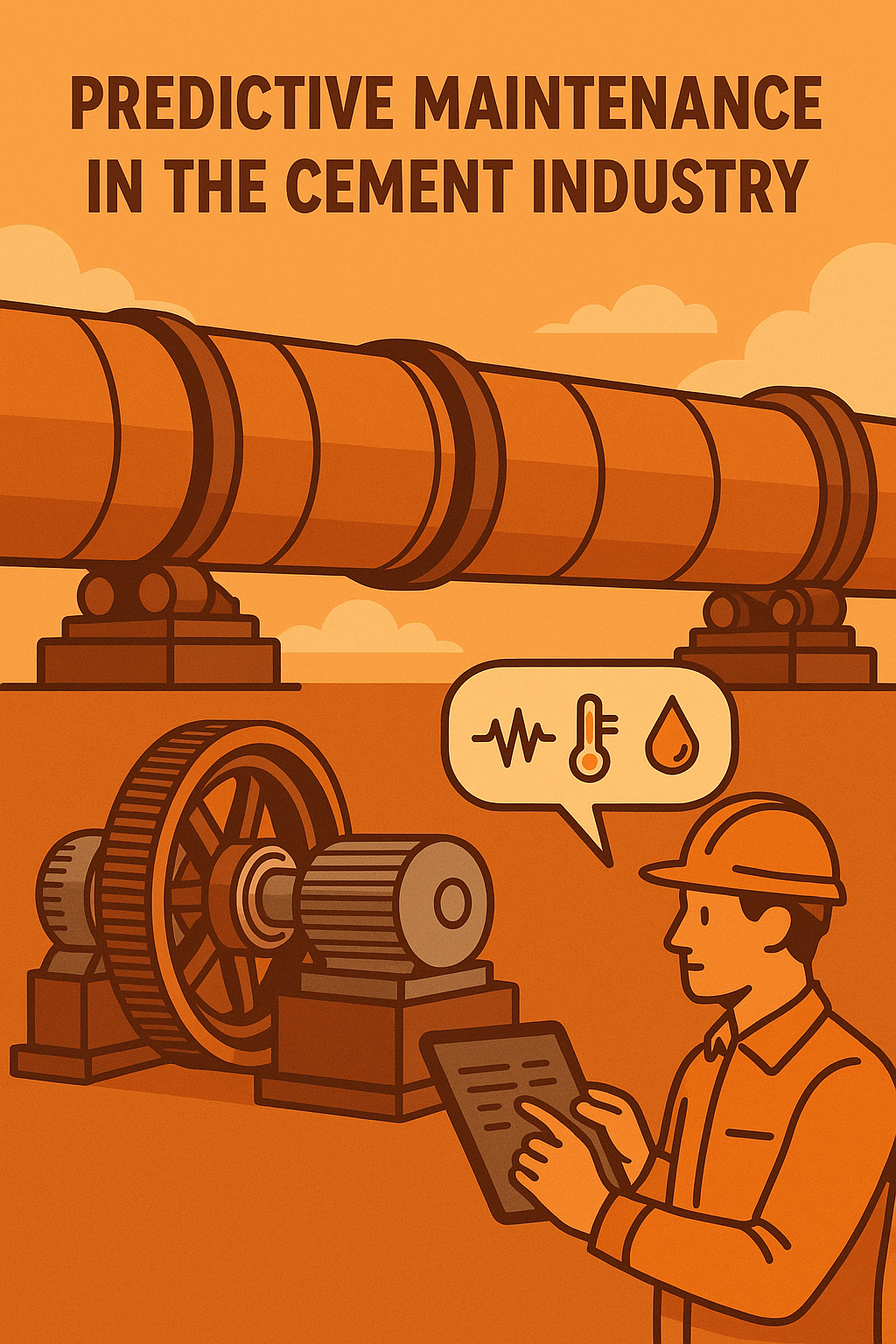
Cement production is one of the toughest environments for machinery. Dust, heat, heavy loads, and continuous operation make equipment reliability a constant challenge. Among the most critical assets are kilns, mills, and their associated drives—machines that, if they fail, can stop production entirely and cause massive financial losses.
This is where predictive maintenance has shown some of its greatest value. Take a cement mill drive: vibrations may rise slowly over time due to imbalance, misalignment, or bearing wear. To an untrained observer, the machine may seem fine—still producing product, still turning. But behind the scenes, the data tells a different story. With vibration analysis, oil monitoring, and thermal imaging, early signs of trouble can be detected weeks or even months before a breakdown. That means repairs can be scheduled during planned shutdowns, avoiding unplanned stoppages that can cost tens of thousands of dollars per hour.
I’ve seen cases where continuous vibration monitoring identified bearing degradation in a kiln support roller. If that failure had gone unnoticed, the result could have been catastrophic damage to the kiln shell, costing millions. Instead, the bearing was replaced during a planned outage, and production continued without disruption.
Another common example is gearboxes in mills and crushers. Oil analysis can reveal metal particles long before the gearbox shows external signs of trouble. Combined with temperature and vibration data, the full picture becomes clear—allowing maintenance teams to act early.
The cement industry is highly competitive, and margins can be tight. Every hour of uptime matters. Predictive maintenance not only protects assets but also optimizes production, reduces costs, and increases safety.
For those working in cement: what predictive techniques have proven most effective in your plants? Do you rely more on vibration, oil, thermography—or a combination of all three?