Oil Analysis Insights
Oil analysis acts as an early-warning system, revealing wear, contamination, and lubricant health long before visible signs appear. A single oil sample can uncover seal damage, dust ingress, or gear wear that vibration or temperature monitoring might miss. Regular oil monitoring prevents costly cascading failures, making it a vital component of predictive maintenance and overall reliability strategy.
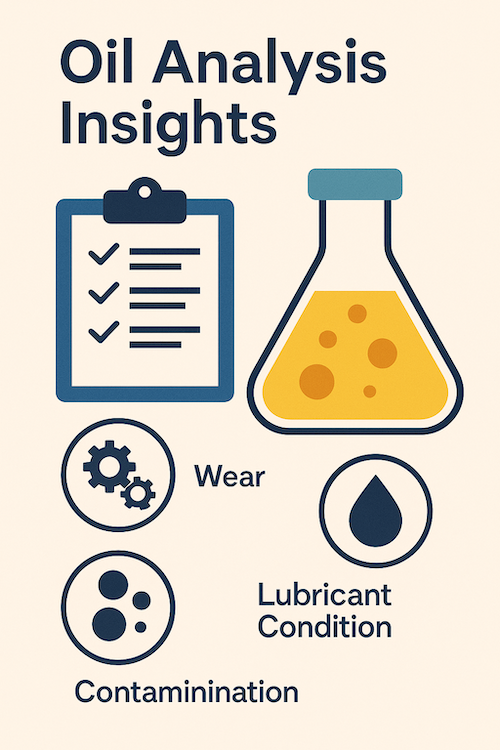
Oil analysis is sometimes underestimated in reliability programs, yet it can be one of the most revealing tools for understanding machine health. A single sample can tell you about wear, contamination, lubricant condition, and even machine operating practices. In many cases, it provides the “early warning system” that vibration or thermography alone might miss.
I’ll share one example: during routine checks, oil analysis from a gearbox came back with unusually high particle counts and elevated silicon levels. At first, operations thought the gearbox was fine—it wasn’t showing any unusual noise, heat, or vibration. But the oil sample was telling a different story. After inspection, the team found that a damaged seal was allowing dust and contaminants to enter. Left untreated, this would have caused abrasive wear on gears and bearings, leading to serious damage. Instead, because of a timely oil analysis, they replaced the seal and flushed the system. A small action avoided a massive failure.
What makes oil analysis powerful is that it looks beyond just lubrication. Metal particles reveal wear trends, additives show if the oil is breaking down, and water or fuel contamination can point to larger systemic problems. It gives both a health check of the lubricant and an indirect health check of the machine itself.
Despite this, many plants still use oil analysis only occasionally—often during annual shutdowns—rather than as part of continuous or routine monitoring. That means they might miss critical trends that build up over time.
So here’s a question for the community: do you see oil analysis mainly as a tool for checking lubricant quality, or do you use it strategically as part of a predictive maintenance program? And if you’ve caught an early-stage fault using oil samples, what was the most surprising or impactful case?