Early Bearing Anomaly Detected on a Chemical Mixer Using Ultrasound Analysis
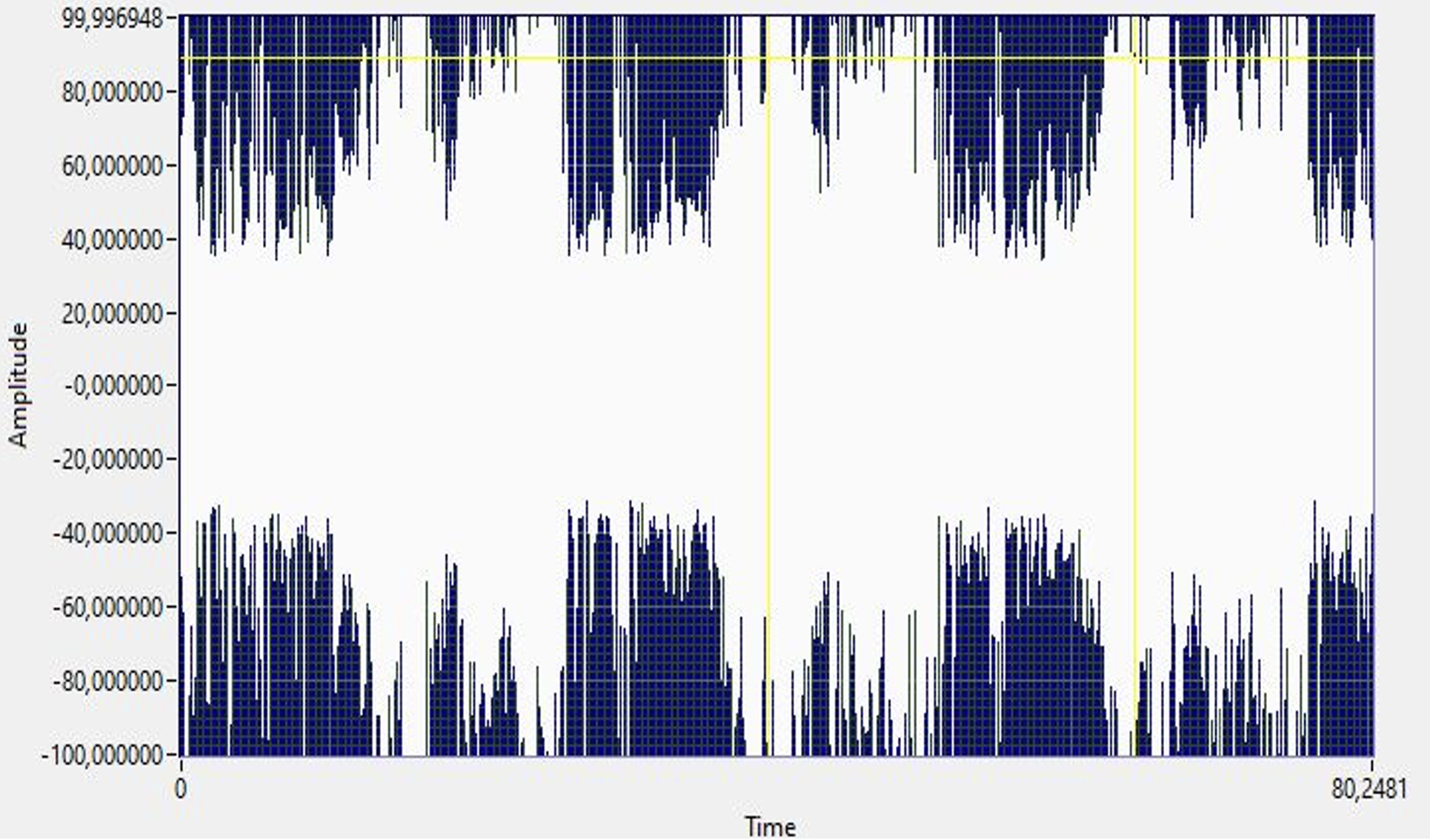
Ultrasound measurements taken from a chemical mixer motor bearing revealed low-frequency and mid-frequency harmonic patterns that may indicate the early stages of bearing degradation. Based on these findings, regular monitoring was recommended to track progression and prevent unexpected failure.
Asset & Measurement Context
• Industry: Chemical processing
• Machine: Chemical mixer motor
• Measurement point: Motor bearing
• Technology: Ultrasound condition monitoring
Key Observations from Ultrasound Data
• 0.40 Hz harmonics were observed with high amplitude and clear repetition, indicating a low-frequency mechanical modulation affecting the bearing.
• 19 Hz and 22 Hz harmonics were also clearly visible, suggesting additional dynamic components acting on the bearing system.
• The harmonic structure was stable and repeatable, making it unlikely to be random noise or transient operational effects.
Interpretation
The coexistence of strong low-frequency harmonics with distinct higher-frequency components can be an early indicator of bearing condition changes such as lubrication degradation, surface interaction, or developing mechanical stress. At this stage, no immediate failure symptoms were observed, but the signal characteristics warrant close attention.
Recommendation to the Customer
Rather than immediate intervention, we advised:
• Regular ultrasound monitoring of the bearing
• Trend-based evaluation of harmonic amplitude changes over time
• Correlation with operating conditions and other condition-monitoring data where available
Value for Operations
• Enables early awareness without unnecessary maintenance actions
• Supports data-driven decision making
• Helps prevent unexpected downtime in a critical chemical process