Early Vibration Signs of Bearing BPFI Failure Case
Early detection of a bearing fault through vibration analysis allows for proactive maintenance, preventing unexpected failures and minimizing repair costs. Monitoring wear and scheduling planned interventions are key benefits of predictive maintenance.
In predictive maintenance, time is always our greatest ally.
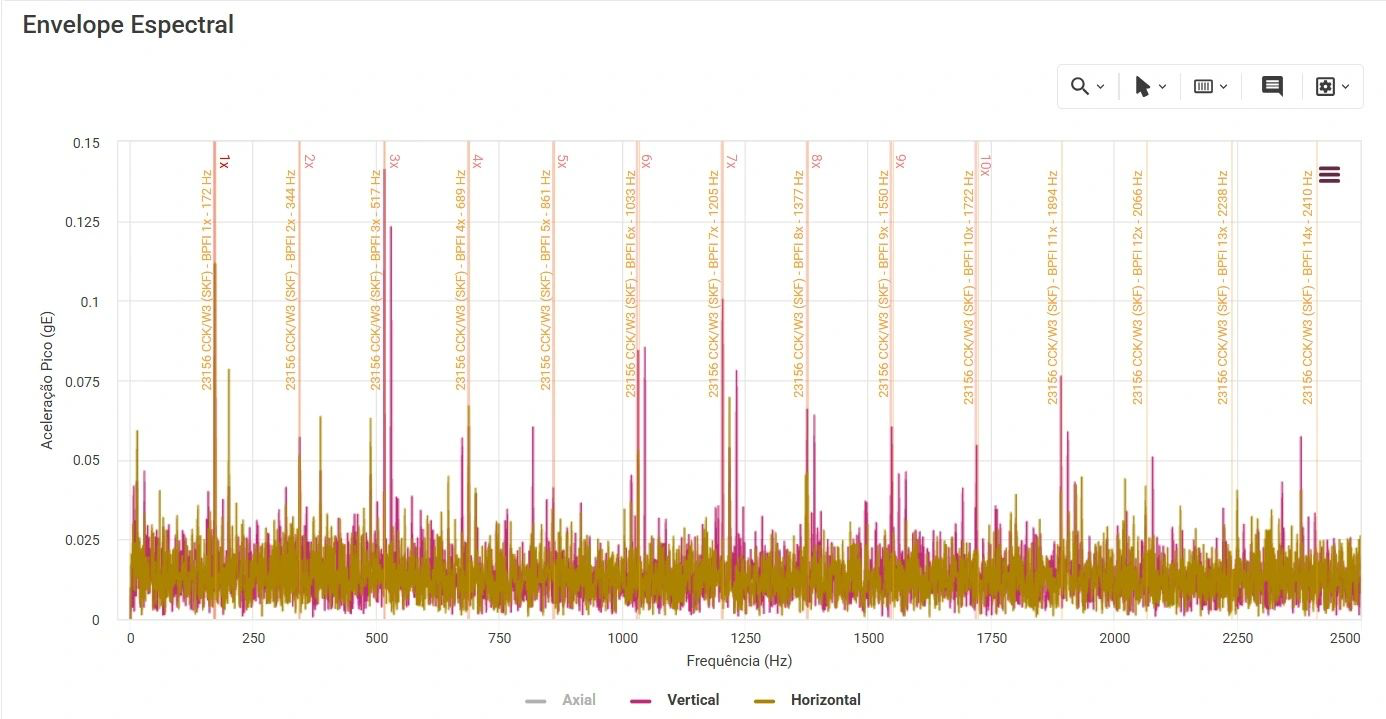
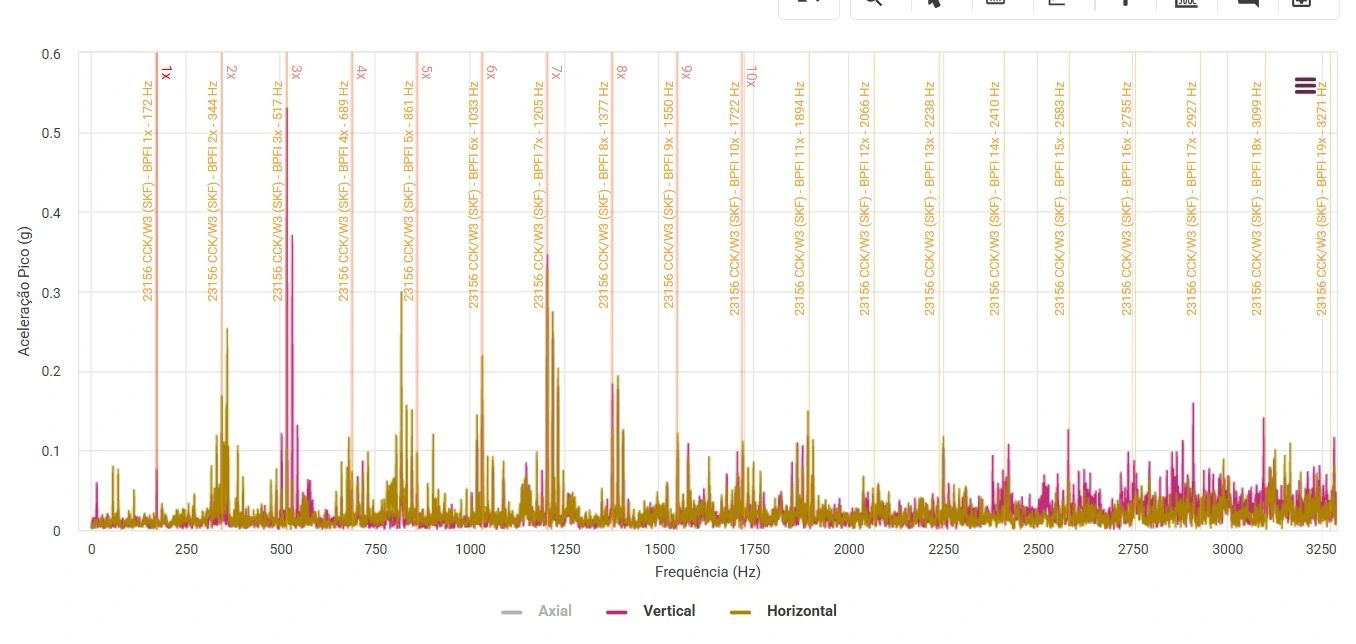
Recently, during a vibration analysis on a piece of equipment, I identified a subtle but consistent spike in the characteristic failure frequency of a bearing's inner ring (BPFI)
Although the amplitude was at an early stage (about 0.1 gE in the acceleration envelope spectrum), the acceleration spectrum already indicated high impact energy caused by the passage of the rolling element over the fault. This type of early detection is precisely the differential of predictive maintenance: identifying problems before they represent an immediate risk, but which have a high potential for evolution.
By identifying this sign early, it becomes possible to:
Keep up with evolution: continuously monitor wear and understand the speed of failure progression.
Plan the intervention: Schedule the replacement of the bearing at a planned stop, avoiding sudden failures and unscheduled stops in production.
Prevent secondary damage: At an advanced stage, failure could compromise not only the bearing, but also axles, housings, and other components, significantly raising the cost of repair.
Thus, seemingly small signals, when correctly interpreted, can make all the difference in asset reliability and maintenance cost reduction.
Additional Images