Right Parameter Selection for Proper Vibration Analysis and Failure Detection
Proper parameter selection, including sampling frequency and time waveform length, is crucial for accurate vibration analysis and fault detection. A longer time waveform, covering at least 7-10 shaft rotations, is necessary for reliable fault detection.
Do you really see what is going on inside your machine?
- The aim of this case is to demonstrate how important to select the right parameters for your measurements (TWF, spectrum, etc).
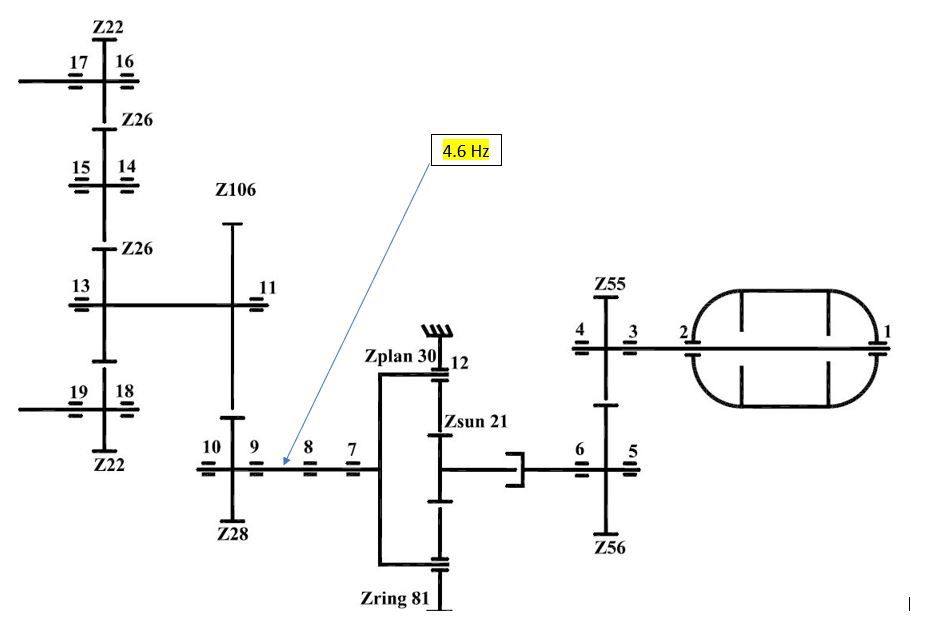
- The schematic is showing motor attached to planetary and then attached to main GB through spline. The measurements showed elevation in PK-PK G’s with presence of GMF in the spectrum with side bands.
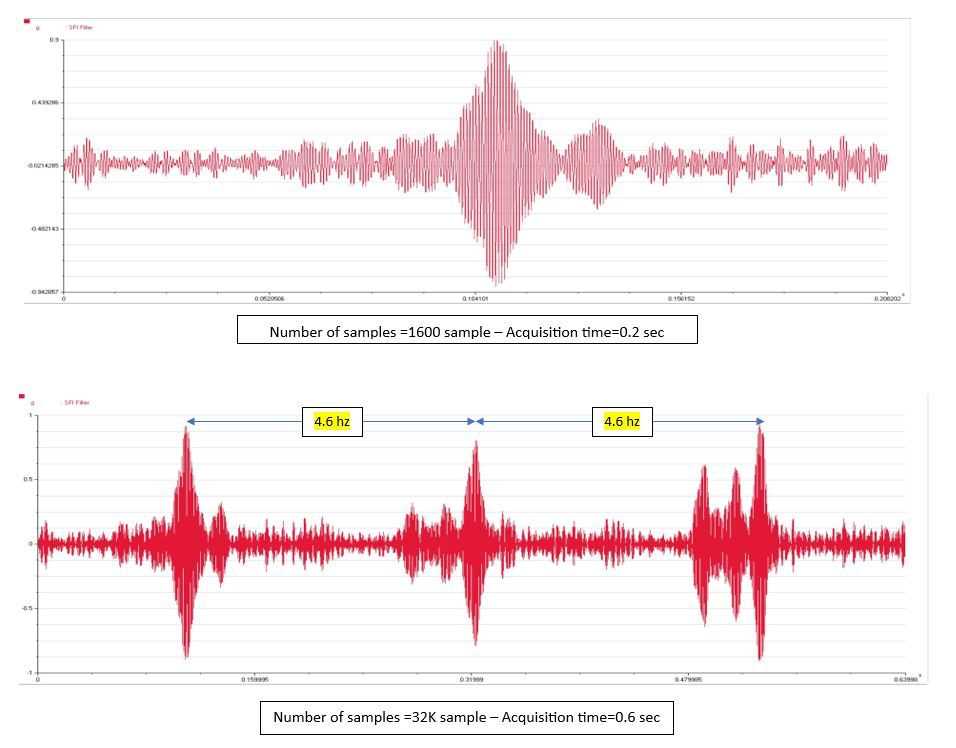
- Overall vibration values were low (Max 1.5 mm/s) and the time wave form was showing just one impact as demonstrated in the above time wave form.
- Another TWF with high number of samples and longer acquisition time was taken for better assessment.
- As demonstrated in the below TWF, there is clear repetitive impact in the TWF with frequency equal to the output shaft speed from planetary GB.
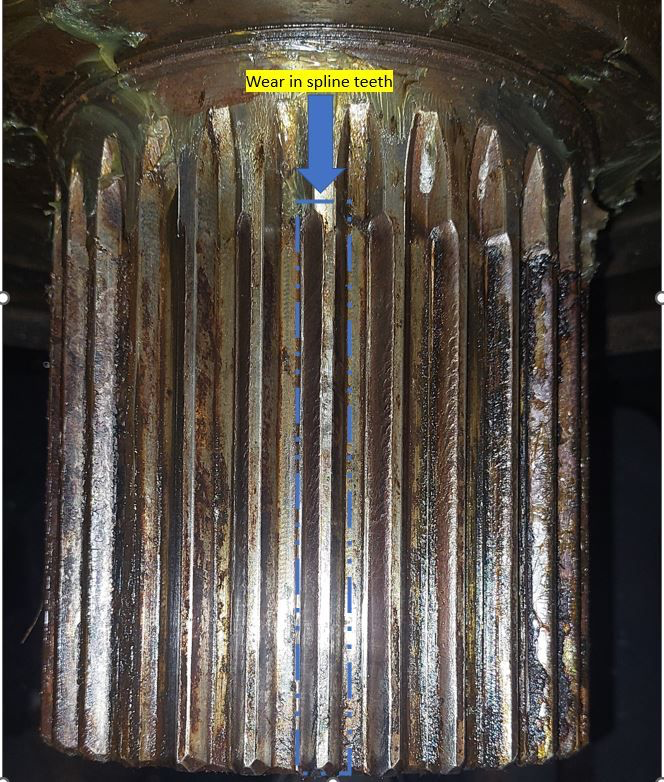
- The picture of the spline is showing clear wear in the spline teeth.
Conclusion:
The duration of the time waveform measurement is a direct result of the sampling rate (how fast) and the number of samples (how much). At a given sampling rate, the length of the time waveform will be longer with a higher number of samples, and shorter with a smaller number of samples.
For the best fault detection capabilities, you need to make sure that a minimum 7 to 10 shaft rotations are covered in the time waveform (for a steady operating condition). So now we have two parameters to take care:
1- The sampling Frequency, impacting the frequency content available in the signal measured
2- The length of time waveform, impacting the fault detection capabilities.
Additional Images