Viscosity Index for Different Temperatures
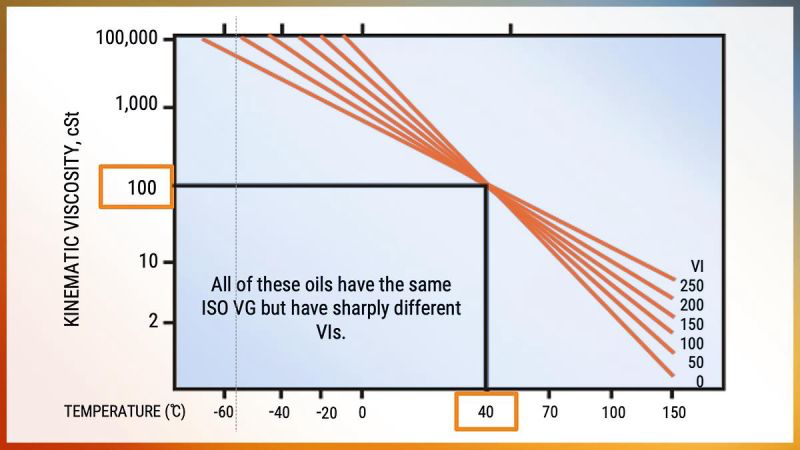
Viscosity Index (VI) is crucial for maintaining oil thickness across varying temperatures. Demand a Viscosity-Temperature chart from suppliers to ensure safe operating temperatures.
🔥 Are you buying oil for 40°C, but your pump runs at 80°C? 🔥
Welcome to the ISO VG Trap.
Your ISO Viscosity Grade (ISO VG level) is just a snapshot at 40°C. But your machine’s temperature is never constant. The result? The oil viscosity at your actual operating temperature can be dangerously thin.
The Silent Killer: Low Viscosity
➡️VG 32 at 40°C = Perfect.
➡️VG 32 at 80°C = Too thin → Under-lubrication → Bearing wear → Failure.
Your Secret Weapon: Viscosity Index (VI)
A higher VI means the oil stays thicker across a wider temperature range. Two oils with the same VG can perform worlds apart.
✅ The Solution is Clear:
Stop buying by VG alone. Demand the Viscosity-Temperature chart from your supplier. Check that the viscosity stays in the safe zone (e.g., 13-20 cSt for bearings) at your real operating temp.
Right oil >> Right temp >> Real reliability.
Image reference: https://www.machinerylubrication.com