The Hidden Cost of Reactive Maintenance
Reactive maintenance may seem cost-effective initially, but it leads to production stoppages, delayed delivery schedules, overtime labor, and emergency repairs. These unplanned downtimes are far more expensive than the cost of proactive maintenance strategies.
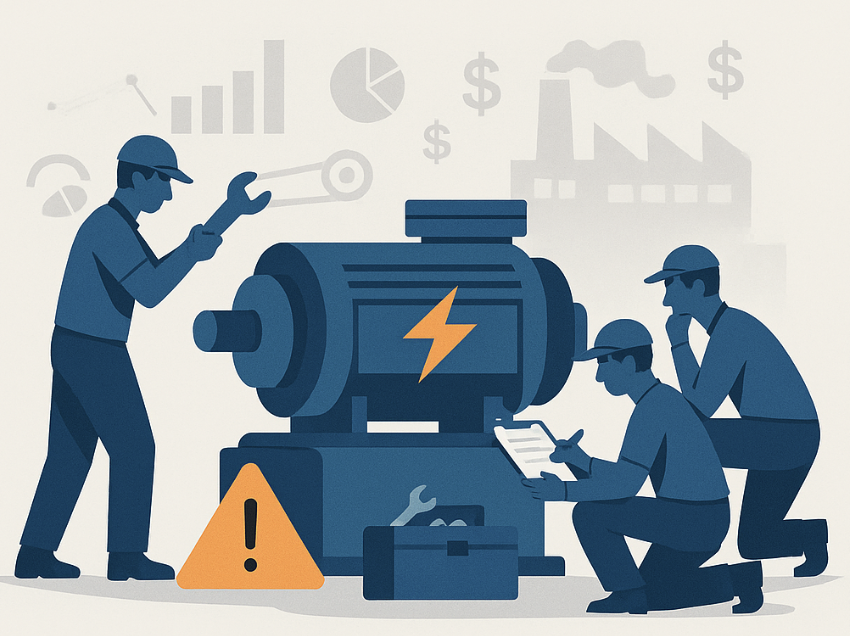
Reactive maintenance—waiting until something breaks before fixing it—seems cheap at first glance. You don’t spend time on planning, you don’t buy spares in advance, and you don’t “waste” man-hours on machines that are still running. But the reality is that unplanned downtime is one of the most expensive hidden costs in industry.
Consider this: when a critical machine fails unexpectedly, the costs go far beyond the repair itself. Production stops, delivery schedules slip, overtime labor is required, emergency spare parts are rushed in (often at a premium price), and sometimes safety is compromised because teams are pressured to “get the machine running” as quickly as possible. Studies have shown that an unplanned breakdown can cost 3–5 times more than planned maintenance. In continuous process industries like cement, steel, or chemicals, a single hour of downtime can run into tens of thousands of dollars.
On the other hand, proactive maintenance strategies—like predictive monitoring, condition-based inspections, and scheduled interventions—allow teams to plan ahead. You can order spare parts in advance, schedule the right technicians, and fix issues before they cascade into catastrophic failures. More importantly, you avoid secondary damage. A bearing replaced at the right time may cost a few hundred dollars; the same bearing, left to fail, can damage the shaft, motor, or gearbox, turning a small problem into a multi-day outage.
Despite all these facts, many managers still ask: “Why invest in predictive maintenance tools or reliability programs when we’ve been running fine without them?” The challenge is that the savings of proactive maintenance are invisible—you don’t see the accidents that never happened, or the failures that were prevented. Meanwhile, the costs of unplanned downtime are painfully visible.
So here’s my question to the community: how do you make the case to leadership?