Leveraging Magnetic Flux and Vibration for Accurate RPM Determination in Rotating Machinery
Magnetometer flux data and vibration measurements help to accurately determine RPM. The magnetic data provides a stable reference signal, while vibration measurements capture mechanical vibrations related to rotation.
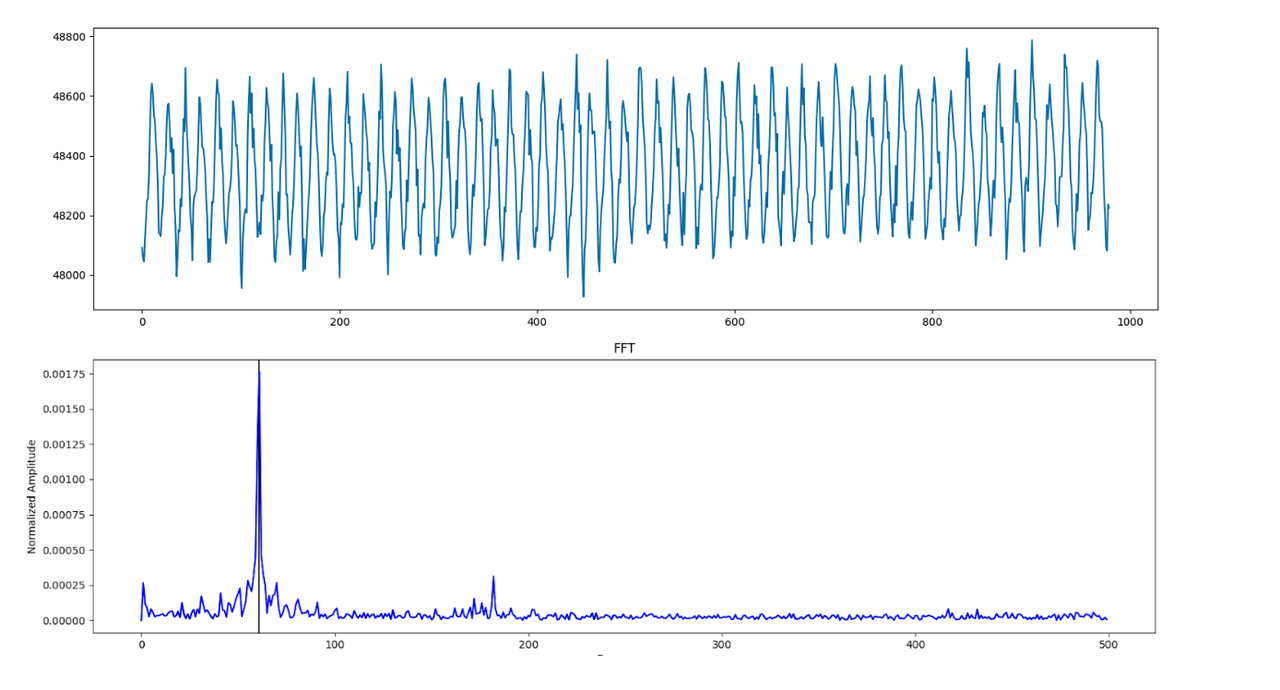
In IntelliVibe, magnetometer flux data combined with vibration measurements are used to accurately determine the RPM (Rotations Per Minute) of a rotating drive. As VFDs (Variable Frequency Drive) continue to be extensively employed in diverse industrial applications, the ability to precisely determine RPM becomes critical for effective condition monitoring and diagnostics. This article delves into the following key aspects:
Here's how the magnetic flux data and vibration measurements work together in IntelliVibe to determine the RPM accurately:
Magnetic data: The magnetic flux data is used to measure the magnetic field surrounding the rotating component. This magnetic field is influenced by the rotation of the component and can be used as a reference signal for RPM calculation. The magnetometer detects the changes in the magnetic field caused by the rotating component's magnets or other magnetic elements.
Vibration measurements: An accelerometer is used to capture the mechanical vibrations generated by the rotating component. These vibrations contain frequency components that are directly related to the rotational speed of the component. The vibration signal typically contains harmonics and sidebands that are multiples or combinations of the fundamental rotational frequency.
Data fusion and analysis: The magnetic data and vibration measurements are combined and analyzed to determine the accurate RPM of the rotating component. The magnetometer data provides a stable reference signal, while the vibration measurements offer additional information about the frequency components associated with the rotation.
Signal processing algorithms: Signal processing algorithms are applied to the combined magnetometer and vibration data to extract the relevant frequency information. Techniques such as spectral analysis and Fourier transform are used to isolate the rotational frequency and its harmonics from the vibration signal.
RPM calculation: Using the frequency information obtained from the signal processing algorithms, the RPM can be calculated accurately. The fundamental frequency or its harmonics extracted from the vibration signal are related to the rotational speed, and the RPM value is derived from these frequencies.
By combining the magnetometer data, which provides a stable reference signal, with the vibration measurements, which capture the mechanical vibrations associated with the rotation, IntelliVibe can accurately determine the RPM of the rotating component. RPM information is critical for condition monitoring, fault detection, and diagnostics of machinery, enabling proactive maintenance and performance optimization.