Electrical Signature Analysis Bearing Fault
Early-stage bearing losses were measured at 0.915 kW, resulting in approximately 0.8 lbs of CO2 emissions per hour of operation. As the bearing failure progressed, losses increased to over 6 kW, leading to 37 tonnes of CO2 emissions per year and $5,976 in energy costs. This data, collected using EMPATH Electrical Signature Analysis, provides real-time insights for decision-making based on ESG goals and reliability.
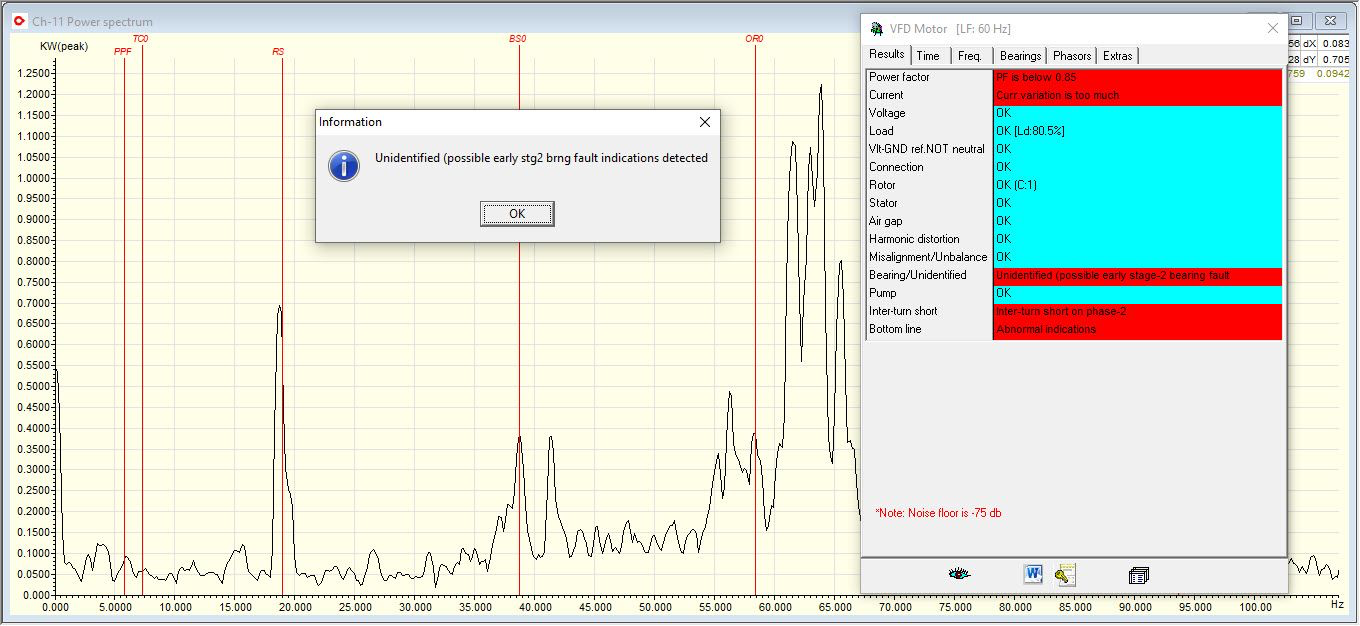
Early Stage 2 hashtag#bearinglosses measured with hashtag#EMPATH hashtag#ElectricalSignatureAnalysis comes out to 0.915 kW of loss across the inner, outer, ball and cage (what do you mean you can actually provide this as real data! Yes, we can!). Later turned out to be early fluting on this drive operated at 60 Hz during testing. We watched its progression over several months until it was repaired.
That comes out to 0.915kW * 0.855 lbs CO2/kWh (USA Average), or ~0.8lbs CO2/hour of operation to start at this point. It will vary due to load, speed, and progression of the failure. So, when asked how long with the bearing last? Well, we can do that too... but we can provide additional decision-making data.
Let's consider a cost of $10/kW demand and $0.10/kWh and the machine operates 8,760 hours per year (24/7). This can easily be calculated as [0.915kW * $10 * 12 for demand (~$110/yr)] + [0.915 kW *0.1*8760 hrs (~$802)] = $912/year electrical costs.
Emissions can also be calculated in metric tonnes CO2 per megawatt hour (2204 lbs/metric tonne) 3.2 tonnes CO2/year.
Several weeks later the losses increased to 1.2 kW, several months later it increased to Stage 3 and combined losses of over 6 kW. At that point we presented it as 5lbs CO2/hour, 37 tonnes CO2/year, energy cost of ~$5,976/year.
Yes, we can also forecast this. Real measurements for real results.
Well everyone is catching up on this (finally), we have been doing this since the early 1990s. So no 'approximates' or 'averages' or only being able to show the difference after, or some other generic thing. We provide real numbers up-front that can be confirmed in the end - for any fault or condition detected. (heck it was my dissertation in the 90s). You can literally make decisions based upon your ESG goals as well as reliability.